Understanding the Phillips Curve
Inflation and Unemployment
The Price of Things
Inflation is one of those economic terms we hear all the time, but what does it actually mean? At its core, inflation is the rate at which the general level of prices for goods and services is rising, and subsequently, the purchasing power of currency is falling.
Think about it this way: the dollar in your pocket today buys less than it did yesterday. It's not that the dollar itself has changed, but the prices of the things you want to buy have gone up. That's inflation in a nutshell.
Inflation is the rate that prices increase over time.
To measure inflation, economists track the price of a representative “basket” of goods and services that a typical household might buy. This includes everything from milk and gasoline to movie tickets and doctor's visits. The change in the price of this basket over time is often expressed as the Consumer Price Index, or CPI. It gives us a single number to understand how quickly prices are changing for the average person.
Why Prices Rise
Inflation doesn't just happen on its own. It's usually driven by one of two main forces. The first is about demand.
Demand-pull inflation
noun
Occurs when aggregate demand for goods and services in an economy outstrips aggregate supply, pulling prices higher.
This is the classic case of "too much money chasing too few goods." Imagine everyone suddenly gets a bonus and decides to buy a new car. Car manufacturers can't instantly produce more cars. With a limited supply and a surge of eager buyers, dealerships can raise prices. Demand is literally pulling prices up. We can see this relationship on a graph, where an increase in overall demand shifts the demand curve to the right, leading to a higher price level.
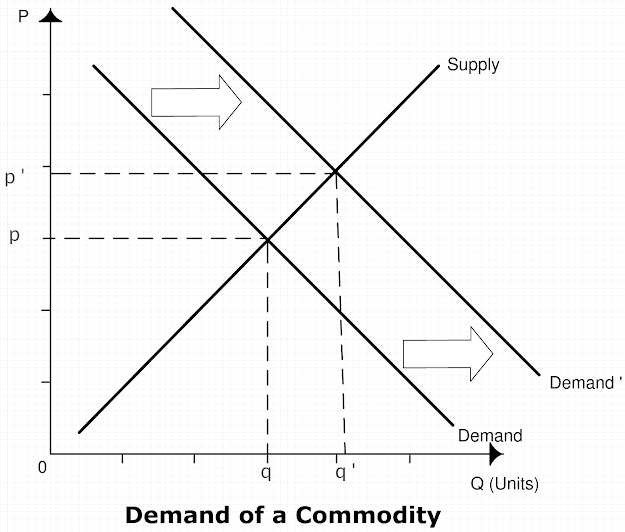
The other side of the coin is when the cost to produce goods and services goes up. This is known as cost-push inflation.
Cost-push inflation happens when the costs of production increase, forcing businesses to raise their prices to maintain their profit margins.
For example, if the price of oil skyrockets, it becomes more expensive to transport goods, run machinery, and even create plastics. These higher costs get passed on to the consumer in the form of higher prices. The supply of goods is constricted because it's more expensive to make them, which "pushes" prices upward.
The Search for Work
Now let's switch gears to unemployment. The unemployment rate isn't just the number of people without jobs. It's the percentage of the labor force that is jobless but actively looking for work. The "labor force" includes people who are either employed or actively seeking employment. This means that retirees, students, and people who aren't looking for a job are not counted in the unemployment rate.
Just like inflation, unemployment isn't a monolithic concept. There are different reasons why people might be out of work, and economists group them into three main categories.
| Type | Description | Example |
|---|---|---|
| Frictional | Temporary unemployment as people move between jobs. | A graphic designer quits her job to find a new one with better pay. |
| Structural | A mismatch between the skills workers have and the skills employers need. | A factory automates its assembly line, leaving welders without a job. |
| Cyclical | Unemployment caused by a downturn in the business cycle (a recession). | A construction company lays off workers during a housing market crash. |
Frictional and structural unemployment are always present to some degree, even in a healthy economy. People will always be changing jobs, and technology will always be evolving. For this reason, economists consider an economy to be at "full employment" when there is no cyclical unemployment. The remaining level of unemployment is called the natural rate of unemployment.
High inflation can erode savings and create economic uncertainty. High unemployment means a loss of potential output for the economy and financial hardship for individuals. Both concepts are central to understanding the overall health of an economy.
What is the primary definition of inflation?
A country's central bank prints a large amount of new money, which is distributed to citizens. As a result, people have more money to spend, but the amount of available goods remains the same. This leads to what type of inflation?
Understanding these two forces, inflation and unemployment, sets the stage for exploring how they relate to one another.