Understanding the PhD Journey
Introduction to PhD Programs
More Than Just Another Degree
A PhD, or Doctor of Philosophy, is the highest degree you can earn at a university. Unlike Bachelor's or Master's programs where you primarily learn about existing knowledge, a PhD is about creating new knowledge. It’s a research degree.
The core purpose is to make an original contribution to your field. You become the world's leading expert on a very specific topic. This means identifying a question nobody has answered, figuring out a way to answer it, and then sharing your findings with the academic community. It’s a transition from being a student who consumes information to a scholar who produces it.
PhD
noun
Short for Doctor of Philosophy, it is the highest university degree that can be conferred after a course of study and research in a particular field.
Mentally Prepare Yourself: One mistake many beginning PhD students make it to assume that a doctoral program is similar to a Bachelor’s or Master’s degree program.
The PhD Journey
A doctoral program isn't just a longer, harder version of a Master's degree. It has a distinct structure, typically broken into two major phases.
The first phase, which might last one to two years, often involves advanced coursework. These aren't introductory classes. They're designed to give you a deep understanding of your field's current state and equip you with the theoretical and methodological tools you'll need for research.
After completing your coursework, you'll usually face comprehensive exams, sometimes called qualifying exams. These tests are designed to prove you have a broad command of your discipline. Once you pass, you officially become a PhD candidate.
The second phase is the heart of the PhD: your research. This is where you'll spend the majority of your time. You'll work closely with a faculty advisor to develop a research topic, conduct your experiments or analysis, and write your findings in a lengthy document called a dissertation or thesis. This phase is largely self-directed, requiring immense discipline and project management skills.
Time and Commitment
A PhD is a marathon, not a sprint. The time it takes to complete one varies significantly by country, field, and individual progress. In the United States, it typically takes between four and seven years of full-time study. In many European countries, programs are often shorter and more focused, lasting three to four years.
It's crucial to understand that a PhD is a full-time job, and often more than that. The expectation is that your studies are your primary focus. The work doesn't fit neatly into a 9-to-5 schedule, especially when you're deep into research that might require long hours in a lab, in an archive, or running computational models.
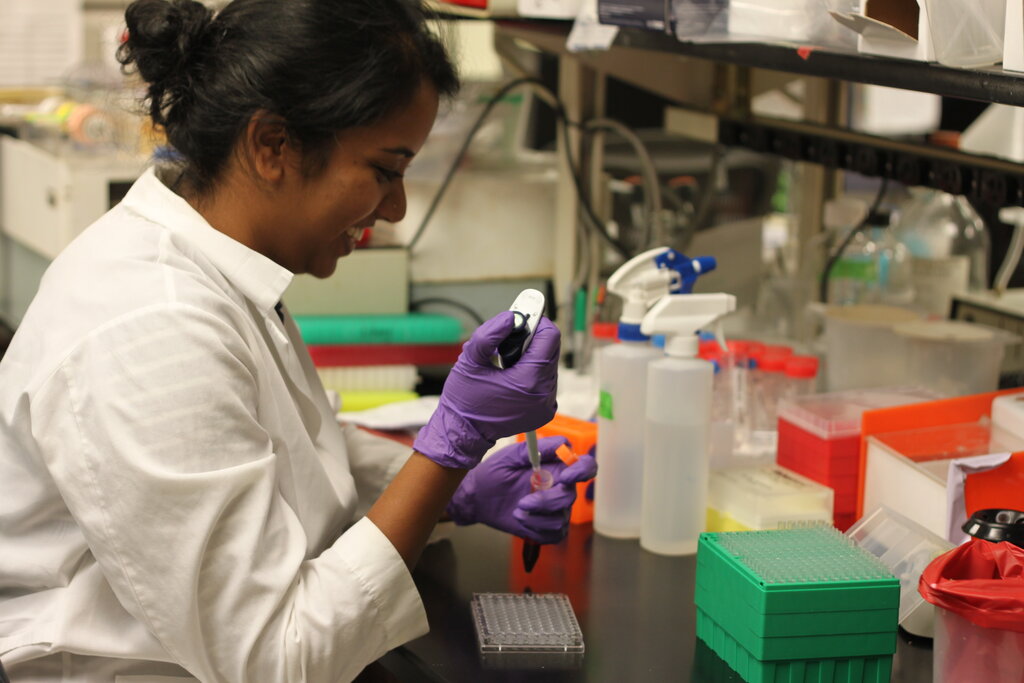
Because it's such a long-term endeavor, thinking of it as a single task can be overwhelming. It's more helpful to see it as a large-scale project with distinct phases, milestones, and deadlines, much like building a complex piece of software or managing a business startup.
The Ultimate Goal
The entire process culminates in the dissertation. This isn't just a long school paper; it's a book-length work that presents your original research. It must be a substantial, new contribution to your field. You are literally adding a new piece to the puzzle of human knowledge.
To finish your PhD, you must defend this work in front of a committee of experts, usually professors from your university. In this oral exam, known as a defense, you present your research and answer their challenging questions. If you pass, you have officially earned the title of Doctor.
The institutional expectation is clear: by the end of the program, you will have demonstrated the ability to conduct independent, high-level research. You have proven you are not just a master of your field's knowledge, but a creator of it.
What is the primary purpose of a Doctor of Philosophy (PhD) program?
In a typical PhD program, what milestone marks the formal transition from being a PhD student to a PhD candidate?
Embarking on a PhD is a significant decision. It's a path defined by deep intellectual curiosity and the drive to create something entirely new.