Understanding the Menstrual Cycle
Menstrual Cycle Basics
The Monthly Rhythm
The menstrual cycle is the body's monthly preparation for a potential pregnancy. It's a series of changes driven by hormones, involving the ovaries and the uterus. Think of it as a natural, repeating pattern that begins during puberty and continues until menopause.
menstruation
noun
The process in a woman of discharging blood and other materials from the lining of the uterus at intervals of about one lunar month from puberty until menopause, except during pregnancy.
While we often hear about a "28-day cycle," that's just an average. The length of a cycle can vary from person to person, and even from month to month. A typical cycle for an adult can range anywhere from 21 to 35 days. The cycle starts on the first day of a period (menstruation) and ends the day before the next period begins.
Four Distinct Phases
There are four phases of a menstrual cycle—menstruation, follicular, ovulation and luteal—with each stage bringing its own set of symptoms, hormone combinations, and bodily sensations.
The menstrual cycle isn't just one long event; it's broken down into four distinct phases. Each phase has a specific role, guided by different hormones.
| Phase | Typical Duration | What Happens |
|---|---|---|
| Menstrual | 3-7 days | The uterine lining is shed, causing bleeding. This is your period. |
| Follicular | ~14 days | An egg matures in an ovary, and the uterine lining begins to rebuild. |
| Ovulation | ~24 hours | The mature egg is released from the ovary. This is when pregnancy is most likely. |
| Luteal | ~14 days | The uterine lining thickens to prepare for a possible pregnancy. |
The follicular and luteal phases make up most of the cycle, with ovulation being a very short, specific event sandwiched between them. The menstrual phase is actually the beginning of the follicular phase.
Hormones in Charge
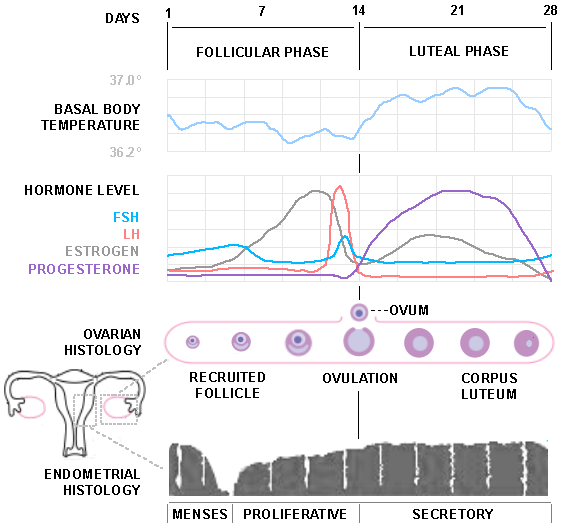
Hormones are the chemical messengers that run the show. Two key players are estrogen and progesterone. Their levels rise and fall throughout the cycle, triggering the different phases.
At the beginning of the cycle, during your period, hormone levels are low. As the follicular phase progresses, estrogen levels rise. This causes the uterine lining to thicken and eventually triggers ovulation. After ovulation, during the luteal phase, progesterone levels rise to help prepare the uterus for a fertilized egg. If pregnancy doesn't occur, both hormone levels drop, the uterine lining sheds, and the cycle starts over.
This hormonal dance is the reason for all the changes your body goes through each month. Understanding this rhythm can help you better understand your own body and health.
Tracking your cycle can help you notice patterns in your energy levels, mood, and physical symptoms throughout the month.
Ready to check your understanding of the menstrual cycle?
What is considered a typical length for an adult's menstrual cycle?
Which hormone's levels rise significantly during the luteal phase to prepare the uterus for a potential pregnancy?
Understanding the phases and hormones of the menstrual cycle is the first step to knowing more about reproductive health. It's a fundamental rhythm of the body.