Understanding the Föhn Wind
Introduction to Föhn Winds
A Wind from the Mountains
Imagine a chilly, damp day in a valley. Suddenly, the wind picks up, but instead of making it colder, it brings a wave of surprising warmth and dryness. The clouds might even seem to part. This isn't just a random weather quirk; it's likely a Föhn wind, a special type of wind that occurs in mountainous regions all over the world.
Föhn
noun
A warm, dry, gusty wind that descends in the lee (downwind side) of a mountain range.
The name itself comes from the German language, originally used to describe this very phenomenon in the European Alps. For centuries, people living in Alpine valleys have known about this wind that could rapidly change the weather from cool and damp to warm and dry. While the name is specific to the Alps, the process that creates it happens globally, where it often goes by other local names.
The Basic Recipe
So, what conditions are needed to create a Föhn wind? The setup is surprisingly simple and requires three main ingredients.
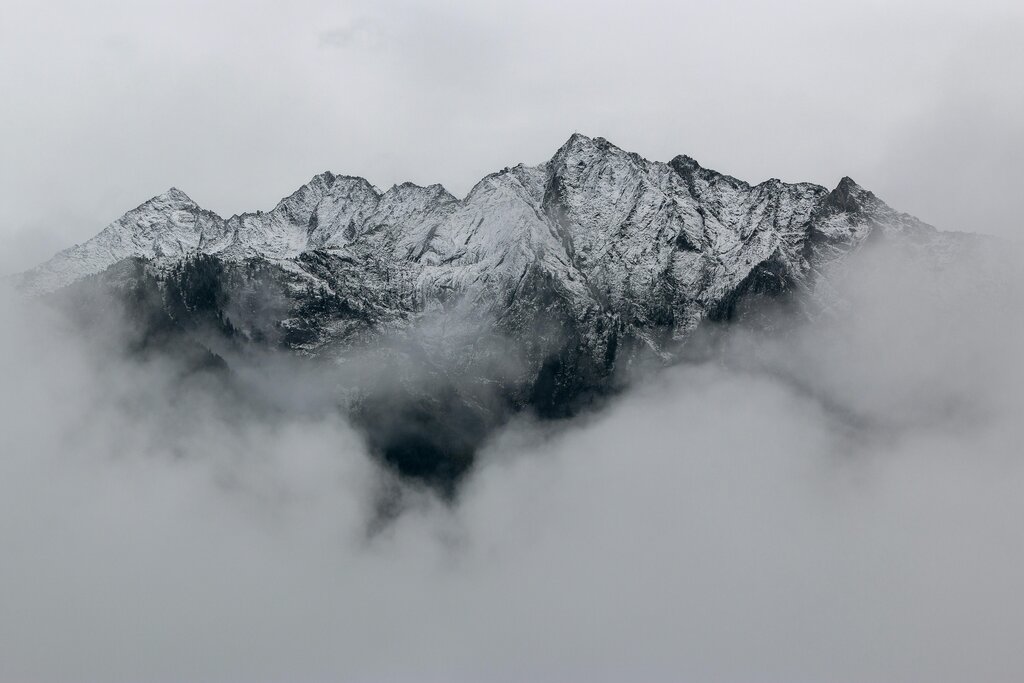
First, you need a significant barrier, like a mountain range. The taller the mountains, the more dramatic the effect can be.
Second, you need wind blowing steadily toward the mountain range. This wind carries an air mass that will be forced to climb over the barrier.
Third, that approaching air needs to be relatively moist. The moisture within the air is a key ingredient that gets removed during the journey over the mountains, fundamentally changing the air's character.
When this moist air is forced to climb the mountain, it cools and sheds its moisture as rain or snow on the first side, known as the windward slope. By the time the air reaches the peak and begins to descend on the other side—the leeward slope—it is much drier. This descent causes the air to warm up significantly.
Moist air goes up one side of a mountain; warm, dry air comes down the other. This simple transformation is the essence of a Föhn wind.
This fundamental process explains why the weather can be so different on opposite sides of the same mountain range. It sets the stage for the dramatic and rapid changes that define this unique wind.