Understanding the Essence of Life
Defining Life
What Is Life?
It seems like a simple question. We know a dog is alive and a rock is not. But pinning down a precise, universal definition of life is surprisingly tricky. Scientists, philosophers, and thinkers have wrestled with this for centuries, and the lines can get blurry.
The question of "what is life?" has challenged scientists and philosophers for centuries, producing an array of definitions that reflect both the mystery of its emergence and the diversity of disciplinary perspectives brought to bear on the question.
Historically, many cultures believed in vitalism, the idea that living things were powered by a special, non-physical spark or life force. This explained the obvious difference between a living creature and an inanimate object. As science advanced, explanations shifted from a mystical spark to observable, physical processes. Biologists began creating a sort of checklist to separate the living from the non-living.
A Checklist for Life
Most modern biology textbooks list a set of common characteristics shared by living organisms. If something ticks all the boxes, it's generally considered alive.
| Characteristic | Description |
|---|---|
| Organization | Living things are made of one or more cells, which are highly organized structures. |
| Metabolism | They take in energy and use it to power all their activities. Think of it as the body's engine. |
| Growth | Organisms grow and develop, following a pattern determined by their genetics. |
| Reproduction | They produce offspring, passing their genetic material to the next generation. |
| Response | They react to stimuli in their environment, like a plant turning toward sunlight. |
| Adaptation | Over generations, populations of living things evolve to become better suited to their environment. |
This list works well for identifying most of what we see around us as living or not. A squirrel fits every category. A car might use energy (metabolism) and respond to stimuli (a driver's foot on the gas), but it doesn't grow or reproduce on its own. So, not alive.
The Gray Areas
But what about the edge cases? A virus is a classic example. It has organization (genes wrapped in a protein coat) and can adapt. However, it can't reproduce or carry out metabolic processes without hijacking a host cell. On its own, it's completely inert. So is it alive?
Many scientists consider viruses to be in a gray area between living and non-living. They meet some criteria, but not all of them.
Even something as simple as a crystal can be confusing. Crystals grow and have an organized structure. Are they alive? No, because they lack metabolism, the ability to reproduce, and other key traits. This is where the checklist proves its worth, but it also shows that no single rule is perfect.
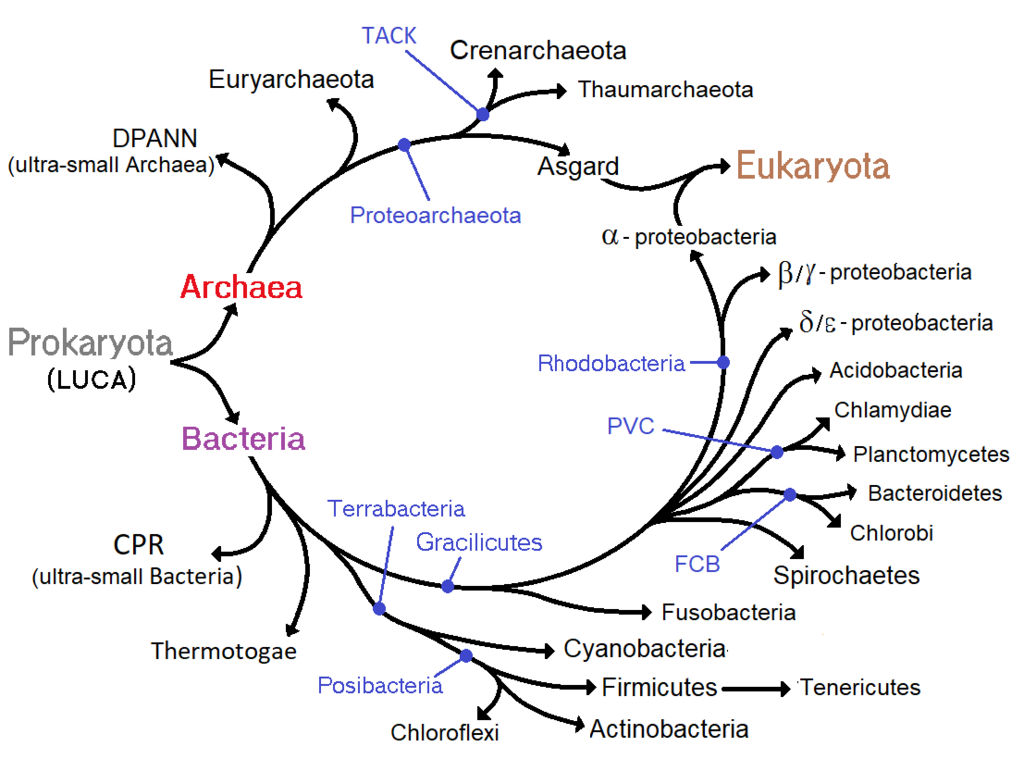
Ultimately, defining life is also a philosophical question. Our definition is based on the carbon-based, water-dependent life we see on Earth. What might life look like on another planet, with a completely different chemistry? As our ability to create artificial life and search for extraterrestrial life grows, our definition will likely need to evolve.
This challenge becomes increasingly urgent as advances in synthetic biology, artificial intelligence, and astrobiology challenge our traditional conceptions of what it means to be alive.
For now, we use a set of shared characteristics to guide us. It's a practical framework for studying biology, even if the edges remain a bit fuzzy.