Understanding the Essence of Art
What Is Art
The Elusive Definition of Art
What is art? The question seems simple, but it has puzzled philosophers, artists, and audiences for centuries. There is no single, universally accepted answer. What one culture considers a masterpiece, another might not even classify as art. The definition has been a moving target, constantly evolving with new ideas and creations.
We need to think about how to define art before we begin to look at it more closely.
Instead of a single definition, we have a collection of theories, each offering a different lens through which to view and understand art. Each theory has its strengths and weaknesses, and each was a product of its time. Let's look at some of the most influential attempts to pin down this slippery concept.
Theories of Art's Purpose
One of the oldest ideas is that art is imitation. This is known as the mimetic theory. For ancient Greek philosophers like Plato and Aristotle, the value of art, like a sculpture or a play, was in how faithfully it copied the real world. A good sculpture was one that looked just like the person it portrayed. This idea held sway for centuries, placing technical skill and realism at the forefront.
Later, during the Romantic movement, the focus shifted from the world to the artist. The expressive theory proposed that art was primarily about communicating emotion. A painting wasn't just a window onto a landscape; it was a window into the artist's soul. The power of the piece lay in its ability to make the viewer feel what the artist felt—joy, sorrow, anger, or peace.
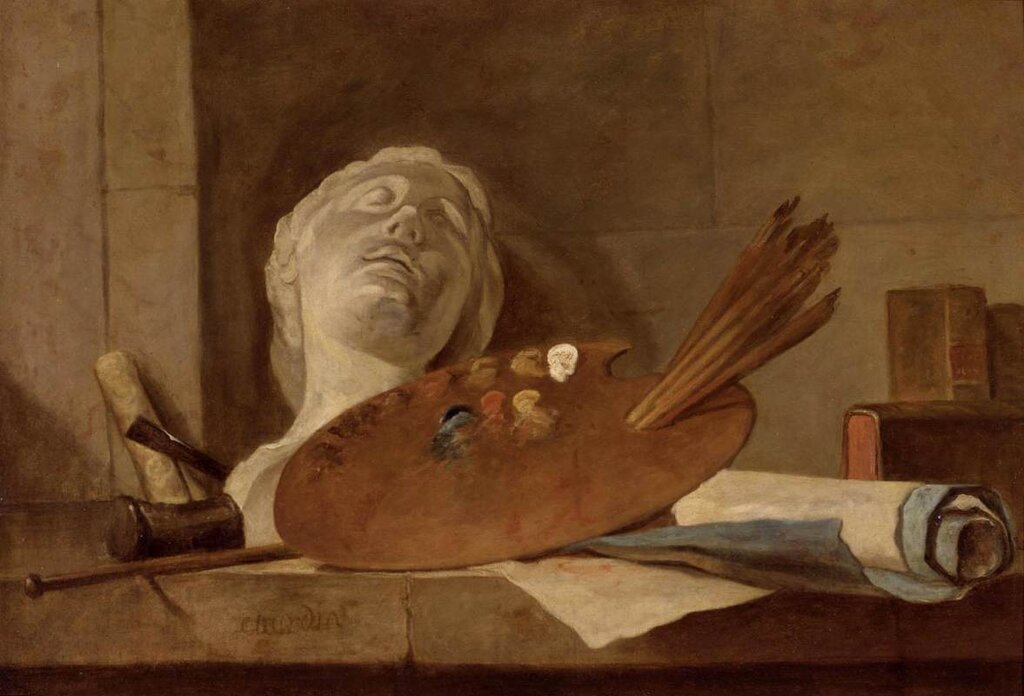
But what about art that doesn't imitate anything or seem to express a clear emotion? Think of a patterned rug or a purely abstract painting. This is where formalism comes in. Formalist theory argues that the most important aspect of a work of art is its form—the arrangement of colors, lines, shapes, and textures. The content, or what the artwork represents, is secondary.
For formalists, a work's artistic value comes from its aesthetic qualities alone. The term was coined to describe the specific combination of lines and colors that stirs our aesthetic emotions. According to this view, you don't need to know the story behind a painting to appreciate it as art; you just need to respond to its visual structure.
Context is Everything
In the 20th century, new kinds of art emerged that challenged all of these definitions. Marcel Duchamp famously exhibited a urinal as a sculpture. Andy Warhol made art from Brillo boxes. These works weren't realistic, they weren't necessarily expressive of the artist's emotion, and their form was identical to an ordinary object. So why were they art?
The institutional theory of art offers an answer. It proposes that an object becomes art when a representative of the art world—an artist, a curator, a critic—deems it to be art. In short, art is what the says it is. This theory shifts the focus from the object's properties to its context. Duchamp's urinal became art because he presented it in a gallery, giving it a new context and a new meaning.
Under this theory, context, not content, is what makes art. The location, the presentation, and the discourse surrounding an object are what elevate it to art status.
Why Definitions Matter
So, where does this leave us? While we may never find a single definition for art, exploring these theories gives us a richer framework for appreciating it. Each definition acts as a different lens, highlighting different aspects of a work.
| Theory | Focuses On | Asks the Question | Influences Appreciation by... |
|---|---|---|---|
| Mimetic | Representation | How accurately does it copy reality? | Valuing technical skill and realism. |
| Expressive | Artist's Emotion | What feeling does it convey? | Highlighting emotional impact and sincerity. |
| Formalist | Form and Design | How are the elements arranged? | Emphasizing aesthetics and composition. |
| Institutional | Context and Community | Who says this is art? | Focusing on the ideas and cultural setting. |
Knowing these different approaches allows us to engage with a wider variety of art. You can appreciate a Renaissance painting for its masterful realism (mimesis), a modern sculpture for its pure compositional beauty (formalism), and a conceptual piece for the clever way it challenges our expectations (institutional).
The lack of a simple definition isn't a failure. It’s a reflection of art’s own boundless creativity.
Ready to test your understanding of these frameworks?
According to the mimetic theory of art, what is the primary measure of a work's value?
The expressive theory of art, popular during the Romantic movement, suggests that art is primarily about what?