Understanding the Deep State
Origins of the Deep State
The Shadow State
The term 'deep state' feels like something out of a spy novel, but its origins are very real. It first entered the public conversation in Turkey during the 1990s to describe a powerful, hidden network operating within the government itself.
deep state
This wasn't just a conspiracy theory. The derin devlet referred to a coalition of high-level figures in the military, intelligence agencies, judiciary, and even organized crime. Their alleged mission was to uphold the secular, nationalist ideology of the Turkish republic, founded by Mustafa Kemal Atatürk. They operated outside the law and beyond the control of the elected government, using their power to steer the country from the shadows.
A Climate of Crisis
To understand why this idea took hold, you have to look at Turkey in the 1990s. The decade was marked by political instability, with a series of weak and short-lived coalition governments. The economy struggled, and the country was engaged in a violent conflict with the Kurdistan Workers' Party (PKK) in the southeast.
This atmosphere of constant crisis created a justification for extraordinary measures. The military had long seen itself as the ultimate guardian of Atatürk's vision. It had a history of intervening directly in politics through coups in 1960, 1971, and 1980.
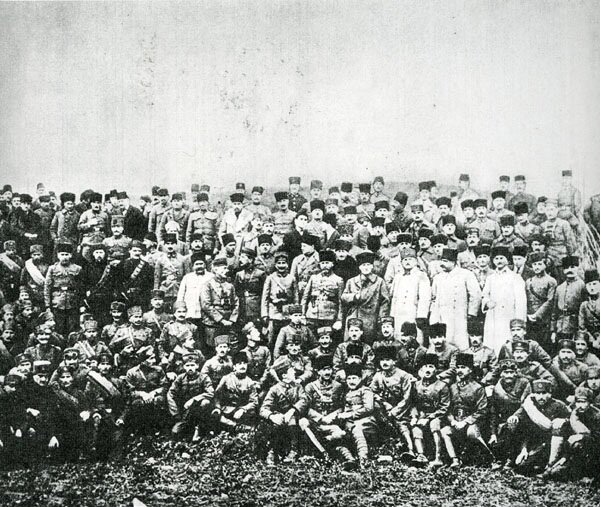
The deep state was seen as a more subtle continuation of this role. Instead of launching overt coups, this clandestine network worked behind the scenes to protect the state's core principles from perceived threats, whether from Islamists, Kurdish separatists, or communists.
Influence and Impact
The actions attributed to the deep state had a profound impact on Turkish governance. These networks were accused of manipulating elections, staging provocations to create chaos, and carrying out assassinations and kidnappings. Their goal was to maintain the established order and neutralize anyone who challenged it, regardless of democratic processes.
One of the most famous incidents that brought the derin devlet into the open was the Susurluk scandal of 1996. A car crash revealed a shocking connection between a member of parliament, a high-ranking police chief, and a notorious far-right militant wanted for multiple murders. The accident exposed the state's links to organized crime and illegal activities, confirming the public's worst fears about a shadowy network operating with impunity.
This secret alliance operated above the law, creating a parallel system of power that undermined elected officials and eroded public trust in state institutions.
The legacy of the derin devlet is complex. It created a deep-seated suspicion of the government that persists in Turkey. The concept showed how unelected, unaccountable groups could wield immense power, shaping a nation's destiny from behind a curtain of secrecy.
Time to check what you've learned.
The term 'deep state' (or derin devlet) originated in the 1990s to describe a clandestine network operating within which country's government?
What was the alleged primary mission of the Turkish derin devlet?