Understanding the Constitution of India
Rulebook for Nations
The Ultimate Rulebook
Imagine trying to play a game of cricket without any rules. No one would know what a 'run' is, when a player is 'out', or how to decide the winner. It would be chaos. Players could just make up their own rules, leading to endless arguments. Rules create fairness and structure, ensuring everyone plays the same game.
A country works in a similar way. It needs a set of rules that everyone agrees on. This master rulebook is called a constitution. It lays out how the country will be run, what powers the government has, and what rights the people are guaranteed. It's the foundation for all other laws.
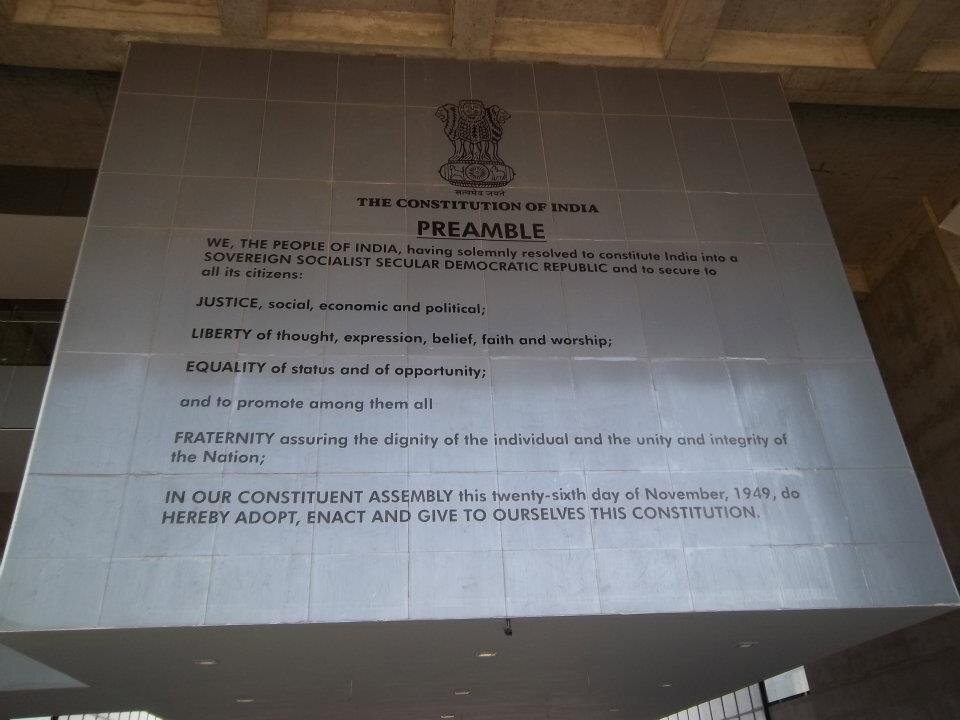
The most important idea behind a constitution is the supremacy of law. This means that the law is the highest authority in the land. No one is above the law, not the richest person, not the most powerful politician, not even the Prime Minister. Everyone must follow the same rules. This principle ensures that power isn't abused and that everyone is treated equally by the legal system.
A Deal for Everyone
So, who agrees to these rules? Everyone does. You can think of a constitution as a kind of social contract. It's an unspoken agreement between the people and the government they create.
The deal works like this: the people agree to give the government authority to make laws and manage the country. In return, the government agrees to use that power to protect the people's rights, keep them safe, and work for their well-being. The constitution is the written form of this contract, making sure both sides hold up their end of the bargain.
When India gained independence from British rule in 1947, it was like starting a new game. The old rules, made by the British, no longer applied. India needed its own rulebook, written by Indians, for Indians. This new rulebook had to reflect the country's values of democracy, equality, and justice, and set the terms for the new relationship between the people and their government.
India's Guiding Document
The result was the Constitution of India. It's the longest written constitution of any country in the world. Its length is a reflection of India's immense diversity. The creators had to make rules that would work for hundreds of millions of people speaking different languages, practicing different religions, and living in vastly different regions.
The Constitution is the single source of power for the government and the ultimate protector of the people.
This document formally came into effect on January 26, 1950, the day India became a republic. It is the supreme law of the land. Every law passed, every action taken by the government, and every court decision must be in line with the Constitution. It is the ultimate rulebook that guides the nation.
What is the primary function of a country's constitution, similar to the rules of a game?
The principle that the law is the highest authority and that no one, including the most powerful leaders, is above it is known as what?
The Constitution is more than just a legal text; it's a statement of what India stands for and the foundation of its democracy.