Understanding the BEAT Tax
Introduction to International Taxation
Crossing Borders with Money
When a company operates in more than one country, things get complicated fast. A simple sale isn't just a sale anymore. It's a cross-border transaction that multiple governments might want to tax.
International taxation is the framework that determines which country gets to tax a company's profits. The goal is to create a system that's fair and predictable, but as global business evolves, the rules often struggle to keep up.
Who Gets to Tax?
Two core principles decide a country's right to tax a company's income: residency and source. Think of them as two separate claims a government can make on a slice of the economic pie.
residency
noun
The legal home of a person or company for tax purposes. A country generally taxes its residents on their worldwide income, no matter where it was earned.
For an individual, residency is usually determined by where you live. For a corporation, it's typically where the company is legally incorporated or where its management and control are located. For example, a company officially set up in Delaware is a U.S. resident for tax purposes.
The second principle is the source of income. This rule says a country can tax any income generated within its borders, regardless of who earned it. If a German car company sells a car to a customer in Canada, the profit from that sale is considered Canadian-source income. Canada has a right to tax that profit, even though the company is a resident of Germany.
So, Germany can tax the company because it's a resident, and Canada can tax the same profit because it was earned there. This creates a problem.
Avoiding the Double Tax Trap
When two countries claim the right to tax the same income, it's called double taxation. Without a way to resolve this, international business would be nearly impossible. Imagine paying a 25% tax in Canada and another 30% in Germany on the same dollar of profit. There wouldn't be much left.
To prevent this, countries sign tax treaties. These are bilateral agreements that spell out the rules for how to divide up taxing rights. They establish which country gets the primary right to tax certain types of income and require the other country to provide relief. This relief usually comes in one of two forms:
- Exemption: The residence country agrees not to tax the foreign income at all.
- Foreign Tax Credit: The residence country taxes the foreign income but allows the company to subtract the taxes it already paid to the source country.
Most countries, including the United States, use a foreign tax credit system.
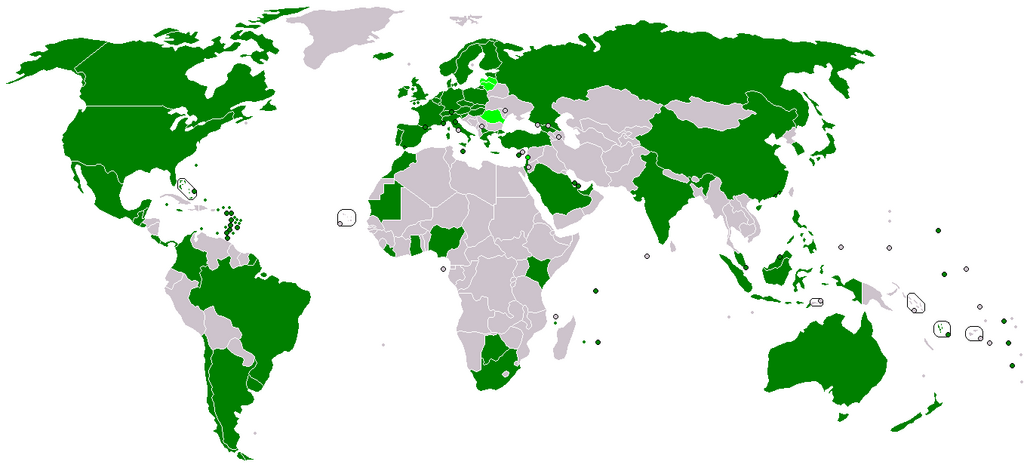
These treaties prevent double taxation and create a more stable environment for multinational companies.
The Price Is Right?
The biggest challenge in international tax comes from transactions that happen inside a single multinational corporation. Imagine a parent company in Japan that designs a smartphone. It sends the blueprints to its subsidiary in China to manufacture the phone. Then, the Chinese subsidiary sells the finished phones to another subsidiary in Ireland, which handles sales for Europe.
How much should the Chinese subsidiary pay the Japanese parent for the blueprints? And what price should the Irish subsidiary pay the Chinese one for the phones? These aren't open market transactions; the company is essentially trading with itself.
Transfer pricing, or the pricing of transactions between affiliates in different tax jurisdictions—also known as intercompany pricing—presents both tax opportunities and financial reporting risks for multinational businesses.
The prices set for these internal trades are called transfer prices. They matter immensely because they determine how much profit is recorded in each country. If the Chinese factory sells the phone to the Irish sales office for a very low price, most of the profit will be booked in Ireland. If Ireland has a lower tax rate than China, the corporation's overall tax bill goes down.
To combat this, tax authorities around the world have adopted the arm's-length principle. This principle states that the transfer price between related companies should be the same as it would be if the companies were unrelated. In other words, the Irish subsidiary should pay the Chinese factory a price that an independent third party would have paid.
Figuring out that price is one of the most complex and contentious areas of international tax law.
As you can see, the rules of international tax are a complex web of residency, source, treaties, and pricing principles. They are the foundation upon which global commerce is built, ensuring that countries can collect their due without stifling the cross-border flow of business.
Time to check your understanding of these core ideas.
Which two core principles determine a country's right to tax a corporation's income?
What is the primary problem that international tax treaties are designed to solve?
With these fundamentals in place, we can begin to explore the specific strategies countries use to protect their tax bases from avoidance schemes.