Understanding Statistical Models and R-Squared
Introduction to Statistical Models
Models and Reality
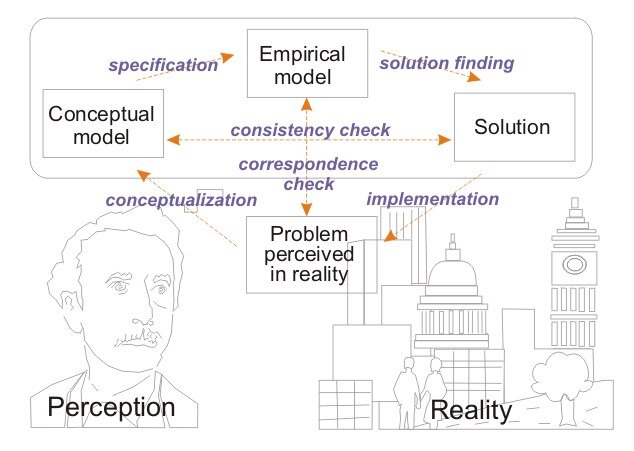
A statistical model is a mathematical way to approximate reality. Think of it like a map. A map isn't the city itself; it's a simplified representation that helps you navigate. It leaves out details like individual trees or traffic lights to give you a clear, useful picture of the city's layout.
Statistical models do the same thing with data. They use mathematical equations to find patterns and relationships, ignoring the noise to focus on the important signals.
These models help us describe, predict, and understand the world around us. By feeding data into a model, we can get a clearer picture of complex situations, from how a marketing campaign might perform to the factors that influence public health.
What are Models For?
Statistical models aren't just one-trick ponies; they serve several distinct purposes. Generally, we build models to achieve one of three goals: to describe, to predict, or to explain.
| Purpose | Goal | Example |
|---|---|---|
| Description | To summarize and simplify complex data. | Using average rainfall and temperature to describe a region's climate. |
| Prediction | To forecast future outcomes based on past data. | Predicting a company's future stock price based on its past performance. |
| Explanation | To understand the relationship between different factors. | Determining if a new teaching method causes an improvement in test scores. |
A descriptive model is like a sketch artist, capturing the main features of a dataset. A predictive model is like a weather forecaster, using current conditions to tell you what's coming next. An explanatory model is like a detective, trying to figure out why something happened by examining the connections between clues.
The Building Blocks
Models are built using variables. A variable is simply any characteristic, number, or quantity that can be measured or counted. In modeling, we usually focus on two main types.
Dependent Variable
noun
The main thing you are trying to predict or understand. It's the outcome or effect.
Independent Variable
noun
A factor that you believe has an influence on the dependent variable. It's the input or the cause.
The goal of a model is to describe how one or more independent variables affect the dependent variable.
The Role of Assumptions
Every statistical model comes with a set of assumptions. These are the ground rules the model follows to make sense of the data. For example, a simple model might assume that the relationship between an independent and a dependent variable is a straight line. This is an assumption because the real relationship might be a curve.
Why make assumptions? Because they simplify the problem, making it possible to create a model in the first place. Without assumptions, the world is too complex to model effectively. The key is to choose a model whose assumptions are reasonable for the problem you're trying to solve.
A model is never a perfect reflection of reality. Its value comes from being a useful simplification. Understanding its assumptions helps you understand its limitations.
Choosing the right model means balancing simplicity and accuracy. A model that is too simple might miss important patterns, while a model that is too complex might be hard to interpret or mistake random noise for a real pattern.
Now that we have the fundamentals down, we're ready to start exploring how these models work in practice.