Understanding Soil Maximum Dry Density
Soil Properties
The Building Blocks of Soil
Soil is more than just dirt. It's a complex mixture of minerals, organic matter, water, and air. For engineers and builders, the mineral part is especially important. These mineral particles come in a huge range of sizes, and their proportions define many of the soil's key characteristics.
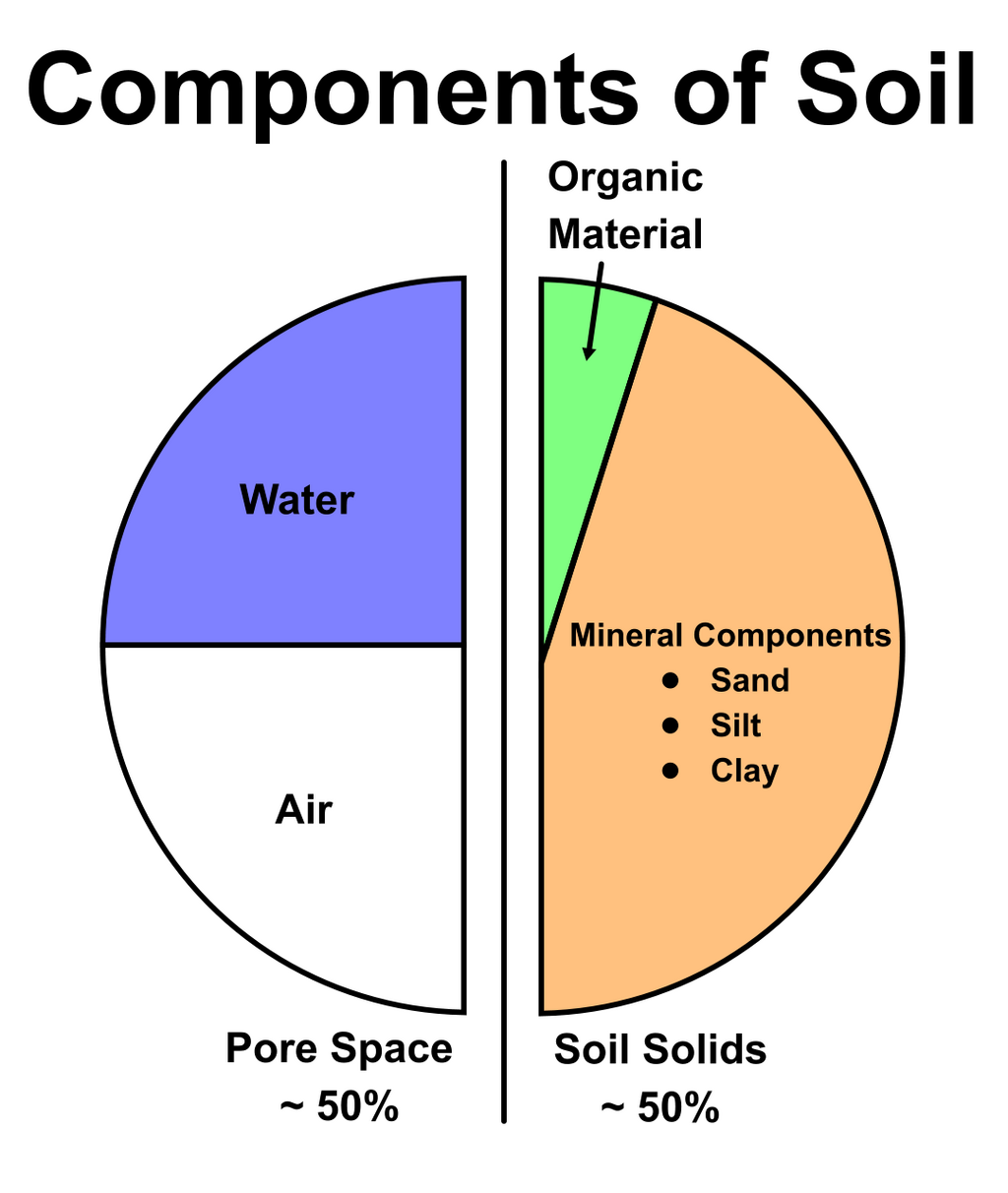
The distribution of these different-sized particles is called the particle size distribution. We can sort these particles into broad categories based on their diameter.
| Particle Type | Typical Size Range (mm) |
|---|---|
| Gravel | > 2.0 |
| Sand | 0.075 - 2.0 |
| Silt | 0.002 - 0.075 |
| Clay | < 0.002 |
Soils are rarely made of just one particle type. Most are a blend. A soil might be mostly sand with a little bit of silt and clay, or it could be an even mix of all three. This specific blend is what determines the soil's texture.
Texture and Structure
Think of soil texture as a recipe. The relative amounts of sand, silt, and clay—the ingredients—determine whether the soil is gritty, smooth, or sticky. A soil with a lot of sand feels coarse, while one with a lot of silt feels floury. Clay-heavy soils are sticky and can be molded when wet.
Soil texture refers to the relative proportions of sand, silt, and clay particles in the soil.
Geotechnical engineers use a tool called the soil texture triangle to classify soils. By plotting the percentage of sand, silt, and clay, you can find the soil's textural class, such as 'sandy loam' or 'silty clay'.
While texture describes the particles themselves, structure describes how these particles are arranged. Sand, silt, and clay particles rarely exist in isolation. They clump together to form larger units called aggregates. The arrangement of these aggregates creates pores and channels within the soil.
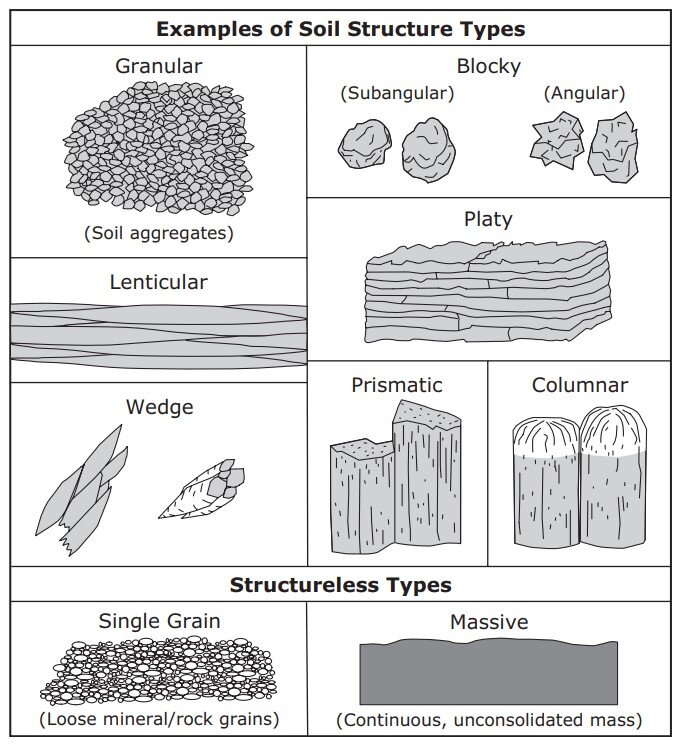
A soil with a good, stable structure has plenty of pore space for air and water to move through. A soil with a poor structure is dense and compacted, making it difficult for water to drain and for plant roots to penetrate.
Density and Porosity
When we talk about how "heavy" a soil is, we're usually talking about its density. In soil mechanics, we look at two main types of density. The first is particle density (), which is the mass of the solid soil particles divided by their volume, excluding the pore spaces. For most minerals, this value is fairly constant, around .
More commonly used in practice is bulk density (), which is the mass of a volume of dry soil, including the pore spaces. It gives a better sense of how compacted the soil is in its natural state.
The relationship between these two densities tells us about the soil's porosity. Porosity is the measure of the empty space within a soil. A high porosity means there are lots of voids for air and water, while a low porosity indicates a more compacted soil.
Understanding these physical properties—particle size, texture, structure, and density—is the first step in predicting how a soil will behave. They influence everything from how much water the ground can hold to how much weight it can support.