Understanding Shoulder Dislocation
Shoulder Anatomy
The Shoulder's Bony Framework
The shoulder is one of the most mobile joints in the human body, but that flexibility comes from a complex arrangement of bones. Three bones form the shoulder girdle: the humerus, the scapula, and the clavicle.
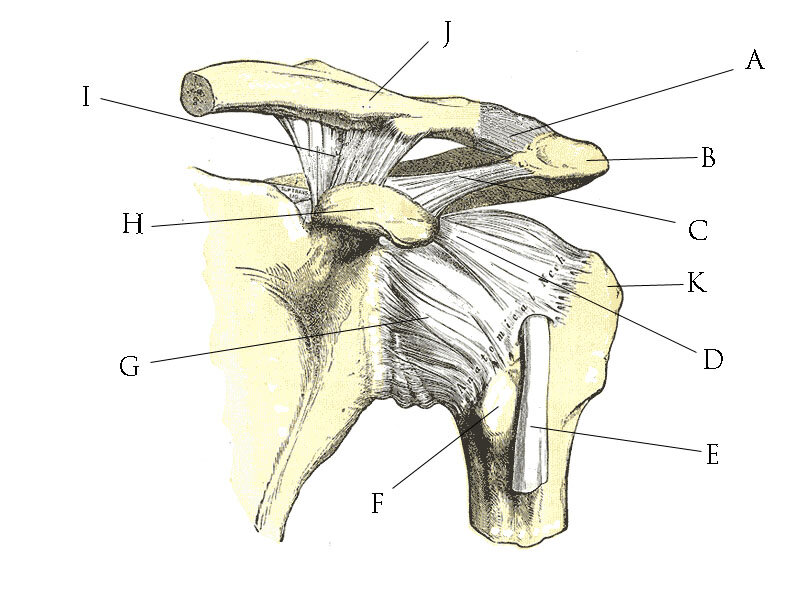
The humerus is the long bone of your upper arm. Its rounded top, known as the humeral head, fits into a socket in the scapula. This forms the main ball-and-socket joint of the shoulder, the glenohumeral joint.
The scapula, or shoulder blade, is a large, triangular bone that sits on the back of the ribcage. It has a shallow, pear-shaped socket called the glenoid fossa (or cavity), where the humeral head articulates. The scapula itself can slide and rotate on the back, which contributes significantly to the arm's overall range of motion.
Finally, the clavicle, or collarbone, acts as a strut connecting the scapula to the sternum (breastbone). It helps to hold the shoulder out to the side of the body.
Muscles That Move and Stabilize
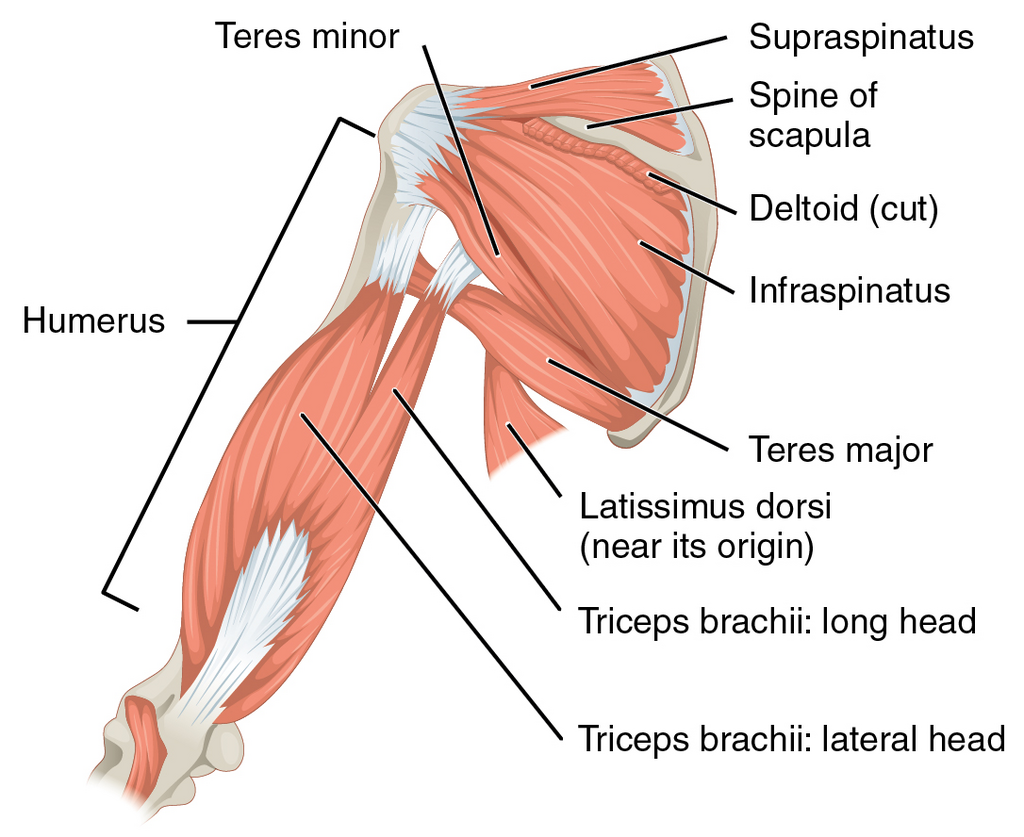
While larger muscles like the deltoid provide the power to lift the arm, a group of four smaller muscles and their tendons, known as the rotator cuff, is crucial for stability. These muscles originate on the scapula and their tendons wrap around the humeral head, holding it securely in the shallow glenoid socket.
The four rotator cuff muscles are:
- Supraspinatus: Helps to lift the arm out to the side (abduction).
- Infraspinatus: Primarily responsible for rotating the arm outward (external rotation).
- Teres Minor: Also assists with external rotation.
- Subscapularis: Located on the front of the scapula, this muscle rotates the arm inward (internal rotation).
Together, they act like a dynamic cuff that compresses the ball into the socket during movement, preventing it from sliding out of place.
The Supporting Connective Tissues
Bones and muscles alone aren't enough. The shoulder relies on a network of tough, fibrous tissues to hold everything together.
Ligaments are like strong ropes that connect bone to bone. The glenohumeral ligaments are a series of ligaments that reinforce the joint capsule, which is a soft tissue envelope that surrounds the shoulder joint. They are the primary source of static stability for the shoulder, preventing excessive movement.
Another key structure is the glenoid labrum. This is a ring of fibrocartilage attached to the rim of the glenoid socket. Think of it as a rubber gasket that deepens the socket, making it about 50% deeper. This added depth creates a better fit for the humeral head, enhancing stability and providing a suction effect that helps hold the joint in place.
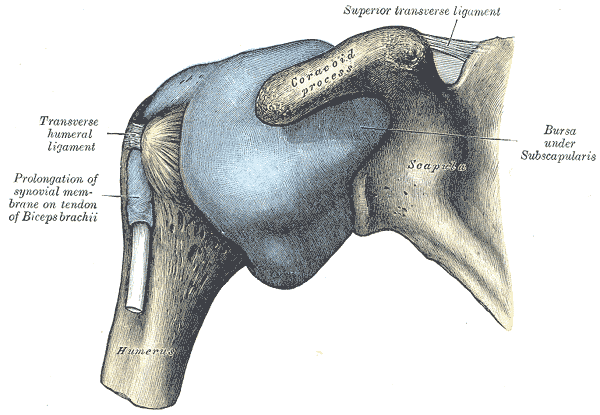
The shoulder's ball-and-socket design allows for an incredible range of motion, but this mobility makes it inherently less stable than other joints, like the hip. It's the most frequently dislocated major joint in the body for this reason.
Now, let's review the key anatomical terms we've discussed.
Ready to test your knowledge?
Which of the following bones is NOT considered part of the shoulder girdle?
A patient has difficulty rotating their arm outward (external rotation). Which two rotator cuff muscles are most likely affected?
Understanding this basic anatomy is the first step in learning about common shoulder injuries and how they are treated.