Understanding Religions
Introduction to Religious Studies
What Is Religion?
Defining religion is harder than it seems. There’s no single definition that satisfies everyone. Some scholars focus on the substance of religion—what it is. They might say it’s a belief in a god or supernatural beings. Others prefer a functional definition, focusing on what religion does. For them, religion might be a system that provides a moral compass, a sense of community, or answers to life's big questions.
What is a "religion"? Is it just a set of beliefs? Does it explain the world around us and why we're here? Is it more like a set of values that help us decide what is right and wrong? How many people have to believe something to make it a religion? Does a person's religion define who they are more than anything else?
Instead of a strict definition, it can be more helpful to look for a 'family resemblance' among different traditions. Most religions share a few common traits, even if they express them in vastly different ways.
Common characteristics of religions often include:
- Beliefs: A set of doctrines or a worldview about the nature of the universe and humanity's place in it.
- Rituals: Practices, ceremonies, or prayers that connect believers to their faith.
- Ethics: A moral code that guides behavior.
- Community: A group of people who share beliefs and practices.
Why Study Religion?
Understanding religion is crucial in our interconnected world. Religious ideas and practices have shaped history, art, politics, and culture for millennia. From holidays and laws to literature and music, the influence is everywhere. Studying religion isn't about deciding which one is 'right'; it's about understanding how different people make sense of their lives and the world around them.
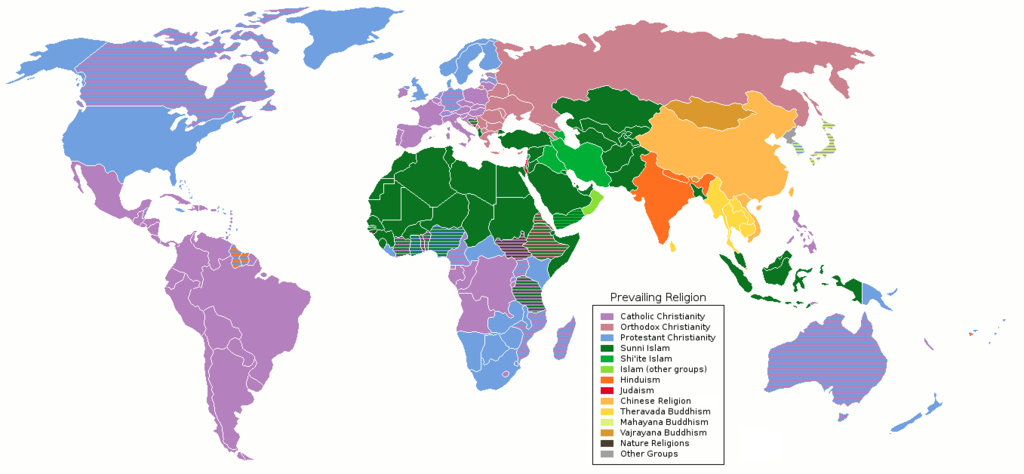
This understanding, often called religious literacy, helps us navigate cultural differences with more awareness and empathy. It provides context for global events and fosters a more nuanced view of societies different from our own. It equips you to engage in more informed conversations about the world.
A Glimpse at World Religions
There are thousands of religions practiced around the world. They are often grouped into broad categories to make them easier to study. One common approach is to group them by geographical origin or shared history.
| Category | Key Religions | Core Idea (Simplified) |
|---|---|---|
| Abrahamic Religions | Judaism, Christianity, Islam | Originated in the Middle East and trace their roots to Abraham. They are monotheistic, believing in one God. |
| Dharmic Religions | Hinduism, Buddhism, Sikhism, Jainism | Originated in the Indian subcontinent. They share concepts like dharma (duty, ethics), karma (action and consequence), and samsara (the cycle of rebirth). |
This is just one way to categorize belief systems, and there are countless other traditions, both ancient and modern, that fall outside these groups. Each one offers a unique window into the human experience.
Now that we have a basic framework, let's test your understanding of these foundational concepts.
A scholar who defines religion as 'a belief in supernatural beings' is using what type of definition?
What is the primary goal of developing 'religious literacy'?
This introduction lays the groundwork for exploring the rich and diverse world of religious traditions. By understanding the basic characteristics of religion and why its study is important, we can approach different faiths with curiosity and respect.