Understanding Religion
Defining Religion
What Is Religion?
The word "religion" seems simple enough, but finding a single definition that everyone agrees on is surprisingly difficult. The term itself comes from the Latin word religare, which means "to bind" or "to tie fast." This root suggests a connection, a binding of humans to something greater than themselves, whether it's a deity, a set of principles, or a community.
This idea of being "bound" can refer to the bond between people and the divine, as well as the shared commitments that unite a group of believers.
However, this etymology only scratches the surface. The challenge is that what one person considers a core part of their religion, another might see as culture, philosophy, or a way of life. Is it about belief in a god? Rituals? A moral code? The answer changes depending on who you ask and where you look.
Religion crosses so many different boundaries and because of this it is extremely difficult to define.
Two Scholarly Lenses
To bring some order to this complexity, scholars often use two main types of definitions: substantive and functional.
A substantive definition focuses on the content or substance of religion—what it is. This approach looks for a key element, like a belief in gods, spirits, or a supernatural realm, that is common across different faiths.
For example, the 19th-century anthropologist Edward Tylor offered a classic substantive definition: religion is simply the “belief in Spiritual Beings.” It's a straightforward approach, but it can be too narrow. Some belief systems, like certain forms of Buddhism, don't center on a god or supernatural beings, which might exclude them under this definition.
A functional definition, on the other hand, defines religion by what it does for people and societies. This approach isn't concerned with the specific beliefs, but with the role religion plays in human life.
The sociologist Émile Durkheim provided a famous functional definition. He described religion as a system of beliefs and practices that unites people into a single moral community. Here, the focus is on social cohesion, providing meaning, or easing anxiety about death. The weakness of this approach is that it can be too broad. A political ideology or even a devoted sports fanbase could fit a functional definition of religion, as they also unite people and provide meaning.
A Western Concept?
Another major challenge is that the very idea of “religion” as a distinct category, separate from other areas of life like politics, law, or family, is largely a Western concept. In many cultures, this separation doesn't exist.
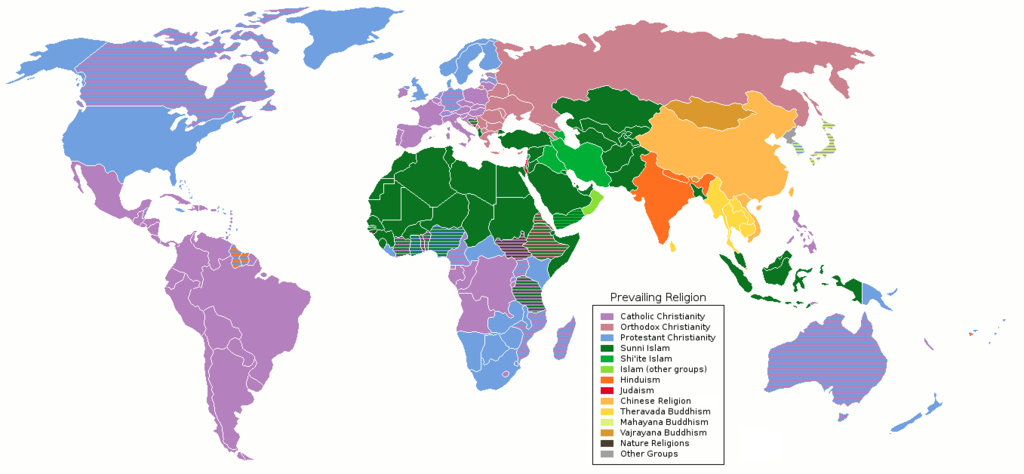
For many Indigenous peoples, for example, their spiritual beliefs are completely interwoven with their understanding of nature, their social customs, and their daily activities. There isn't a separate word for "religion" because it's not a separate thing—it's simply their way of life. The same can be said for aspects of Hinduism or Confucianism, where belief, philosophy, and cultural practice are deeply intertwined.
Ultimately, there is no perfect, one-size-fits-all definition. Trying to create one often tells us more about the person defining it than about religion itself. The best approach is to recognize religion as a complex and varied human phenomenon that can't be easily contained in a single box.
The word "religion" originates from the Latin word religare, which means...
A sociologist who defines religion as a system that unites people into a moral community is using what kind of definition?