Understanding Pulmonary Embolism
Circulatory System
The Body's Delivery Service
Think of your circulatory system as a vast and busy delivery network. It's a system of roads stretching to every corner of your body. The cargo isn't packages, but essential supplies like oxygen and nutrients. This network also handles cleanup, carrying away waste products like carbon dioxide.
There are three main parts to this system: the heart, the blood vessels, and the blood. The heart is the central pump, the blood vessels are the roadways, and the blood is the fleet of vehicles making the deliveries and pickups.
The essential components of the human cardiovascular system are the heart, blood, and blood vessels.
The Heart's Four Chambers
The heart is a powerful muscle that works tirelessly, pumping blood throughout your life. It's divided into four main sections, called chambers. There are two chambers on the top, the atria (singular: atrium), and two on the bottom, the ventricles. The right side of the heart works separately from the left side, creating two parallel pumps.
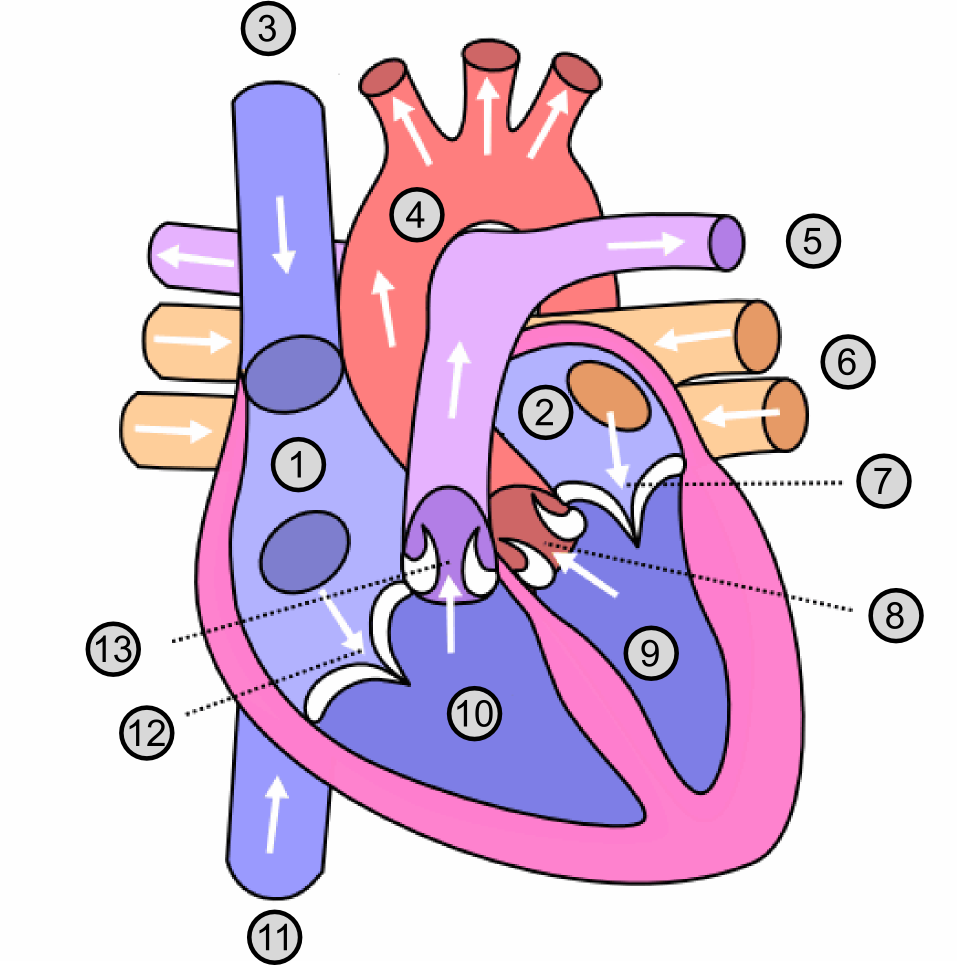
Here's how they work together:
- Right Atrium: This chamber receives oxygen-poor blood from the body.
- Right Ventricle: The right atrium squeezes blood into this more powerful chamber, which then pumps it to the lungs.
- Left Atrium: After picking up oxygen in the lungs, the blood returns to the heart, entering the left atrium.
- Left Ventricle: The left atrium pushes the oxygen-rich blood into the left ventricle, the strongest chamber of the heart. It pumps this fresh blood out to the rest of the body.
To keep blood moving in the right direction, the heart has valves. These are like one-way doors that open to let blood pass through and snap shut to prevent it from flowing backward. Each of the four chambers has a valve at its exit.
The Road Network
Blood vessels are the tubes that carry blood. If you laid them all out end-to-end, they would stretch for tens of thousands of miles. They come in three main types, each with a specific job.
Artery
noun
A muscular blood vessel that carries blood away from the heart to the rest of the body. Arteries handle high-pressure blood flow.
Arteries are the major highways. They carry oxygen-rich blood away from the heart (with one exception we'll see soon). They have thick, strong, muscular walls to withstand the high pressure from the heart's pumping action.
Veins are the return routes. They carry oxygen-poor blood back to the heart. The pressure in veins is much lower, so their walls are thinner. Many veins, especially in the limbs, have tiny valves to stop blood from flowing backward due to gravity.
Capillaries are the tiny, local streets. They are microscopic vessels that connect arteries and veins. Their walls are only one cell thick, which allows for the easy exchange of oxygen, nutrients, and waste products between the blood and the body's cells.
| Vessel Type | Direction of Flow | Wall Thickness | Pressure | Function |
|---|---|---|---|---|
| Artery | Away from heart | Thick & elastic | High | Transport blood to the body |
| Vein | Toward heart | Thin | Low | Return blood to the heart |
| Capillary | Connects arteries & veins | One cell thick | Very Low | Exchange of gases, nutrients, and waste |
Two Loops, One System
The circulatory system actually consists of two connected loops, or circuits, that both start and end at the heart. This is called a double circulation system.
The Pulmonary Circuit: This loop is all about gas exchange. The right ventricle pumps oxygen-poor blood to the lungs through the pulmonary artery (the one artery that carries deoxygenated blood). In the lungs, the blood drops off carbon dioxide and picks up a fresh supply of oxygen. The now oxygen-rich blood travels back to the left atrium through the pulmonary veins.
The Systemic Circuit: This loop supplies the rest of the body. The powerful left ventricle pumps the newly oxygenated blood into the aorta, the body's main artery. From there, it travels through a branching network of arteries and capillaries, delivering oxygen and nutrients to every cell. As it does, it picks up waste products. The now deoxygenated blood returns to the right atrium through the veins, and the entire process begins again.
Which chamber of the heart is the strongest and responsible for pumping oxygen-rich blood to the entire body?
What is the main function of capillaries?
This continuous, looping journey ensures that every part of your body gets what it needs to function while efficiently removing what it doesn't.