Understanding Probability Calculation
Probability Basics
What Are the Chances?
We constantly deal with uncertainty. Will it rain tomorrow? Will my favorite team win the championship? Will I catch the bus if I leave in five minutes? Probability is the branch of mathematics that gives us a way to measure and talk about this uncertainty.
It provides a framework for quantifying the likelihood of different outcomes. Instead of just saying something is "unlikely" or "probably going to happen," we can assign a specific number to it. This allows us to compare chances and make more informed decisions.
The Sample Space
Before we can calculate the chance of something happening, we need to know all the things that could happen. This complete set of all possible outcomes of an experiment is called the sample space.
Let's start with a simple experiment: flipping a coin. There are only two possible outcomes. The coin can land on heads or tails. So, the sample space, which we often denote with , is:
What about rolling a standard six-sided die? The possible outcomes are the numbers on its faces. The sample space is:
It's crucial to define the sample space correctly. Every calculation that follows depends on it.
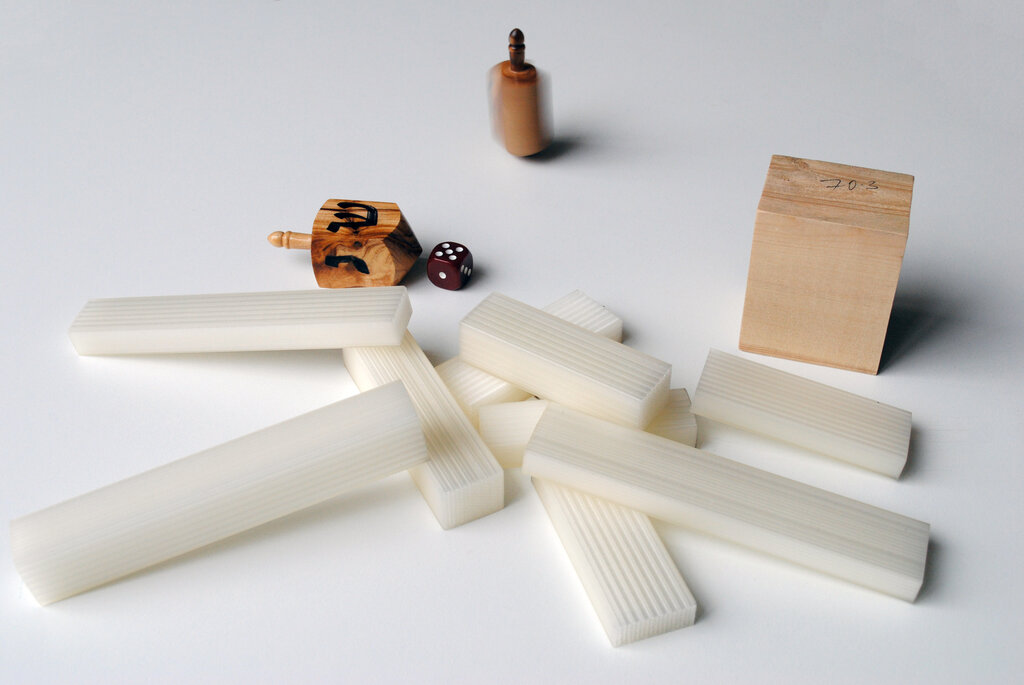
For more complex experiments, the sample space gets bigger. Imagine rolling two dice and adding their values together. What's the smallest possible sum? A 1 and a 1, which equals 2. What's the largest? A 6 and a 6, which equals 12. The sample space for the sum is all the integers from 2 to 12.
Events
Usually, we're not interested in every single outcome in the sample space. Instead, we care about a specific outcome or a group of outcomes. In probability, this is called an event.
An event is simply a subset of the sample space. It’s the particular result we're watching for.
Let's go back to rolling a single die. The sample space is .
- The event of "rolling a 3" is the set .
- The event of "rolling an even number" is the set .
- The event of "rolling a number greater than 4" is the set .
In each case, the event is just a selection of one or more outcomes from the total sample space.
Calculating Probability
Once we have the sample space and the event, we can calculate the event's probability. The most straightforward way is the classical definition, which works when all outcomes in the sample space are equally likely. A fair coin and a standard die are perfect examples of this.
The formula is simple.
Here, "favorable outcomes" are just the outcomes that make up our event.
Let's use this. What's the probability of rolling an even number on a fair die?
- The sample space is . The total number of outcomes is 6.
- The event of rolling an even number is . The number of favorable outcomes is 3.
So, the probability is:
This means there's a 1 in 2 chance, or a 50% chance, of rolling an even number. Let's try another. What's the probability of drawing an Ace from a standard 52-card deck?
- Total number of outcomes: 52 (since there are 52 cards).
- Number of favorable outcomes: 4 (since there are 4 Aces).
The probability is:
Probabilities are always expressed as a number between 0 and 1, inclusive. A probability of 0 means the event is impossible, while a probability of 1 means the event is certain to happen.
| Probability Value | Meaning | Example (with a six-sided die) |
|---|---|---|
| Impossible Event | The probability of rolling a 7. | |
| Possible Event | The probability of rolling a 5 is 1/6. | |
| Certain Event | The probability of rolling a number less than 10. |
Understanding these basic building blocks, sample spaces, events, and the probability formula, is the first step toward mastering the world of chance and data.