Understanding Price Elasticity of Demand
Introduction to Price Elasticity
What is Elasticity?
Imagine stretching a rubber band. Some bands are incredibly stretchy, while others are stiff and barely give. In economics, this idea of “stretchiness” is called elasticity. It measures how much one thing changes in response to a change in something else.
Specifically, we're often interested in how much the quantity of a product people want to buy changes when its price goes up or down. This is called the price elasticity of demand.
One critical concept in this realm is the price elasticity of demand, which measures how sensitive the quantity demanded is to a change in price.
It’s a powerful tool that helps us understand consumer behavior. For some products, a small price change can cause a huge shift in demand. For others, the price can swing wildly, and people will keep buying about the same amount. Elasticity gives us a precise way to measure this sensitivity.
Calculating Elasticity
To get a specific number for elasticity, we use a straightforward formula. It compares the percentage change in the quantity people demand to the percentage change in the price.
Let's break that down. First, you calculate the percentage change in quantity demanded:
Then, you do the same for the price:
Because the demand curve slopes downward (higher prices lead to lower demand), the price and quantity will always move in opposite directions. This means the result of the elasticity formula will technically be negative. However, economists usually drop the minus sign and just look at the absolute value to keep things simple.
For example, if a coffee shop raises the price of a latte from 💲3 to 💲3.30 (a 10% increase), and the number of lattes sold per day drops from 100 to 80 (a 20% decrease), the price elasticity is:
We drop the negative sign, so the elasticity is 2.
Interpreting the Numbers
The number you get from the formula tells you exactly how responsive demand is. We can sort these values into three main categories.
| Elasticity Value | Category | What It Means |
|---|---|---|
| Greater than 1 | Elastic | A change in price causes a larger percentage change in demand. |
| Less than 1 | Inelastic | A change in price causes a smaller percentage change in demand. |
| Exactly 1 | Unit Elastic | A change in price causes an exactly proportional change in demand. |
Elastic demand (E > 1) is common for goods with many substitutes. If the price of one brand of cereal goes up, people can easily switch to another. The demand is “stretchy” or highly sensitive to price.
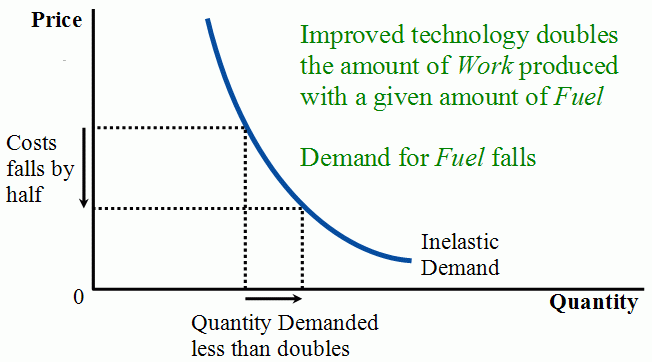
Inelastic demand (E < 1) applies to necessities with few or no substitutes. Think gasoline or essential medicine. Even if the price increases, people still need to buy them, so demand doesn't change much. It’s “stiff” and not very sensitive to price.
Unit elastic demand (E = 1) is a theoretical middle ground where the percentage change in quantity is the same as the percentage change in price. For example, a 10% price jump leads to a 10% drop in demand.
Why It Matters for Business
Understanding elasticity isn't just an academic exercise. It's crucial for making smart business decisions, especially about pricing.
How a price change will affect a company's total revenue—the total amount of money it brings in—depends entirely on the elasticity of its product.
If demand is inelastic, a price increase will raise total revenue. If demand is elastic, a price decrease will raise total revenue.
Think about it. If you sell a product with inelastic demand, like life-saving drugs, you can raise the price without losing many customers. The extra money you make per item more than makes up for the small drop in sales, so your total revenue goes up.
But if you sell a product with elastic demand, like a specific type of pizza, a price hike could be disastrous. Many customers would just go to a competitor. In this case, lowering the price might attract a flood of new customers, and the surge in sales could lead to higher total revenue, even though you're making less on each pizza.
Now let's check your understanding of these core ideas.
Price elasticity of demand is a measure of the:
If a product has elastic demand, how would a decrease in its price affect the company's total revenue?
Grasping price elasticity gives you a new lens through which to see the market, revealing why businesses make the pricing decisions they do.