Understanding Number Systems
Introduction to Number Systems
The Language of Numbers
A number system is simply a way of writing down numbers. Think of it as a language for quantities. We all know what five apples look like, but how we write the number "five" depends on the system we're using. These systems give us a consistent set of rules and symbols to represent any quantity imaginable, from the number of apps on your phone to the distance between galaxies.
At its core, a number system is a structured method for representing numbers using a specific set of symbols, or digits.
Every number system is built around a central idea: the base.
The Role of the Base
The base, also known as the radix, is the number of unique digits a system uses to represent numbers. The system we use in everyday life is base-10, because it uses ten digits: 0, 1, 2, 3, 4, 5, 6, 7, 8, and 9.
Base
noun
The number of unique digits or symbols used to represent numbers in a positional number system.
The base determines the 'counting cycle.' In a base-10 system, once we count past 9, we run out of single digits. To represent the next number, we add a new column to the left and start over at 0 in the first column. This is how we get from 9 to 10. A system with a different base would have a different number of digits and would 'roll over' at a different point.
Position is Everything
In most number systems, the position of a digit matters. A lot. This is called positional notation. The '7' in 700 means something entirely different from the '7' in 70. Its value depends on its place within the number.
Each position represents the system's base raised to a power, starting with a power of 0 on the far right. The total value of a number is the sum of each digit multiplied by its positional value. We can express this with a general formula.
This powerful idea allows us to represent incredibly large numbers using a small set of symbols. We just keep adding more positions to the left.
Why This Matters for Computers
While humans are comfortable with ten digits, computers are not. A computer's brain is made of billions of tiny electronic switches. Each switch can only be in one of two states: on or off. There's no in-between.
This two-state reality makes a base-2 system, which uses only two digits (0 and 1), the natural language for computers. Every piece of information in a computer, from this text to a complex video game, is ultimately stored and processed as a vast sequence of ons and offs, represented by 1s and 0s.
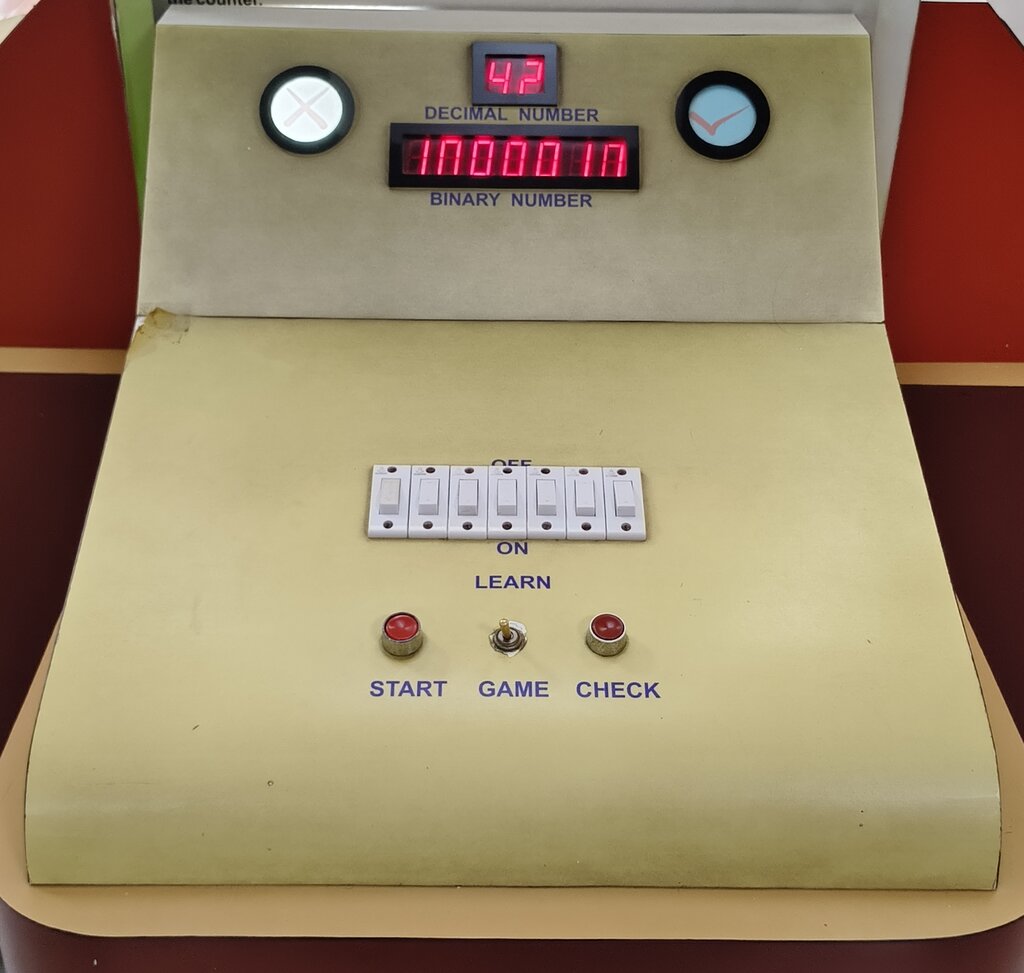
Understanding the concept of different number systems is the first step to understanding how computers fundamentally work. By learning how to translate between bases, we can bridge the gap between the human world of ten digits and the digital world of two.
What does the 'base' (or 'radix') of a number system define?
Why is the base-2 number system (binary) the natural language for computers?