Understanding Non-Binary Gender Identities
Understanding Gender Identity
Your Inner Sense of Self
Everyone has a gender identity. It’s your deep, internal feeling of whether you’re a man, a woman, or something else. Think of it as a core part of who you are, separate from what anyone else sees. It's not about your body parts or how you dress—it’s about how you feel and see yourself on the inside.
Gender identity refers to an internal sense of who we are that emerges from biological traits, developmental influences, and environmental conditions.
This internal feeling is distinct from two other related concepts: the sex you were assigned at birth and how you express your gender to the world. Let's break down these differences, because understanding them is key to understanding identity.
Sex, Identity, and Expression
It's common to hear the terms sex and gender used interchangeably, but they refer to different things. To get a clear picture, it helps to separate three distinct ideas:
- Biological Sex is a label, usually assigned at birth, based on physical characteristics like chromosomes, hormones, and anatomy. This is what's typically noted on a birth certificate.
- Gender Identity is your own, personal sense of your gender. It's who you know you are inside. This identity may or may not match the sex you were assigned at birth.
- Gender Expression is how you show your gender to the outside world. This can include your choice of clothing, your hairstyle, your mannerisms, and your name. It's the outward presentation of your identity.
For many people, these three aspects align. A person assigned female at birth who identifies as a woman is called cisgender. When a person's gender identity does not align with the sex they were assigned at birth, they are transgender. For example, someone assigned male at birth who knows themself to be a woman is a transgender woman.
These terms simply describe the relationship between one's assigned sex and one's internal identity. They aren't labels that define a person's entire experience.
cisgender
adjective
A term for people whose gender identity aligns with the sex they were assigned at birth.
A Spectrum, Not a Switch
Thinking of gender as a simple binary—man or woman—doesn't capture the full range of human experience. It's more accurate to see gender as a spectrum. Some people identify strongly as male or female, while others may feel they are somewhere in between, a combination of both, or neither.
This is why gender identity isn't a
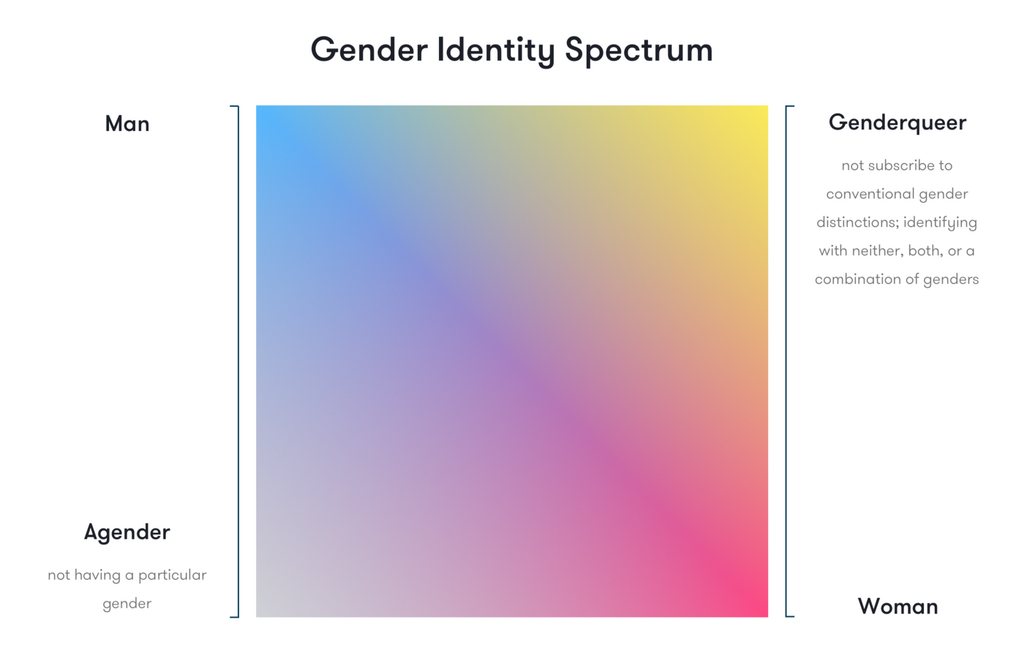
Furthermore, a person's understanding of their own gender identity can evolve over time. For some, their identity is stable throughout their life. For others, it can shift or become clearer as they grow and learn more about themselves. This potential for change is often referred to as gender fluidity.
Understanding that gender is an internal, personal experience is the first step. It's about respecting how individuals see themselves, regardless of how they may appear to the outside world.
What is the best definition of gender identity?
A person who was assigned female at birth and has a deep, internal sense of being a woman is described as __________.