Understanding Network Switches
Introduction to Network Switches
The Traffic Cops of Your Network
Think of all the devices in your home or office connected to the internet: computers, printers, smart TVs, game consoles. How do they all talk to each other without getting their signals crossed? A key player in this is the network switch.
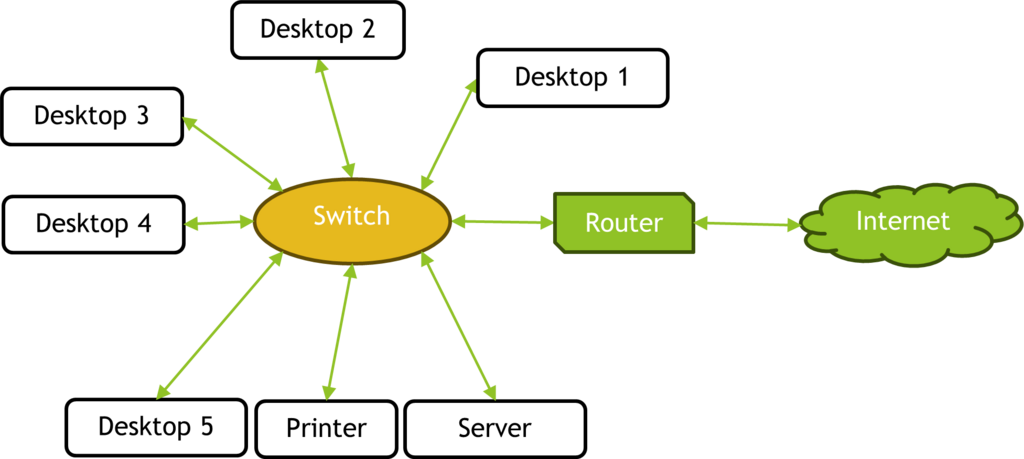
A network switch is a device that connects multiple devices together on a single computer network. It's the central point that allows your devices to share information and access shared resources like a printer or an internet connection.
But a switch is more than just a simple connector. Its main job is to intelligently manage the flow of data. When one device sends information to another, the switch receives the data packet and sends it only to the device it's intended for. It acts like a smart mail carrier for your local network, ensuring each letter gets to the right mailbox.
How Switches Work Smarter
To deliver data precisely, a switch uses something called a MAC address. Every network-capable device has a unique Media Access Control (MAC) address, like a permanent, physical mailing address. When a switch is first turned on, it learns the MAC address of every device connected to it and stores this information in a table.
When a data packet arrives, the switch checks the destination MAC address in the packet's header. It then looks up that address in its table and forwards the packet directly to the correct device through the corresponding port.
This targeted delivery is what makes switches so efficient. It creates a dedicated, temporary communication path between the sender and the receiver. This prevents unnecessary traffic from flooding the network and slowing things down for everyone else.
Switches vs. Hubs and Routers
It's easy to confuse switches with other networking hardware like hubs and routers, but they have very different jobs.
To solve this problem, each computer on a network is connected to a special tiny computer called a network switch (or switch for short).
A hub is an older, much simpler device. When a hub receives a data packet, it doesn't know where it's supposed to go. So, it just broadcasts the packet to every single device connected to it. It’s like a mail carrier shouting a message to the entire office, hoping the right person hears it. This creates a lot of noise and can lead to "collisions," where data packets crash into each other, forcing them to be resent. Switches solve this problem by creating direct lines of communication.
A router, on the other hand, has a different mission. While a switch connects devices within the same local network (a LAN), a router connects different networks together. Your home router is a perfect example: its job is to connect your entire local network (all your devices) to the global network (the internet).
Routers use IP addresses (like a street address for a whole building) to send data between networks, whereas switches use MAC addresses (like an apartment number within that building) to send data between devices on the same network.
| Device | Primary Function | Operates On | Analogy |
|---|---|---|---|
| Hub | Connects devices, broadcasts data to all | Same Network | Shouting in a room |
| Switch | Connects devices, sends data to specific recipient | Same Network | Mailroom sorting |
| Router | Connects different networks together | Different Networks | Postal service |
By directing traffic only where it needs to go, switches significantly reduce unnecessary data chatter on a network. This prevents data collisions, boosts overall speed, and makes the network much more efficient.
What is the primary function of a network switch?
A switch uses a device's __________ to direct traffic, while a router uses its __________.
Switches are fundamental building blocks for nearly every modern network, quietly and efficiently directing traffic to keep our digital lives running smoothly.