Understanding Neoliberalism
Introduction to Neoliberalism
What is Neoliberalism?
At its heart, neoliberalism is a philosophy about the best way to organize society. It champions the idea that individual freedom and economic prosperity are best achieved when markets are free and government's role is limited. Think of it as a specific recipe for running a country's economy.
neoliberalism
noun
A political and economic philosophy that emphasizes free markets, deregulation, privatization, and a reduction in government spending.
The core principles of this philosophy are straightforward. First, it advocates for free markets. This means letting supply and demand operate with as little interference as possible. Second is deregulation, which involves removing rules that proponents believe stifle business and innovation. Finally, it calls for minimal government intervention in the economy. The idea is that the government should act more like a referee, enforcing contracts and protecting property, rather than a player trying to control the outcome of the game.
The government should set the rules, not pick the winners and losers. The market, left to its own devices, will create the most efficient outcomes.
A Reaction to the Times
Neoliberalism didn't appear out of thin air. It grew as a response to the dominant economic ideas of the early-to-mid 20th century. Following the Great Depression, many governments embraced Keynesian economics, which argued for active government intervention, like increased spending and higher taxes, to manage economic downturns.
In the 1930s and 1940s, a group of thinkers began to push back. They saw the expansion of government control as a threat to individual liberty. They believed that central planning, even with good intentions, could lead down a dangerous path. For decades, their ideas remained on the fringes of economic and political thought.
The Architects of an Idea
Two figures are central to the development of neoliberal thought: Friedrich Hayek and Milton Friedman. They weren't collaborators, but their ideas built on one another and shaped the philosophy for generations.
Friedrich Hayek, an Austrian-British economist, was one of the earliest and most forceful critics of government planning. In his famous 1944 book, The Road to Serfdom, he argued that government control of the economy inevitably leads to the loss of personal freedom. He warned that socialism and other forms of collectivism were fundamentally incompatible with democracy.
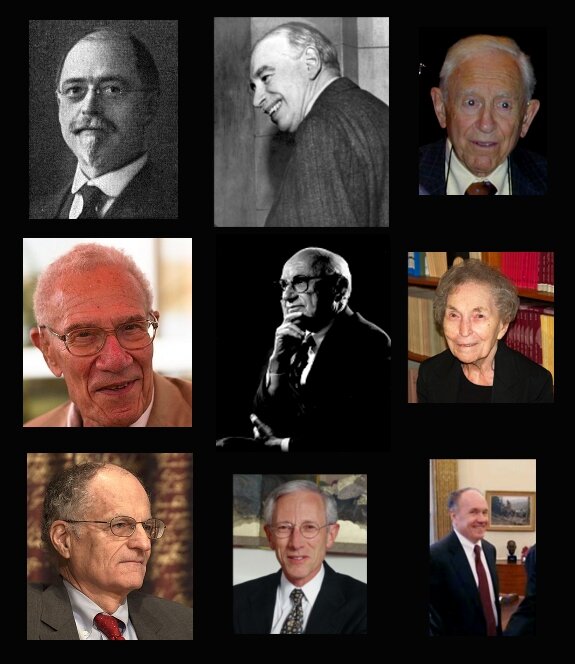
Later, the American economist Milton Friedman became the most prominent champion of these ideas. He brought neoliberal concepts to a much wider audience through his books, television appearances, and advisory roles to politicians. Friedman argued that the free market was not only the most efficient way to allocate resources but also a necessary condition for political freedom. He believed that most government programs, from public housing to price controls, caused more harm than good, despite their intentions.
Friedman's core message was that government's primary economic role should be to create a stable and predictable environment, then step back and let individuals and businesses compete freely.
Together, Hayek and Friedman laid the intellectual groundwork for a major shift in how people thought about the relationship between the government and the economy. Their arguments for free markets, deregulation, and minimal state intervention would eventually move from the academic world into the halls of power, reshaping policies across the globe.
Now, let's test your knowledge on these foundational concepts.
What is the central philosophy of neoliberalism regarding the organization of society?
According to the provided text, Milton Friedman was an economist who brought neoliberal ideas to a wider audience. What was one of his core arguments?
This introduction covers the basic definition, historical origins, and key thinkers behind neoliberalism. In the next section, we'll explore how these ideas were put into practice.