Understanding Maximum Dry Density in Soils
Soil Composition
What's in Your Soil?
Soil is much more than just dirt. It's a complex, living mixture that forms the foundation for much of life on Earth. At its most basic, soil is made of four main ingredients: minerals, organic matter, water, and air.
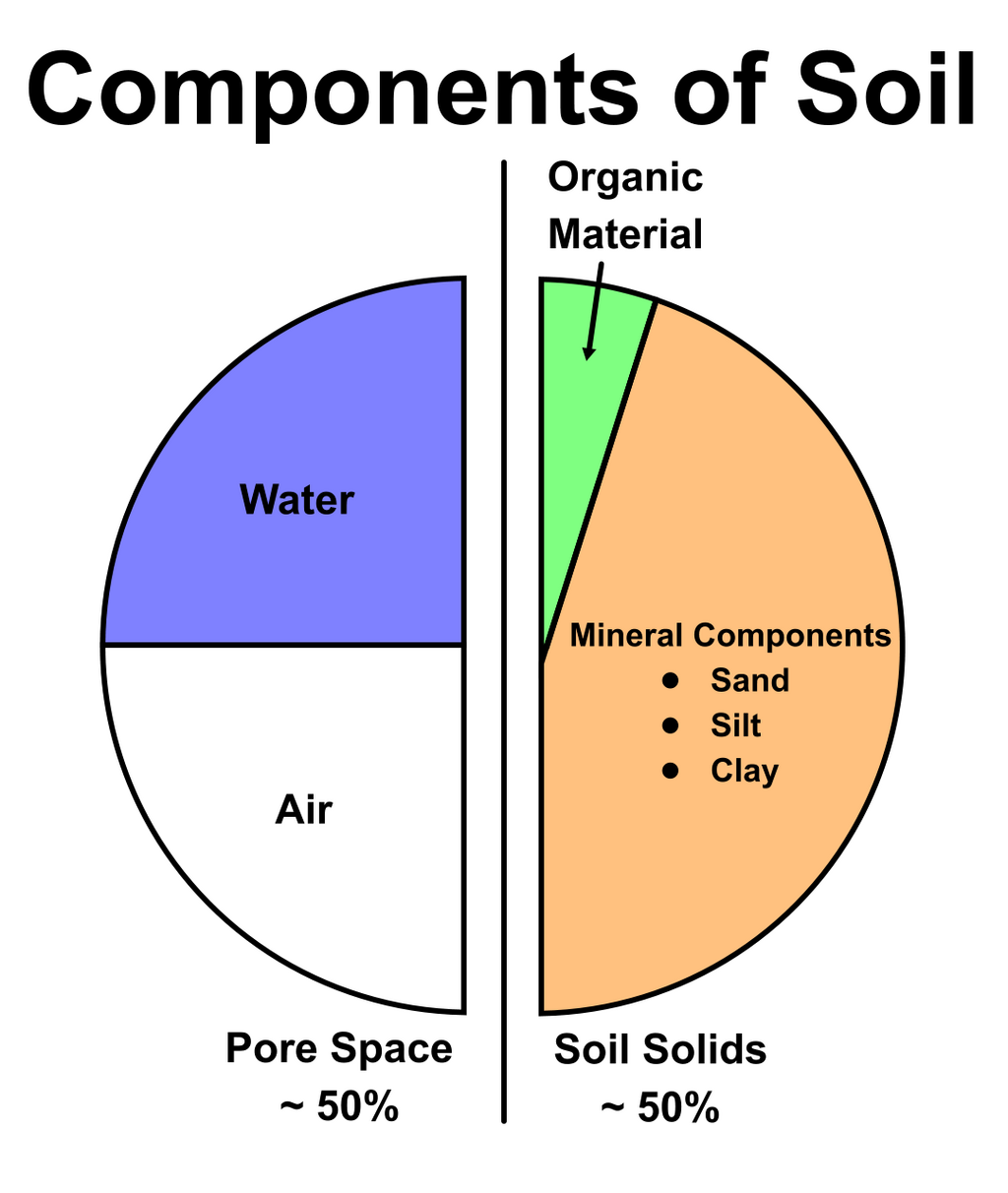
Think of a jar half-filled with marbles. The marbles are the solid parts of the soil. The empty spaces between them are just as important. In soil, these spaces, called pores, are filled with a constantly shifting balance of water and air. This simple combination is what makes soil work.
The Solid Stuff
The solid portion of soil is a mix of mineral particles and organic matter. The minerals are tiny pieces of weathered rock, and they make up the bulk of the soil's weight and volume.
These mineral particles come in three main sizes: sand, silt, and clay. Sand particles are the largest, feeling gritty to the touch. Silt particles are smaller and feel smooth, like flour. Clay particles are microscopic and feel sticky when wet. The relative amounts of these three particles determine the soil's texture.
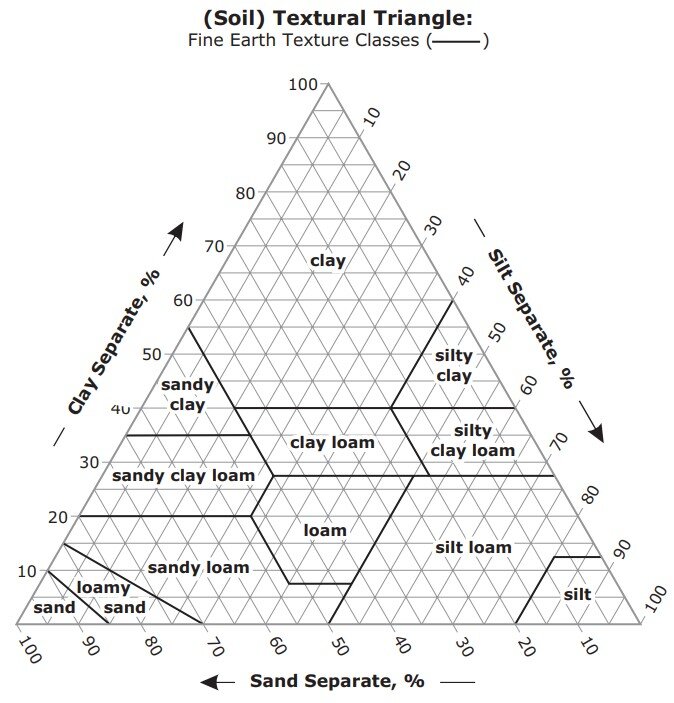
A soil with a good mix of all three, like a loam, is often ideal for agriculture because it balances water drainage and retention. A soil's texture is a fundamental property that influences nearly everything else, from how much water it can hold to how easily roots can grow.
| Particle | Size | Feel When Wet | Water Drainage |
|---|---|---|---|
| Sand | Large (gritty) | Doesn't stick | Very Fast |
| Silt | Medium (smooth) | Slightly sticky | Moderate |
| Clay | Small (sticky) | Very sticky | Very Slow |
The other solid component is organic matter. This is the living and decaying material in soil, like old leaves, dead roots, and countless microorganisms. Though it usually makes up only a small fraction of the soil's volume (around 5%), it plays a huge role.
Organic matter provides nutrients for plants, helps the soil hold onto water like a sponge, and acts as a glue, binding mineral particles together.
Humus
noun
The stable, dark, spongy component of soil organic matter that remains after most of the plant and animal residues have decomposed.
This binding action is what creates soil structure. Instead of being a loose collection of individual particles, healthy soil forms clumps or aggregates. A good structure creates a network of pores that are essential for air and water movement.
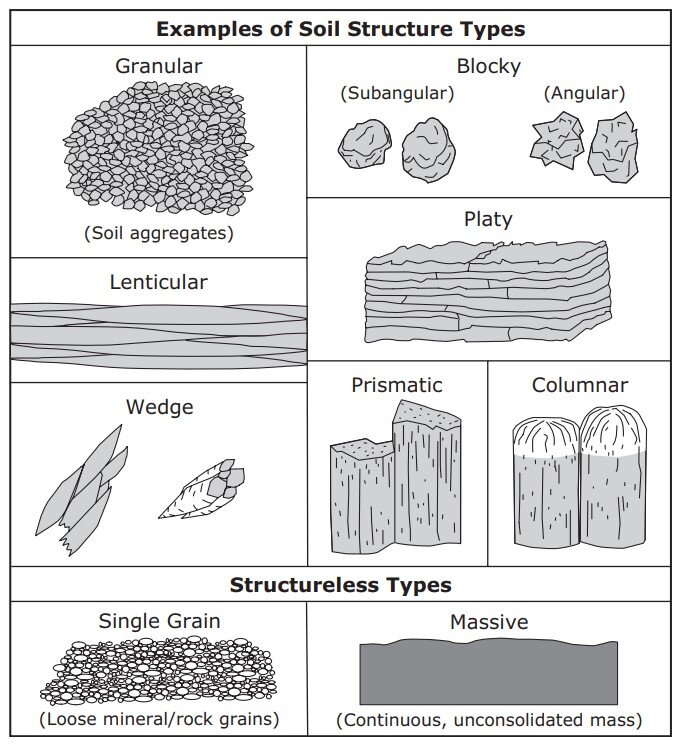
The Spaces in Between
The empty spaces between the solid particles are called pore spaces, and they are filled with water and air. The amount of pore space a soil has is its porosity. A soil with high porosity can hold more water and air.
Coarse, sandy soils have large pores but less total pore space overall. Fine-textured clay soils have tiny individual pores, but so many of them that their total porosity is much higher.
Porosity is about how much space there is. Permeability is about how connected that space is.
Permeability refers to how easily water and air can move through the soil. Sand, with its large, well-connected pores, has high permeability. Water drains through it quickly. Clay, despite its high porosity, has very low permeability because its tiny pores are not well connected, making it difficult for water to pass through.
Both plant roots and the billions of microbes living in the soil need oxygen from the air in these pores to survive. At the same time, they need the soil water, which is actually a nutrient-rich solution, to fuel their growth. A healthy soil maintains a delicate balance, providing enough water for life without letting the pores become so waterlogged that they suffocate.
Understanding these four components, minerals, organic matter, water, and air, is the first step in understanding soil mechanics. The relative proportions of each dictate the soil's texture, structure, porosity, and permeability, which in turn control how it behaves.