Understanding Mathematical Frequencies
Introduction to Frequency
What is Frequency?
Imagine tapping your foot to a song. The number of taps you make in a minute is a type of frequency. In math and science, frequency is a more precise concept: it measures how often a repeating event happens in a specific unit of time.
The standard unit for frequency is the hertz, abbreviated as Hz. One hertz is equal to one event, or cycle, per second.
If a wheel makes two full rotations every second, its frequency is 2 cycles per second, or 2 Hz.
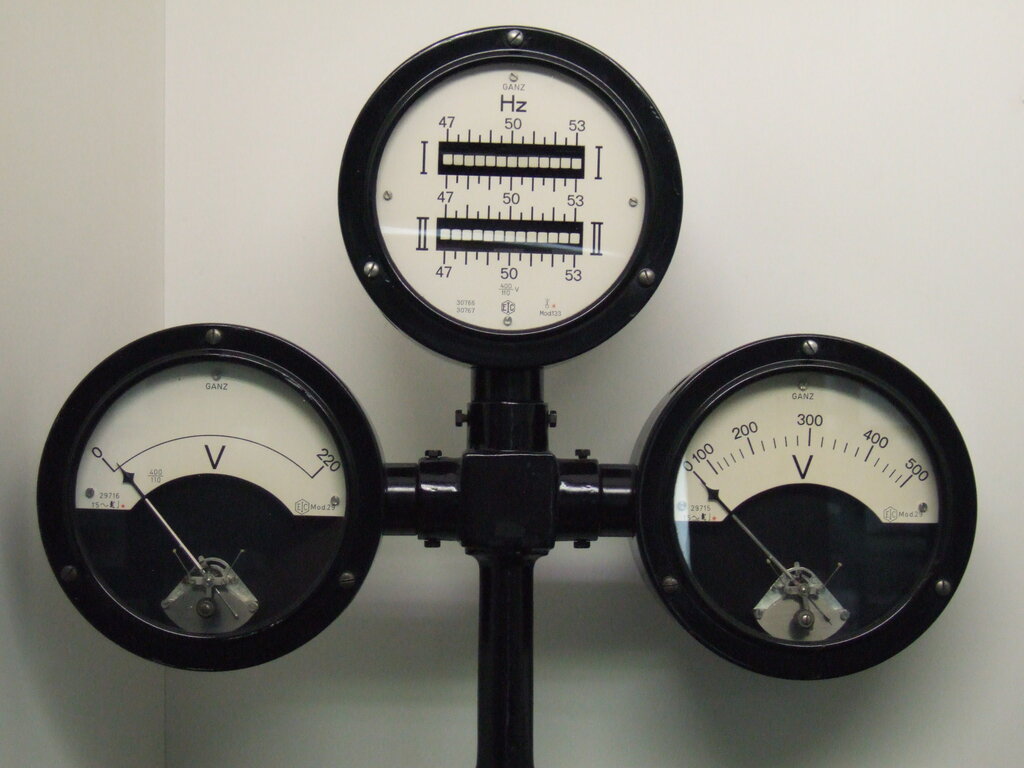
Frequency's Other Half
Closely related to frequency is the concept of a period. The period is the amount of time it takes to complete one full cycle of an event. If frequency tells us 'how often,' the period tells us 'how long' one cycle takes.
Frequency and period are inverses of each other. If you know one, you can always find the other. This inverse relationship is fundamental.
Here, stands for frequency and stands for period. Let's look at an example. A pendulum swings back and forth, completing a full cycle every 2 seconds. Its period, , is 2 seconds. What is its frequency?
The frequency of the pendulum is 0.5 Hz. This means it completes half a cycle every second.
Putting It Together
Let's try one more example. A computer's processor might be rated at 3 gigahertz (GHz). 'Giga' is a prefix meaning billion. So, the processor completes 3 billion cycles per second.
Frequency = 3,000,000,000 Hz
What is the period of one of these cycles? We use the same inverse relationship.
This gives us a period of about 0.00000000033 seconds, or 0.33 nanoseconds. That's incredibly fast, but the math is the same whether we're talking about a slow pendulum or a fast computer chip.
Ready to test your understanding?
What does the frequency of an event measure?
A clock's second hand completes a full circle every 60 seconds. What is the frequency of its rotation?
Understanding frequency and period is a key first step in exploring waves, oscillations, and many other areas of math and science.