Understanding Marxism
Introduction to Marxist Theory
The Thinkers Behind the Theory
Marxism is a way of understanding history, society, and economics developed by Karl Marx and his close collaborator, Friedrich Engels. In the mid-19th century, they looked at the world and saw a story of conflict, driven by the way we produce and organize the things we need to live.
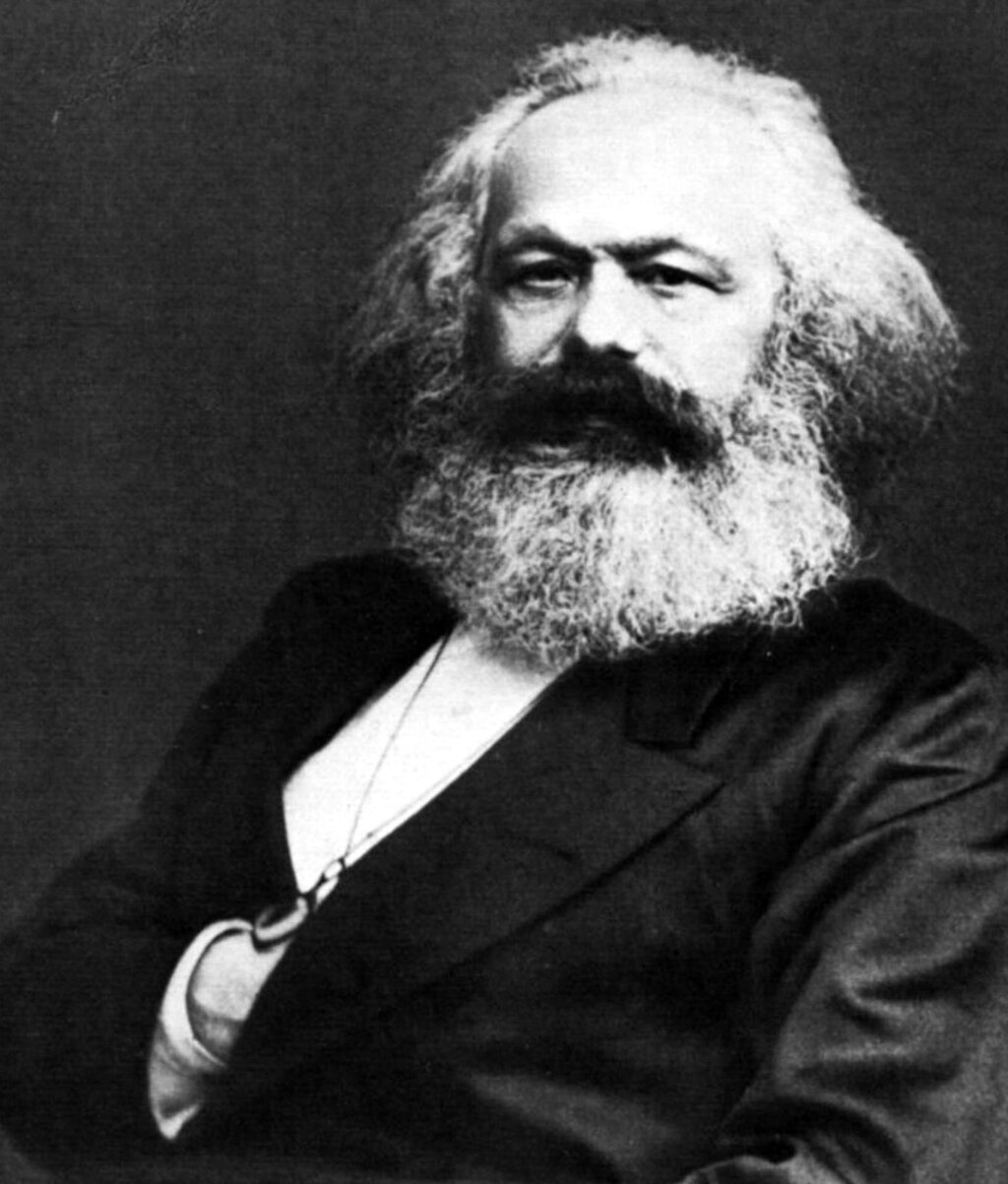
Their most famous work, The Communist Manifesto, published in 1848, laid out a radical new perspective. It wasn't just an academic exercise. They believed their analysis revealed the inner workings of society and could predict its future course. At its heart, Marxism offers a powerful critique of capitalism and a theory of social change.
The Engine of History
So, what drives history forward according to Marx? It's not great leaders, grand ideas, or divine will. Instead, it's the struggle between different social classes.
Marx believed all history could be understood as the history of class struggle.
A social class is a group of people who share a similar relationship to the “means of production”—the tools, factories, land, and resources needed to create goods. In a capitalist society, the two main classes are:
- The Bourgeoisie: The owners of the means of production. They own the factories, businesses, and land.
- The Proletariat: The workers. They own little more than their ability to work, which they sell to the bourgeoisie for a wage.
This relationship is inherently unequal. The interests of the owners (to maximize profit) are directly opposed to the interests of the workers (to earn a fair wage and have good working conditions). This ongoing conflict, or class struggle, is the engine that Marx believed powers historical change.
Base and Superstructure
This idea is part of a broader concept called historical materialism. Materialism here means that the material conditions of our lives—how we produce food, shelter, and goods—are the foundation of society. Everything else grows from this economic foundation.
Marxists often use the analogy of a building. The economic system is the base, and everything else—politics, law, culture, religion, art, and philosophy—is the superstructure. The shape of the base determines the shape of the superstructure.
In other words, a society built on a capitalist base will have laws that protect private property, political systems that favor the wealthy, and cultural values that encourage competition and consumerism. The superstructure works to justify and maintain the base.
Critiquing Capitalism
Marx didn't just describe capitalism; he offered a deep critique of it. He saw it as an economic system full of contradictions that would eventually lead to its own downfall. One central critique revolves around the idea of exploitation.
In a capitalist system, workers produce goods or services that have a certain value. However, they are only paid a wage that covers their basic needs, not the full value of what they create. The difference between the value a worker produces and the wage they receive is called surplus value. This surplus value is the source of the capitalist's profit.
For Marx, profit is essentially the unpaid labor of the working class.
This leads to another key concept: alienation. Marx argued that under capitalism, workers become disconnected from their own humanity. They are alienated in several ways:
- From their labor: Workers don't choose what to do or how to do it. Their work is a means to an end (a wage), not a fulfilling activity.
- From the product: They create things they don't own and have no control over.
- From each other: Capitalism forces workers to compete against one another for jobs.
- From their human potential: Instead of finding creative expression in their work, they feel drained and dehumanized by it.
For Marx, capitalism was a powerful system that created immense wealth, but it did so at a great human cost.
Now, let's test your understanding of these foundational ideas.
What is the primary engine of historical change, according to Karl Marx?
In Marxist theory, the tools, factories, and resources used to create goods are collectively known as the ________.
These core concepts—class struggle, historical materialism, exploitation, and alienation—are the building blocks of Marxist theory. They provide a framework for analyzing society that has remained influential and controversial for over 150 years.