Understanding Lymphatic Nodes
Introduction to the Lymphatic System
The Body's Other River
You know about your circulatory system, the network of arteries and veins that carries blood. But your body has another, less famous network of vessels running alongside it. This is the lymphatic system, a quiet partner that's essential for keeping you healthy.
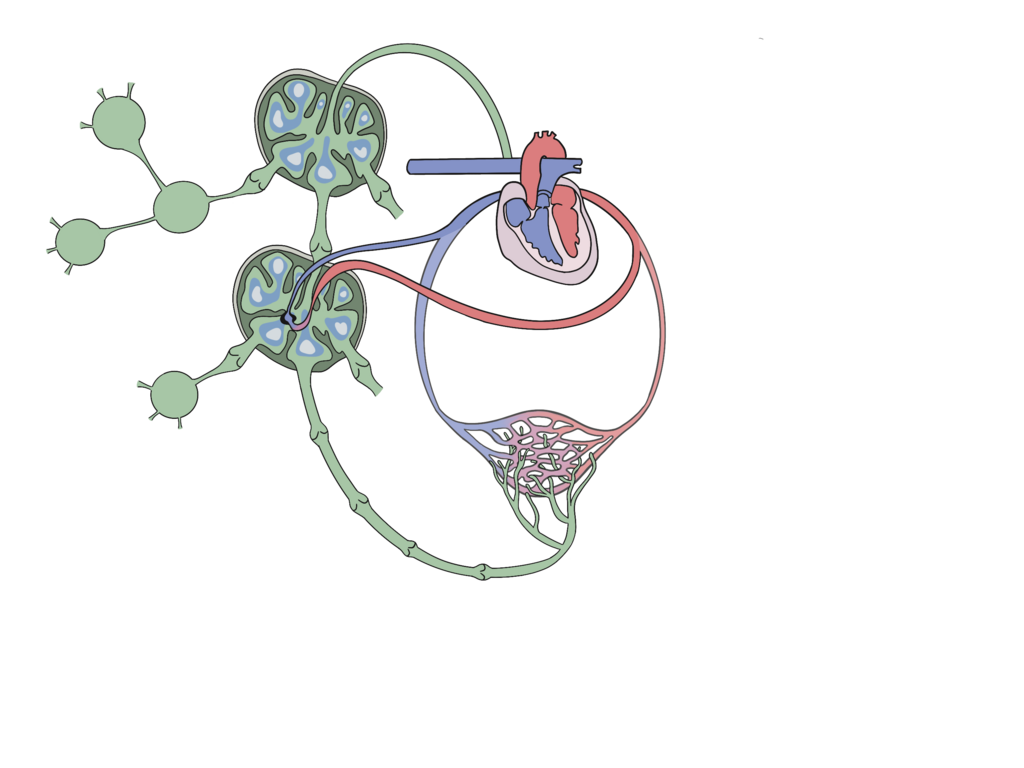
Instead of blood, this system carries a clear, watery fluid called lymph. It’s like a slow-moving river that collects waste, transports crucial molecules, and serves as a highway for your immune cells. Without it, your tissues would swell up, your body couldn't absorb certain nutrients, and your immune system would struggle to fight off invaders.
Lymph
noun
A colorless fluid containing white blood cells that bathes the tissues and drains through the lymphatic system into the bloodstream.
What the System Does
The lymphatic system has three main jobs. First, it maintains the body's fluid balance. As blood circulates, a small amount of plasma naturally leaks out of tiny blood vessels called capillaries into the surrounding tissues. This fluid, now called interstitial fluid, delivers oxygen and nutrients to your cells.
The lymphatic system collects this excess fluid and returns it to your bloodstream. Each day, it recycles about three liters of fluid—more than the amount of soda in a large bottle.
Second, it helps with nutrient absorption. In your small intestine, the lymphatic system picks up fats and fat-soluble vitamins that are too large to be absorbed directly into the blood capillaries. It then transports them into the bloodstream.
Finally, the lymphatic system is a cornerstone of your body's defense. It houses and transports white blood cells, called lymphocytes, which fight infection. It also filters lymph to trap and destroy bacteria, viruses, and other foreign particles.
The Key Players
The system is made of several parts working together.
Lymphatic vessels are the tubes that carry lymph. They begin as tiny, blind-ended capillaries in your body's tissues. These small vessels merge to form larger ones, eventually emptying their contents back into the bloodstream near the heart. They have one-way valves, much like veins, to keep the lymph from flowing backward.
Lymphoid organs are specialized tissues that produce, store, or process immune cells. They act as filters and command centers for your immune response.
The thymus, a small organ located in your chest just behind the breastbone, is where a critical type of lymphocyte called a T-cell matures. It's most active during childhood and gradually shrinks as you age.
The spleen, located in the upper left of your abdomen, is the largest lymphatic organ. It filters your blood, removing old red blood cells and fighting off blood-borne pathogens. It also serves as a reservoir for certain types of white blood cells.
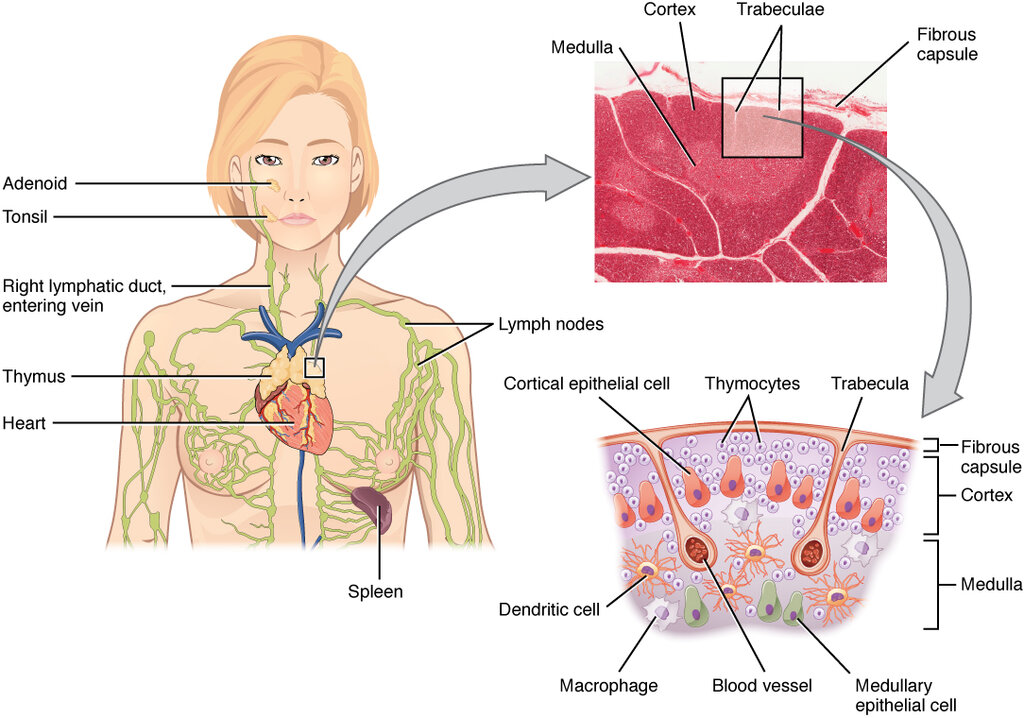
Other important lymphoid tissues include your tonsils and patches of tissue in your small intestine. Together, these components form a distributed, body-wide defense network that is constantly on guard.
What is the primary fluid transported by the lymphatic system?
Which of the following is NOT a main function of the lymphatic system?