Understanding Long COVID Treatments
Understanding Long COVID
When COVID-19 Lingers
For most people, a COVID-19 infection is a short-term illness. But for others, the health problems don't go away after a few weeks. Sometimes, new symptoms even appear. This condition is commonly known as Long COVID.
The more formal term you might hear from a doctor is PASC, which stands for Post-Acute Sequelae of SARS-CoV-2 infection. It’s a mouthful, but it simply describes health issues that linger or develop at least four weeks after the initial infection.
Sequelae
noun
A condition which is the consequence of a previous disease or injury.
These lingering effects aren't rare. Studies suggest a significant portion of people who get COVID-19, even those with mild initial cases, experience some form of Long COVID. It can affect anyone: young, old, healthy, or those with preexisting conditions.
Roughly 10% of participants met criteria for Long COVID three months post-infection, and 81% of those still reported symptoms a year later.
A Body-Wide Condition
Long COVID isn't a single ailment with a simple checklist of symptoms. It's a complex condition that can impact nearly every organ system in the body. The experience is different for everyone. One person might struggle with severe fatigue and shortness of breath, while another might have persistent headaches and difficulty concentrating, often called "brain fog."
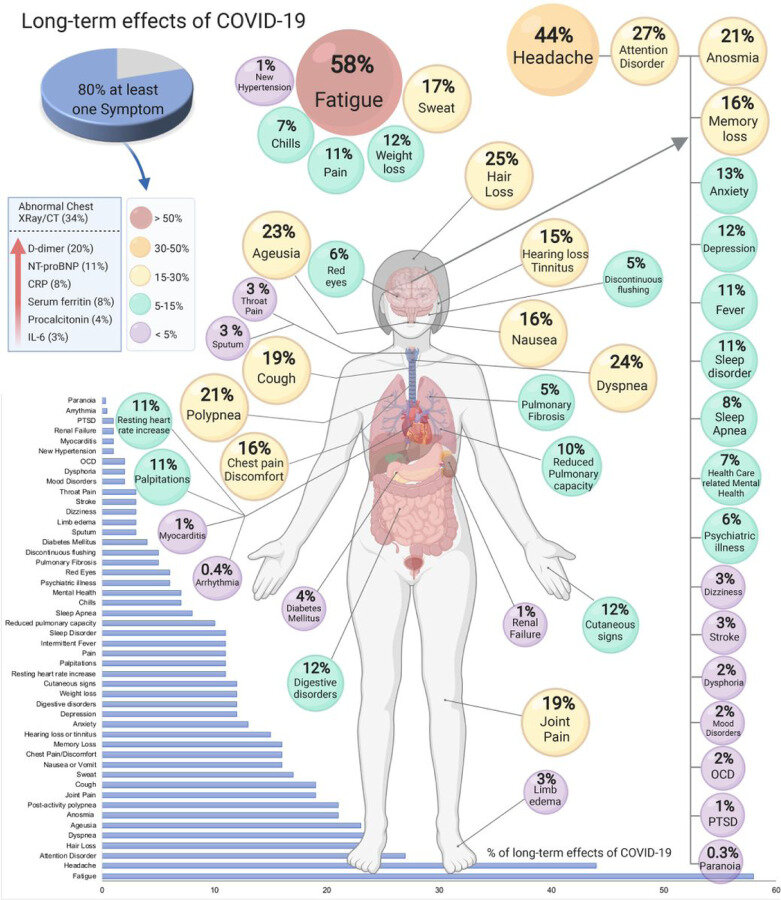
The symptoms can be relentless, or they can come and go. People often report a pattern of feeling better for a few days, only to have their symptoms flare up again after minor physical or mental exertion. This variability makes the condition unpredictable and difficult to manage.
Here's a breakdown of some common symptoms by the systems they affect:
| System | Common Symptoms |
|---|---|
| Neurological | Brain fog, headache, sleep problems, dizziness, changes in smell or taste, depression or anxiety |
| General | Fatigue, fever, post-exertional malaise (symptoms worsen after physical or mental effort) |
| Cardiovascular | Heart palpitations, chest pain |
| Respiratory | Shortness of breath, cough |
The Impact on Daily Life
The effects of Long COVID go far beyond physical symptoms. The persistent fatigue, pain, and cognitive challenges can be debilitating, making it difficult to work, attend school, or even perform simple daily tasks.
The unpredictability of symptoms can be especially frustrating. Planning social activities or professional commitments becomes a challenge when you don't know if you'll feel well enough to participate.
Imagine trying to read a book, but your brain can't seem to hold onto the words, or feeling as exhausted after walking to the mailbox as you once did after a long hike. This is the daily reality for many with Long COVID.
This ongoing struggle can take a heavy toll on mental health, leading to anxiety, depression, and social isolation. The journey is often a frustrating one, involving numerous doctor visits and tests as individuals seek answers and relief.
As we continue to learn more about this condition, recognizing its profound impact on quality of life is the first step toward better support and care for those affected.
What is the formal medical term for health issues that linger or develop at least four weeks after a COVID-19 infection?
According to studies, who is at risk of developing Long COVID?