Understanding Letterboxing in Film
Aspect Ratios
Shaping the Screen
An aspect ratio is simply the proportional relationship between an image's width and its height. It's written as two numbers separated by a colon, like 4:3 or 16:9. The first number refers to the width, and the second to the height.
Think of it like a recipe for a rectangle. A 4:3 ratio means for every 4 units of width, there are 3 units of height. A 16:9 ratio means for every 16 units of width, there are 9 units of height. This doesn't define the image's actual size, just its shape.
These numbers aren't arbitrary. Each one tells a different kind of story and has its own history.
From Boxy to Widescreen
Early cinema settled on a ratio of roughly 4:3, also known as the Academy Ratio (1.37:1). It was the standard for decades. When television arrived, it adopted the same boxy shape because it was what audiences were used to seeing.
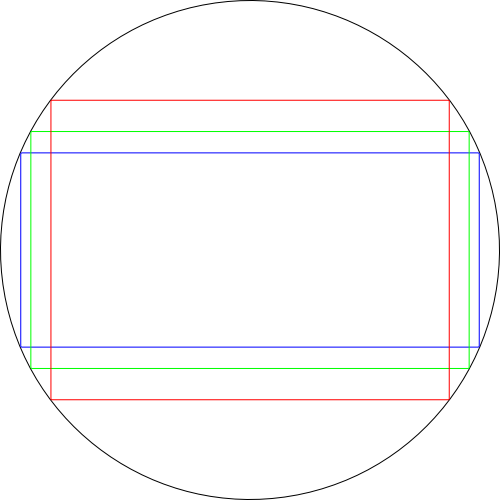
To compete, the film industry needed to offer something TV couldn't: a bigger, more immersive experience. This led to the birth of widescreen formats in the 1950s. Theaters started showing movies in wider ratios like 1.85:1 and the expansive 2.35:1, also known as CinemaScope. These formats made films feel more epic and grand.
Eventually, television followed suit. High-definition television (HDTV) adopted 16:9 as its standard, which is now the default for most TVs, computer monitors, and online video platforms.
How Ratios Shape a Story
The choice of aspect ratio is a powerful artistic tool that influences how a story is told. Different shapes create different feelings.
A 4:3 ratio feels contained and intimate. It's excellent for focusing on a single character or creating a sense of confinement. It frames faces beautifully, which is why it was popular in the golden age of Hollywood.
In contrast, a widescreen ratio like 2.35:1 is perfect for showcasing vast landscapes, sprawling cities, or large-scale action sequences. It gives a sense of freedom and can make the environment a character in itself. Directors use this wide frame to place multiple points of interest on screen at once, guiding the viewer's eye across the scene.
The 16:9 ratio strikes a balance. It's wide enough to feel modern and cinematic but not so wide that it feels unnatural for more personal stories. Its versatility is why it became the universal standard.
| Ratio | Also Known As | Common Use |
|---|---|---|
| 4:3 | 1.33:1 | Classic TV, older films |
| 16:9 | 1.78:1 | HDTV, YouTube, modern monitors |
| 1.85:1 | Flat | Common US widescreen film standard |
| 2.35:1 | CinemaScope | Epic, action, and sci-fi films |
Knowing these ratios helps you understand the director's intention. They chose that specific frame to make you feel a certain way, whether it's the intimacy of a close-up or the awe of a spectacular vista.
Design for three main aspect ratios: 16:9 for YouTube and presentations, 1:1 for social media feeds, and 9:16 for Stories and Reels.
Let's check your understanding of these core concepts.
What does the aspect ratio of an image describe?
In the aspect ratio 4:3, what does the number 4 represent?
Understanding aspect ratios is fundamental to appreciating the visual language of film and video.