Understanding Laser Eye Surgery Options
Eye Anatomy
Anatomy of Vision
To understand how laser surgery corrects vision, we first need to look at the eye itself. Think of your eye as a sophisticated camera. It gathers light, focuses it, and converts it into electrical signals that your brain interprets as images. This process starts at the very front of the eye.
Cornea
noun
The transparent, dome-shaped outer layer at the very front of the eye. It acts as the eye's main lens, responsible for most of its focusing power.
The cornea is where the magic begins. As light enters your eye, the cornea bends, or refracts, these light rays to start focusing them. Its smooth, curved surface provides about two-thirds of the eye's total optical power. Because it's the outermost layer and has a fixed shape, it's the perfect target for the precision of a laser.
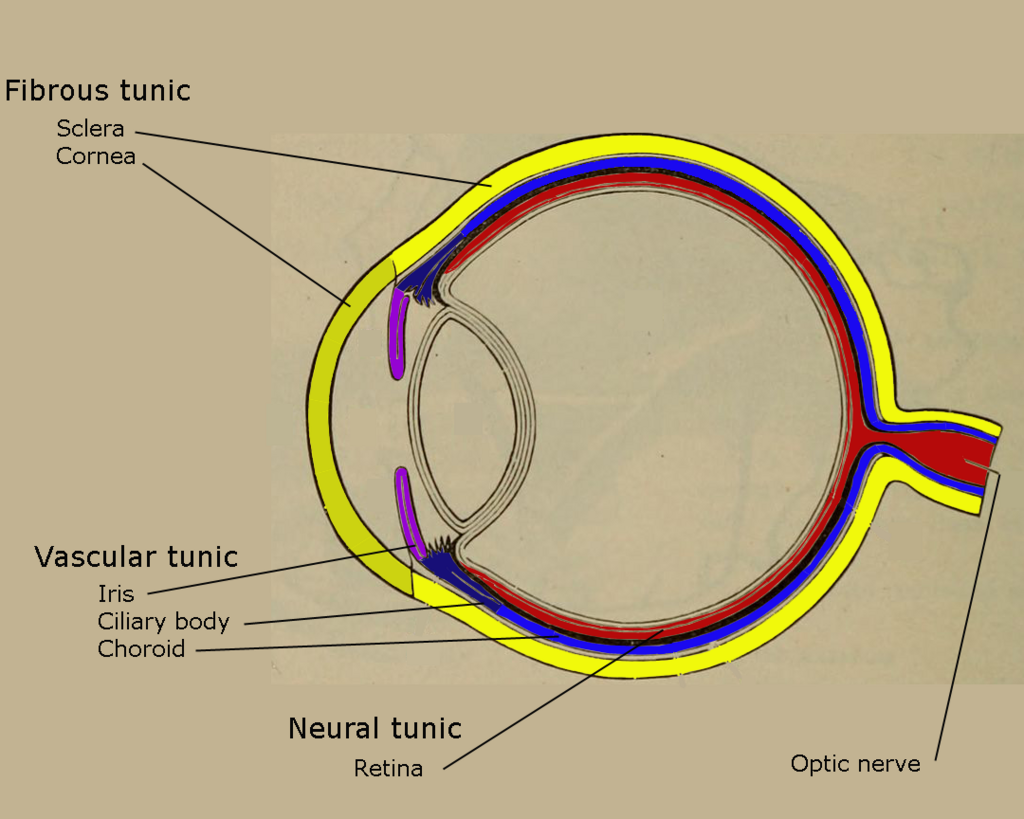
Behind the cornea and the iris sits the lens. While the cornea does the heavy lifting, the lens provides adjustable, fine-tuned focusing. It can change its shape to help you focus on objects at different distances, whether you're reading a book or looking at a distant mountain. It works in partnership with the cornea to direct light precisely onto the back of the eye.
The final destination for this focused light is the retina, a light-sensitive layer of tissue lining the back of the eyeball. The retina acts like the film in a camera, converting the light rays into neural signals. These signals are then sent to the brain through the optic nerve, where they're finally processed into the images we see.
When Focus Goes Wrong
Perfect vision, or emmetropia, happens when the cornea and lens focus light directly onto the retina. But small variations in the eye's shape can disrupt this perfect focus, leading to what are known as refractive errors.
Myopia (Nearsightedness): Objects up close appear clear, while distant objects are blurry. This occurs when the eyeball is slightly too long or the cornea is too curved. As a result, light focuses in front of the retina instead of on it.
With hyperopia, the opposite happens.
Hyperopia (Farsightedness): Distant objects may be clear, but close-up objects appear blurry. This happens when the eyeball is too short or the cornea is too flat. Light isn't bent enough, and the focal point falls behind the retina.
Another common issue isn't about the length of the eye, but the shape of the cornea.
Astigmatism: Vision is blurry or distorted at all distances. This is caused by an irregularly shaped cornea, more like a football than a perfect sphere. This imperfection causes light to focus on multiple points instead of just one, resulting in unclear vision.
Understanding these basic structures and common errors is the key to seeing how a procedure like LASIK can so effectively correct vision. By reshaping the cornea, the eye's primary lens, surgeons can change how light is refracted, ensuring it lands perfectly on the retina.