Understanding Large Language Models
Introduction to NLP
Teaching Computers to Read
Human language is messy. It's filled with slang, sarcasm, and nuance. We understand each other because we have a lifetime of context. But how do you teach a computer to understand what we mean when we say, "That's sick"? That’s the central challenge of Natural Language Processing, or NLP.
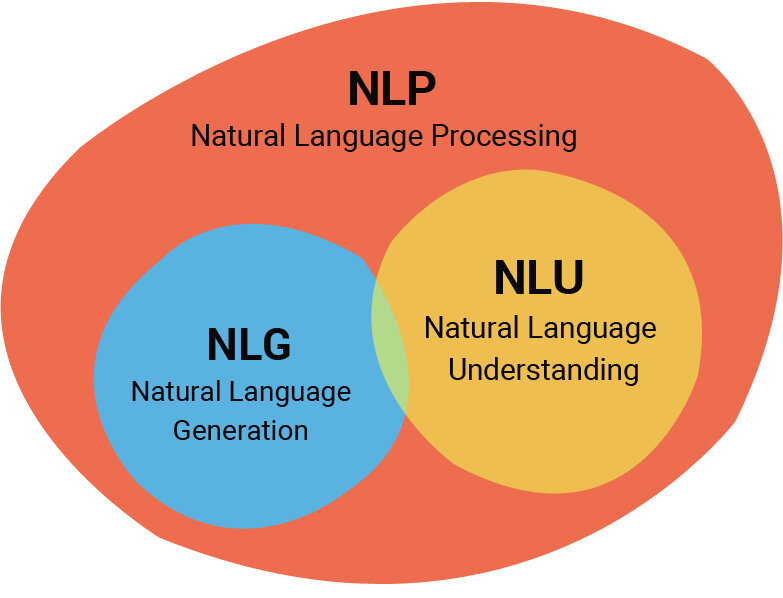
NLP is a field of artificial intelligence that gives computers the ability to understand, interpret, and generate human language, both text and speech. Think of it as a bridge between how humans communicate and how computers process information. Instead of you needing to learn a programming language to talk to a computer, NLP helps the computer learn your language.
A Brief History
The dream of talking to computers isn't new. In the 1950s, early NLP efforts were mostly rule-based. Researchers tried to hand-write a giant grammar book for the computer. If a sentence followed the rules, the computer could parse it. This was incredibly slow and brittle. A single new phrase or a bit of slang could break the entire system.
By the 1990s, the approach shifted. Instead of feeding computers rules, scientists started feeding them data. This was the rise of statistical NLP. By analyzing massive amounts of text, a computer could learn the probability that one word would follow another. This was a huge leap forward. It's how early machine translation and search engines started to feel more natural.
More recently, the field has been revolutionized by neural networks, which are loosely modeled on the human brain. These models can learn patterns from data in a much more sophisticated way, leading to the powerful AI we see today.
Core NLP in Action
NLP isn't just one thing; it's a collection of tasks that help machines make sense of language. Here are a few of the most common ones.
Text Classification
noun
The process of assigning a category or label to a piece of text.
Another key task is Named Entity Recognition (NER). This is about identifying key pieces of information in a text and classifying them. For example, in the sentence, "Apple announced its new iPhone in Cupertino last Tuesday," an NER system would identify "Apple" as an organization, "Cupertino" as a location, and "last Tuesday" as a date.
Finally, there's Machine Translation. This is what powers services like Google Translate. Early systems translated word-for-word, which often led to awkward or incorrect phrasing. Modern systems analyze the entire sentence to understand its context and grammar, producing much more fluid and accurate translations.
Each of these tasks helps turn messy, unstructured human language into organized, structured data that a computer can actually use.
The Hard Parts
Making sense of language is difficult because it's full of ambiguity. A single word can have multiple meanings depending on the context. If you say you're going to the "bank," do you mean a financial institution or the side of a river? Humans use context clues to figure this out instantly, but it's a huge hurdle for machines.
Sentence structure can be ambiguous, too. Consider the sentence: "I saw the man on the hill with a telescope." Did you use a telescope to see the man, or did the man on the hill have a telescope? The grammar is correct either way, but the meaning changes completely. This is a classic NLP challenge.

Then there's the sheer diversity of human language. There are over 7,000 languages in the world, each with its own grammar, syntax, idioms, and slang. Building an NLP system that works well for English is one thing; building one that works for every language is a monumental task.
Let's check your understanding of these fundamental concepts.
What is the primary goal of Natural Language Processing (NLP)?
How did the dominant approach to NLP shift from the early days (c. 1950s) to the 1990s?
Despite these challenges, NLP has made incredible strides. It powers the voice assistants on our phones, the auto-complete in our emails, and the chatbots we interact with online. Understanding these basics is the first step to seeing how more advanced models operate.