Understanding Large Language Models
Introduction to LLMs
What Are Large Language Models?
Large Language Models, or LLMs, are a type of artificial intelligence designed to understand and generate human-like text. Think of them as incredibly sophisticated versions of the autocomplete on your phone. While your phone might suggest the next word, an LLM can write an entire email, answer a complex question, or even create a story.
At their core, LLMs are pattern-recognition machines. They are trained on vast amounts of text from the internet, books, and other sources, allowing them to learn the relationships between words, sentences, and ideas.
Their significance lies in their versatility. Unlike older AI models that were built for a single purpose, like translating French to English, a single LLM can perform a wide range of tasks without needing to be retrained for each one. This flexibility has made them a foundational technology in modern AI.
A Quick Trip Through Time
The journey to today's LLMs wasn't overnight. Early approaches to natural language processing (NLP) relied on strict, hand-coded rules. For example, to understand a sentence, a program would need a grammarian to write rules for every possible sentence structure. This was brittle and couldn't handle the messy, unpredictable nature of human language.
Later, statistical models came along. These were better, as they learned patterns from data instead of relying on fixed rules. However, they were still limited. They often focused on specific tasks and required carefully prepared data.
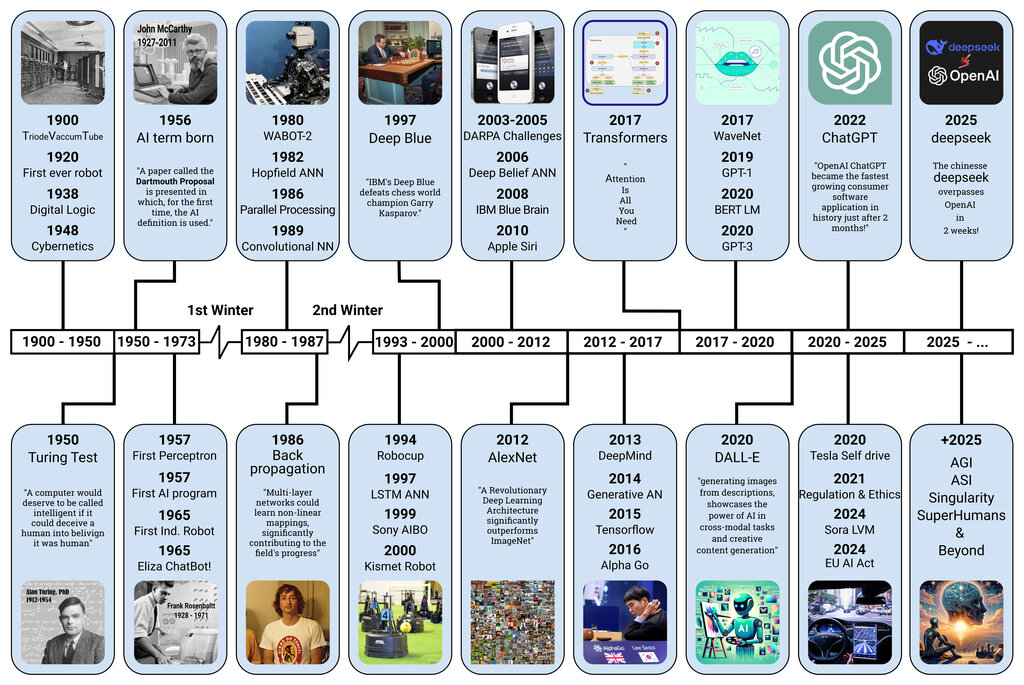
Over extensive research spanning decades, language modeling has progressed from initial statistical language models (SLMs) to the contemporary landscape of large language models (LLMs).
The real breakthrough came with the development of a new architecture called the Transformer, introduced in 2017. This design was much better at understanding the context of words in long sequences of text. By scaling up these Transformer models and training them on internet-sized datasets, researchers created the first true LLMs.
Meet the Heavyweights
When people talk about LLMs, a few key names often come up. The most famous are part of the Generative Pre-trained Transformer (GPT) series developed by OpenAI.
GPT-3, released in 2020, was a landmark model. Its ability to generate coherent, context-aware, and creative text for a huge variety of prompts was unlike anything seen before. It demonstrated that a single, massive model could achieve strong performance on many different NLP tasks, from summarization to code generation.

Following its success, OpenAI released even more powerful models, including GPT-4. Each new version is more capable, with a better grasp of nuance, logic, and reasoning. These models power popular applications like ChatGPT, which brought the capabilities of LLMs into the hands of millions.
The era of LLMs started with OpenAI GPT-3 model, and the popularity of LLMs is increasing exponentially after the introduction of models like ChatGPT and GPT4.
The Impact on AI
The rise of LLMs has had a profound impact on AI and technology. They have drastically changed how we build applications that involve language. Instead of creating a specialized model for each task, developers can now use a single, powerful LLM as a foundation.
This has accelerated progress in many areas. Customer service chatbots are now more conversational and helpful. Content creation tools can help draft articles, emails, and marketing copy. Programmers can get help writing and debugging code. LLMs are even being used in scientific research to analyze papers and sift through data.
| Application Area | How LLMs Are Used |
|---|---|
| Content Creation | Generating blog posts, social media updates, and creative writing. |
| Customer Support | Powering intelligent chatbots that can answer complex user questions. |
| Software Development | Assisting with writing code, finding bugs, and explaining code snippets. |
| Data Analysis | Summarizing long reports and identifying key trends in textual data. |
| Translation | Providing more natural and context-aware translations between languages. |
They represent a shift towards more general and capable AI systems, setting the stage for future innovations.
Which of the following best describes the primary advantage of modern Large Language Models (LLMs) over older AI models?
What architectural breakthrough, introduced in 2017, was crucial for the development of modern LLMs by improving how AI understands context in long sequences of text?
This introduction has covered the basics of what LLMs are, where they came from, and why they matter. They are a powerful tool that is reshaping our interaction with technology.