Understanding Large Language Models
Introduction to LLMs
What Are Large Language Models?
At its core, a Large Language Model, or LLM, is an AI program trained to understand and generate human language. Think of it as an incredibly advanced version of the autocomplete on your phone. While your phone might suggest the next word in a sentence, an LLM can write entire essays, compose emails, and even generate computer code.
A Large Language Model (LLM) is a type of artificial intelligence program designed to understand, generate, and work with human language.
These models are called "large" because they are trained on massive amounts of text data from the internet, books, and other sources. This vast training set allows them to learn the patterns, grammar, context, and nuances of language. By processing this information, they build a complex statistical understanding of how words and sentences fit together.
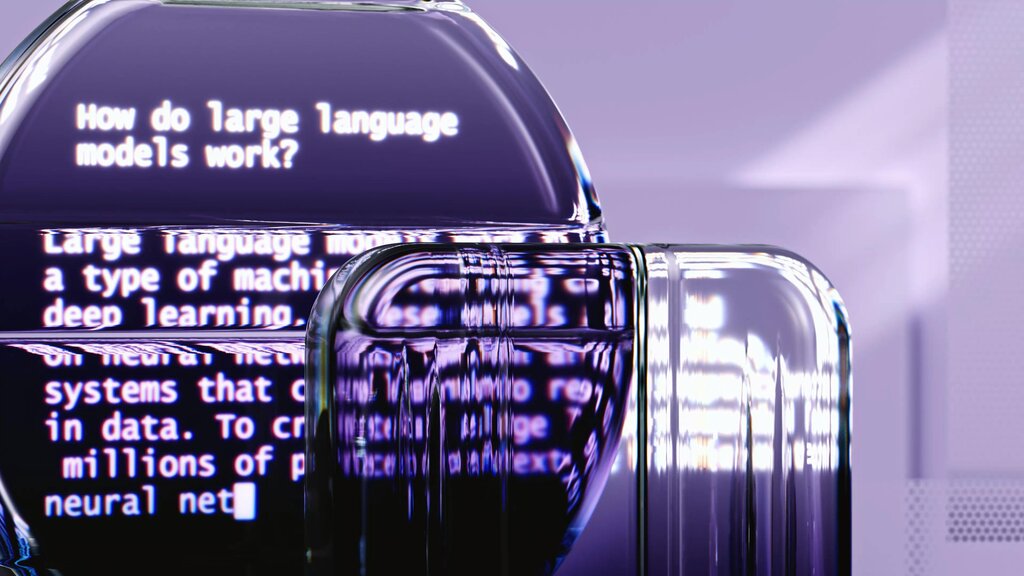
This ability makes them powerful tools for a huge range of applications, from search engines that give you direct answers to chatbots that can hold surprisingly natural conversations. They are changing how we interact with information and technology.
A Quick Trip Through Time
LLMs might seem like they appeared overnight, but they are the result of decades of research. Early language models were much simpler. For a long time, computers used a statistical approach called n-grams. An n-gram model would look at a sequence of n words to predict the next one. For example, a 2-gram (or bigram) model might see the phrase "thank you" and predict that "very" or "for" is likely to come next, simply because it has seen those patterns frequently in its training data.
These models were useful but had a major weakness: they had a very short memory. They couldn't understand the broader context of a paragraph or an entire document. The meaning of a sentence often depends on what was said several sentences before, and n-gram models just couldn't keep track of that.
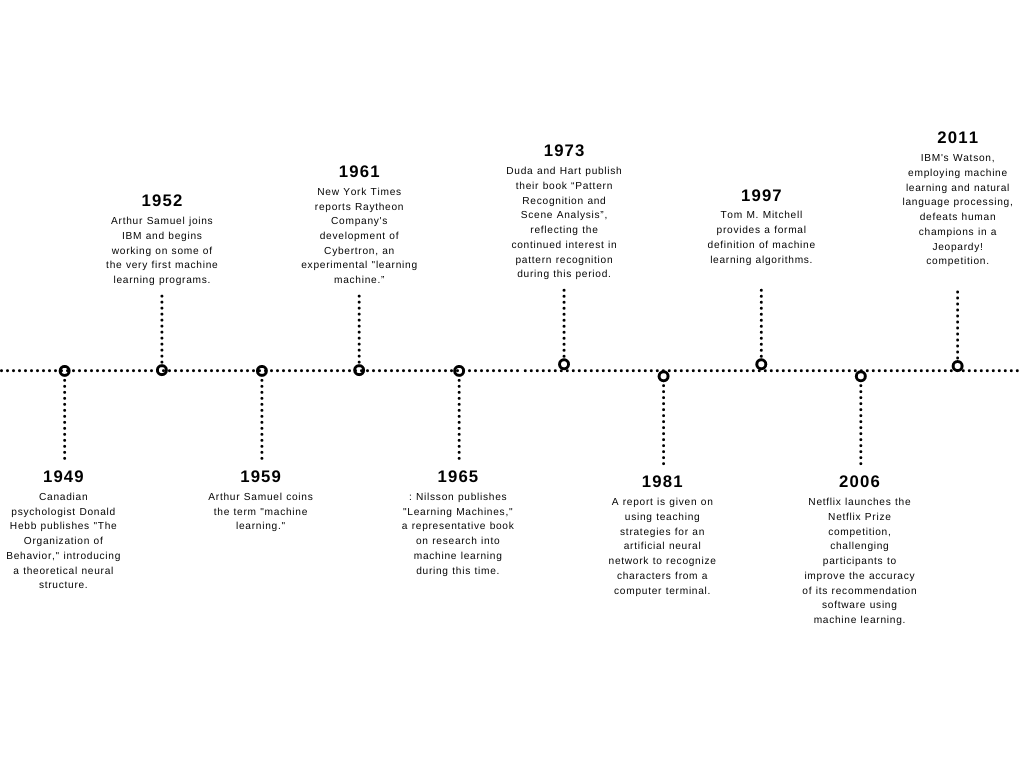
Later, neural networks offered an improvement. They could capture more complex relationships between words. However, they also struggled with long-term dependencies, the way words at the beginning of a long sentence can influence words at the end. The real breakthrough came with new architectures capable of handling context across much longer stretches of text, which paved the way for the powerful LLMs we see today.
The Building Blocks of Language
To work with language, computers need to turn words into numbers. This process involves a few key concepts from the field of Natural Language Processing (NLP).
Tokenization
noun
The process of breaking down a piece of text into smaller units, such as words, sub-words, or characters.
Imagine the sentence: "LLMs are powerful." Through tokenization, a model might break this down into three pieces, or tokens: ["LLMs", "are", "powerful"]. Each token is then assigned a unique number. This is the first step in converting human language into a format a machine can understand.
But a simple number isn't enough. The model needs to understand that "king" is related to "queen" in a way that it isn't related to "car." This is where embeddings come in.
A word embedding is a way of representing a token as a list of numbers, called a vector. This isn't just a random list; it's a coordinate in a high-dimensional space. In this space, words with similar meanings are located close to each other. For example, the vectors for "happy" and "joyful" would be near one another, while the vector for "sad" would be further away.
This clever representation allows the model to capture semantic relationships. The relationship between "man" and "woman" might be represented by the same vector that describes the relationship between "king" and "queen." By turning words into these meaningful numerical representations, LLMs can perform mathematical operations on them to reason about language.
With these foundational concepts in place, we can begin to see how an LLM starts to make sense of the complex world of human language. Tokenization breaks text down into manageable parts, and embeddings give those parts meaning and context.
What is the primary function of a Large Language Model (LLM)?
According to the text, what was a major limitation of older n-gram models?
These core ideas—training on vast datasets, learning from context, and representing words as meaningful numbers—are the foundation upon which Large Language Models are built.