Understanding Karl Marx
Karl Marx's Life
The Making of a Revolutionary
Karl Marx was born in 1818 in Trier, a city in what was then the Kingdom of Prussia. His father, a successful lawyer, provided the family with a comfortable, middle-class life. Young Marx was an able student, and his father initially encouraged him to study law. He enrolled at the University of Bonn and later the more prestigious University of Berlin.
In Berlin, Marx's interests shifted decisively from law to philosophy. He became captivated by the ideas of Georg Wilhelm Friedrich Hegel, a towering figure in German philosophy who had taught at the university until his death in 1831. Marx fell in with a group of radical thinkers known as the Young Hegelians, who used Hegel's ideas to critique religion, politics, and society.
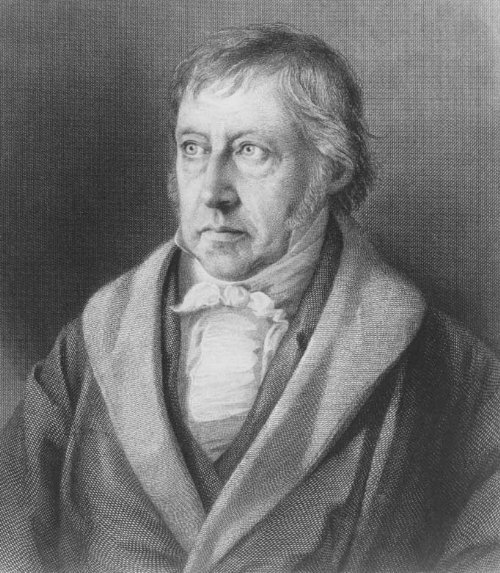
The Philosopher's Shadow
Hegel's philosophy is complex, but one of its core concepts is the dialectic. He saw history as a process of change driven by the conflict of opposing ideas. A prevailing idea (a thesis) would be challenged by its opposite (an antithesis), and their struggle would resolve into a new, more complex idea (a synthesis). This new synthesis would then become the new thesis, and the process would repeat, driving history forward.
Thesis vs. Antithesis → Synthesis
The Young Hegelians, including Marx, embraced this dialectical method. However, Marx soon broke with them on a crucial point. While Hegel saw this process unfolding in the realm of ideas and spirit, Marx began to believe that the real driving force of history was not abstract ideas, but the material, economic conditions of life. He famously "turned Hegel on his head," applying the dialectical method to the real-world struggles between social classes.
Dialectic
noun
A method of argument for resolving disagreement that has been central to European philosophy since antiquity. For Hegel, it was the process by which ideas and history evolve through conflict between a thesis and an antithesis, resulting in a synthesis.
A Fateful Friendship
After completing his doctorate, Marx's radical journalism made him a political exile. He moved to Paris in 1843, a hub of socialist thought. It was there, in 1844, that he reconnected with Friedrich Engels, the son of a wealthy German textile manufacturer. This meeting marked the beginning of one of history's most important intellectual partnerships.
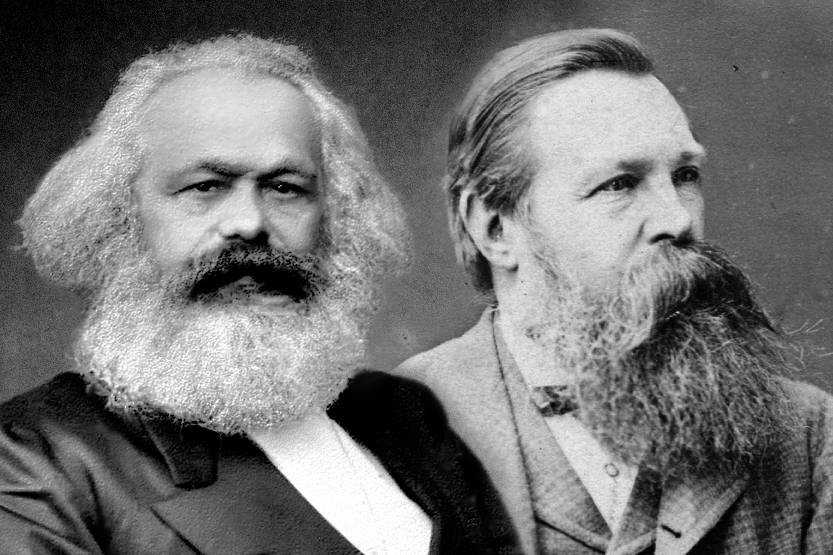
Engels brought a crucial perspective to their collaboration. While Marx was steeped in philosophy, Engels had firsthand experience with the brutal realities of industrial capitalism. His family owned a factory in Manchester, England, and he had documented the appalling conditions of the working class in his book, The Condition of the Working Class in England. Engels' practical insights and, often, his financial support, were indispensable to Marx's work for the rest of his life.
The Engine of Change
The backdrop for Marx and Engels' work was the Industrial Revolution. This period saw a massive shift from agrarian, rural societies to industrial, urban ones. New technologies like the steam engine and power loom created factories that could produce goods on an unprecedented scale. This revolution created immense wealth, but it also created a new social class: the urban industrial working class, or the proletariat.
Marx witnessed the conditions of this new class. People, including children, worked long hours in dangerous factories for low wages. They lived in crowded, unsanitary slums. He saw a society starkly divided between the bourgeoisie, the factory owners and capitalists who controlled the means of production, and the proletariat, who had nothing to sell but their own labor.
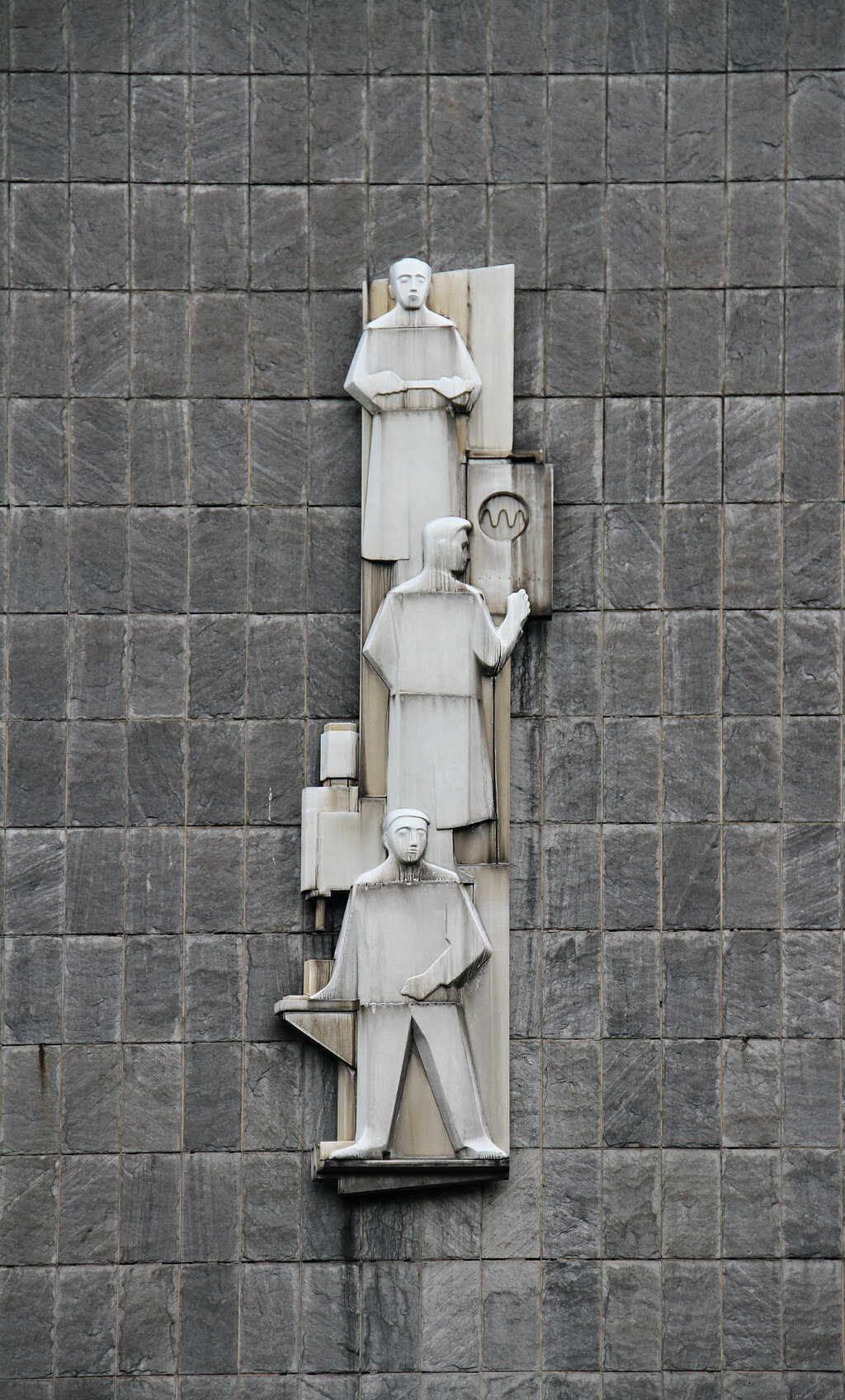
This direct observation of social upheaval was the final, crucial element in forming Marx's thought. His Hegelian training gave him a theory of historical change, his partnership with Engels provided practical grounding, and the Industrial Revolution gave him his central subject: the conflict between capital and labor that he believed would define the modern world.