Understanding Kaal
Introduction to Hindu Cosmology
The Cosmic Dance
Many traditions view time as a straight line with a distinct beginning and end. Hindu cosmology, however, sees the universe in a different light. It imagines the cosmos not as a one-time event, but as a living entity that is born, flourishes, eventually dissolves, and is then reborn. This endless rhythm is a fundamental concept for understanding the Hindu worldview.
At the heart of this perspective is the concept of kaal, or time. But it’s not the time you see ticking on a clock. In this view, time is a powerful force, an aspect of the divine that governs the great cosmic cycles of creation, maintenance, and dissolution.
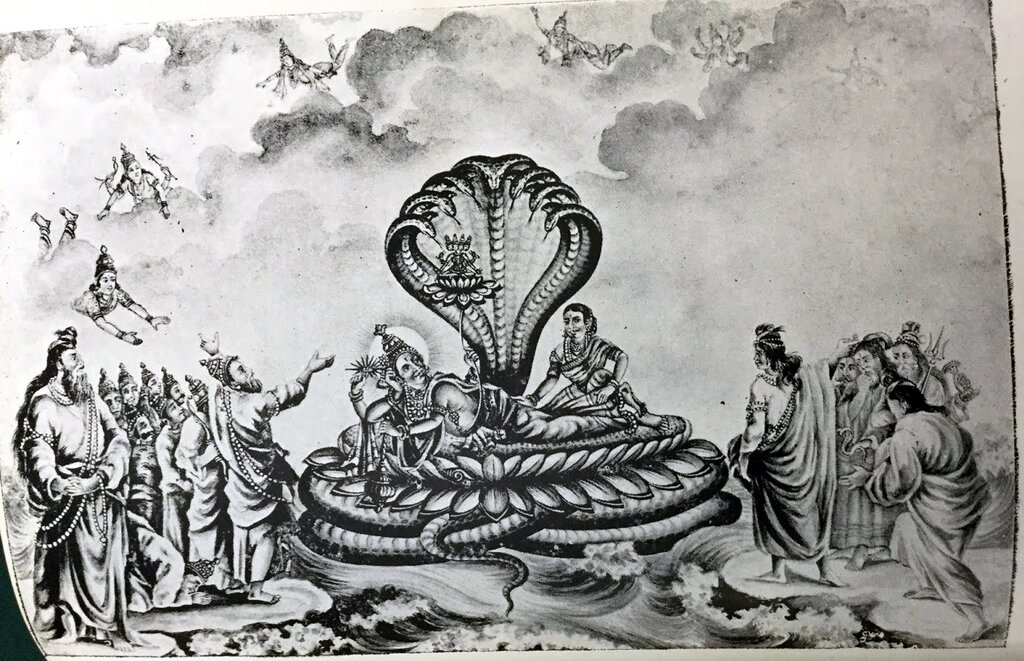
This vast, cyclical process isn't random. It is guided by three principal divine forces, often represented by the deities Brahma, Vishnu, and Shiva. Together, they form a trinity that oversees the entire life of the universe.
The Architects of the Universe
Each of these deities has a specific, vital role in the cosmic cycle.
-
Brahma, the Creator: When a new universal cycle begins, it is Brahma who brings the cosmos into existence. He is the architect, structuring the worlds and all the beings within them.
-
Vishnu, the Preserver: Once the universe is created, it needs to be maintained. Vishnu’s role is to preserve cosmic order and harmony. He works to sustain the world, ensuring balance and righteousness prevail.
-
Shiva, the Destroyer: All things that are born must eventually end. Shiva’s role is to bring the universe to its conclusion. This destruction is not seen as a negative event. Instead, it’s a necessary and purifying act, clearing the slate for Brahma to begin the process of creation all over again.
These three forces are not in opposition but work in concert, driving the endless rhythm of the cosmos. Every star that forms, every civilization that rises, and every world that perishes is part of this grand, recurring cycle. It's a vision of the universe as dynamic and eternally renewed.
In Hindu cosmology, the universe doesn't have a single beginning and end. It's an endless cycle of birth, life, and rebirth.
Now that we have a grasp of the big picture, let's review the key concepts.
Ready to test your knowledge?
How does Hindu cosmology primarily describe the nature of time and the universe?
Which deity's role is to preserve cosmic order and harmony during a universal cycle?
This understanding of a cyclical universe, governed by the divine principles of creation, preservation, and destruction, forms the foundation of Hindu cosmology. It provides a framework for how time and existence are perceived on the grandest of scales.