Understanding Jurgen Habermas
Introduction to Critical Theory
A Different Kind of Theory
Most theories try to describe the world as it is. A biologist might explain how a cell works, and a physicist might describe the law of gravity. They observe, analyze, and report. Social theories often worked the same way, aiming to be neutral observers of human society.
But in the 1920s and 30s, a group of German thinkers proposed a radical new approach. They argued that a theory of society shouldn't just describe it. It should also critique it, with the goal of changing it for the better.
Critical theory refers to a broad school of thought that critiques society, culture, and politics, aiming not just to understand the world but to change it.
This new approach became known as Critical Theory. It wasn't about finding fault for the sake of it. It was about uncovering the hidden power structures and forms of domination that shape our lives, often without us even realizing it.
The Frankfurt School
The birthplace of Critical Theory was the Institute for Social Research in Frankfurt, Germany. Because of this, its key thinkers are often called the Frankfurt School. They were a diverse group, drawing from philosophy, sociology, psychoanalysis, and economics to build a more complete picture of modern life.
Among the most influential figures were Max Horkheimer, Theodor W. Adorno, and Herbert Marcuse. They were living through a period of immense turmoil in Germany: economic depression, the rise of fascism, and the failure of workers' revolutions that Karl Marx had predicted.
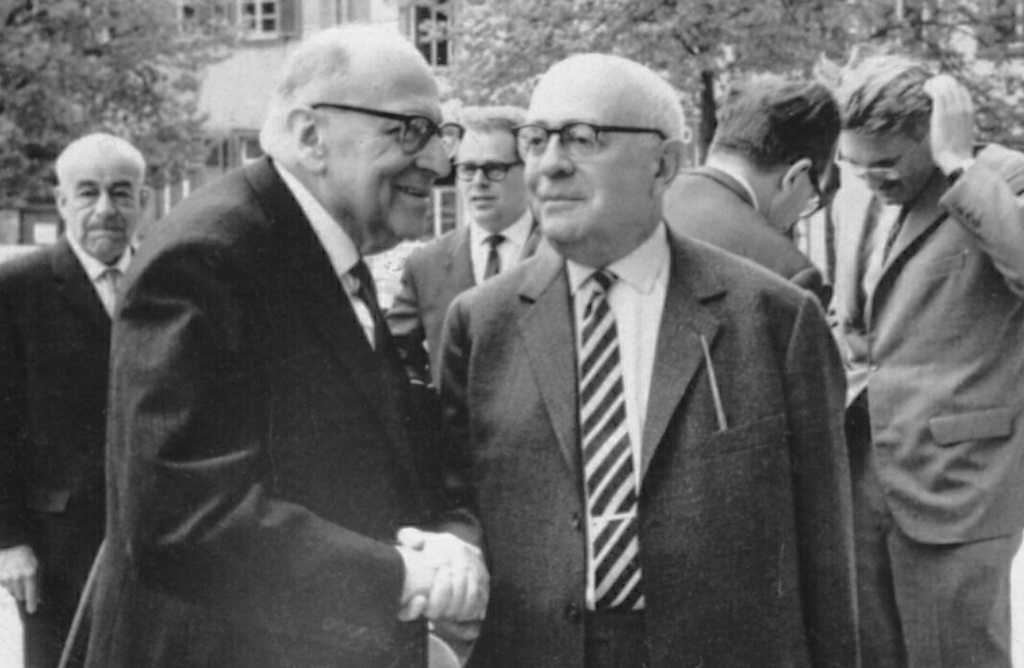
This context was crucial. The Frankfurt School wanted to understand why society seemed to be generating oppression and irrationality, despite advances in technology and knowledge. Why, for instance, did many people in advanced capitalist societies seem to embrace systems that worked against their own interests?
Critique of the Status Quo
The Frankfurt School took aim at what they called "traditional theory." This included the popular idea of positivism, which held that social science should imitate the natural sciences. Positivists believed researchers could and should be detached, value-free observers, simply collecting data about society.
The critical theorists thought this was a dangerous illusion. They argued that no observer is truly neutral. By pretending to be objective, traditional theories often ended up reinforcing the existing power structures. A theory that just describes poverty without questioning the system that creates it, for example, implicitly accepts that system.
positivism
noun
A philosophical theory that holds that all genuine knowledge is either true by definition or can be derived from sensory experience and logical treatment of such data. In social science, it promotes the idea that researchers can be neutral observers of society.
Instead of taking society's values and structures for granted, Critical Theory puts them under the microscope. It asks: Who benefits from this system? Whose interests are being served? How does culture, like movies and music, shape the way we think and prevent us from imagining a different kind of world?
Knowledge for Freedom
This leads to the ultimate goal of Critical Theory: emancipation. The point of all this critique is not to be negative, but to liberate people from hidden constraints.
This is the idea behind what's called emancipatory knowledge. It is a type of understanding that helps people recognize the social and historical forces that limit their freedom. Once you see these forces clearly, you can begin to act to change them.
Think of it like this: if you don't know the rules of a game are rigged, you'll just keep playing and losing. Emancipatory knowledge is like someone explaining how the game is rigged. It doesn't guarantee you'll win, but it gives you the awareness needed to start fighting for a fairer game.
The goal of Critical Theory isn't just to interpret the world, but to help create a world that is more rational, free, and just for everyone.
The Frankfurt School laid the groundwork for a new way of thinking about society, one that connects theory directly to the struggle for human freedom. Their ideas have influenced countless fields, from sociology and political science to cultural studies. This foundation is essential for understanding the next generation of critical theorists, including Jürgen Habermas, who built upon these core principles to develop his own powerful theories.
What is the primary goal of Critical Theory that distinguishes it from what it calls "traditional theory"?
The group of thinkers who developed Critical Theory is most commonly known by what name, derived from the location of their institute?