Understanding Indian Politics
Introduction to Indian Political System
Governing a Billion People
India is the world's largest democracy. At its heart is a detailed political system designed to govern a vast and incredibly diverse population. This system is a parliamentary democratic republic, meaning the people elect representatives to a parliament, which then forms the government. The entire framework operates according to a single, powerful document: the Constitution of India.
At its core, India is a sovereign, socialist, secular, democratic republic with a parliamentary system of government.
The Nation's Rulebook
The Constitution of India isn't just a set of laws; it's the soul of the nation's governance. Adopted in 1950, it is the longest written constitution of any country in the world. This comprehensive document lays out the fundamental principles, procedures, rights, and duties that guide both the government and its citizens. It establishes the supremacy of the rule of law, ensuring that no one, not even the government, is above the law.
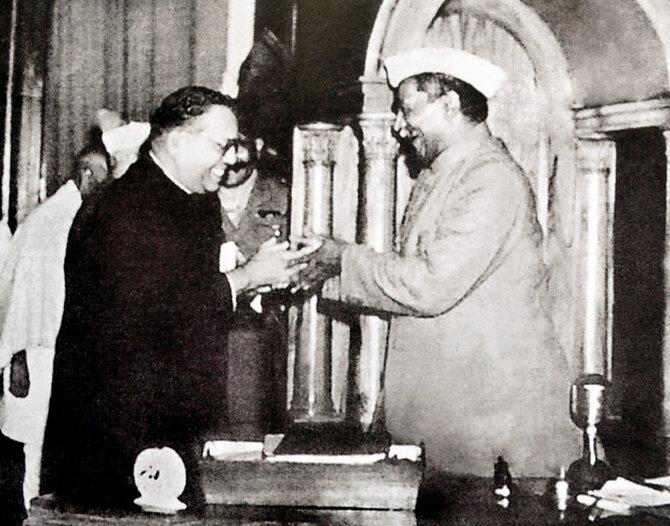
Think of it as the ultimate instruction manual. It defines the powers and limitations of the government, protects the fundamental rights of every citizen, and outlines the path towards social justice and equality. Every law passed, every action taken by the government, must be in line with the Constitution.
A Federal Union
To manage its immense diversity, India uses a federal structure. This means power is divided between the central government (the Union) in New Delhi and the individual state governments. This system is designed to balance national unity with regional autonomy, allowing states to address local issues while remaining part of the larger country.
The Constitution clearly defines the responsibilities of each level of government through different lists. The Union List covers matters of national importance like defense and foreign policy. The State List includes subjects like local police and public health. A third category, the Concurrent List, contains subjects like education and forests, where both the Union and state governments can make laws. This layered approach helps ensure that a country with over a billion people runs smoothly.
The Three Branches
Like many modern democracies, India's government is divided into three distinct branches. This separation of powers prevents any single part of the government from becoming too powerful, creating a system of checks and balances.
Legislature
noun
The law-making body of the government. In India, this is the Parliament at the central level, consisting of two houses: the Lok Sabha (House of the People) and the Rajya Sabha (Council of States).
The Legislature's primary role is to debate issues and create laws for the country. Its members are elected by the people to represent their interests.
Executive
noun
The branch responsible for implementing and enforcing the laws made by the Legislature. It is headed by the President of India, but the real power lies with the Prime Minister and the Council of Ministers.
This branch handles the day-to-day administration of the country, from managing foreign relations to overseeing national projects. It is accountable to the Legislature.
Judiciary
noun
The system of courts that interprets the laws and settles legal disputes. It acts as the guardian of the Constitution and protects the fundamental rights of citizens.
The Judiciary, headed by the Supreme Court of India, ensures that all laws and government actions comply with the Constitution. Its independence is a cornerstone of Indian democracy, providing a crucial check on the power of the other two branches.
What type of political system does India have?
What is the primary role of the Constitution of India?