Understanding Incoterms
Introduction to Incoterms
What are Incoterms?
When you buy something from another country, a lot has to happen to get it from the seller's warehouse to your doorstep. Who pays for the shipping? Who is responsible if the package gets damaged on a cargo ship? Who handles customs paperwork? Without clear rules, these questions could lead to costly misunderstandings.
This is where Incoterms come in. They are a set of globally recognized rules that define the responsibilities of sellers and buyers for the delivery of goods under sales contracts. Published by the International Chamber of Commerce (ICC), they provide a universal language for traders everywhere.
Think of Incoterms as a shorthand that clarifies the tasks, costs, and risks involved in moving goods from a seller to a buyer.
A Quick History
In the early 20th century, international trade was a bit like the Wild West. Merchants in different countries had their own interpretations of common trade terms. A term like "FOB" could mean one thing in New York and something entirely different in London. This confusion often led to disputes.
To bring order to this chaos, the International Chamber of Commerce first published the Incoterms rules in 1936. The goal was to establish a common set of definitions for the most frequently used trade terms. Since then, the ICC has periodically updated the rules to reflect changes in global trade practices. Revisions were made in 1953, 1967, 1980, 1990, 2000, 2010, and most recently, 2020.
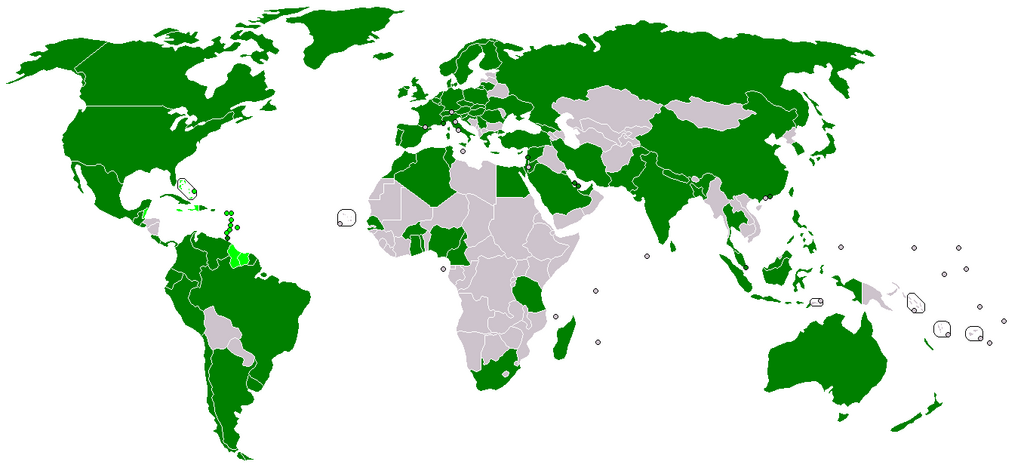
Why They Matter
Incoterms are a fundamental part of international trade. By incorporating a specific Incoterm into a sales contract, the buyer and seller agree on their respective obligations. This clarity helps prevent misunderstandings, reduces the risk of legal complications, and smooths the entire transaction process.
Crucially, the rules specify two very important things:
- The transfer of risk: They pinpoint the exact moment in the shipping journey when the responsibility for loss or damage to the goods shifts from the seller to the buyer.
- The division of costs: They clearly state which party is responsible for expenses like transportation, insurance, customs duties, and port fees.
I can't say it enough. Incoterms. Determine the appropriate Incoterms for your shipment and agree on them upfront with your customer or supplier.
Incoterms 2020 Overview
The latest edition, Incoterms 2020, features 11 rules. These rules are divided into two main categories based on the mode of transport.
| Category | Rules |
|---|---|
| For Any Mode(s) of Transport | EXW (Ex Works), FCA (Free Carrier), CPT (Carriage Paid To), CIP (Carriage and Insurance Paid To), DAP (Delivered at Place), DPU (Delivered at Place Unloaded), DDP (Delivered Duty Paid) |
| For Sea and Inland Waterway Transport | FAS (Free Alongside Ship), FOB (Free on Board), CFR (Cost and Freight), CIF (Cost, Insurance and Freight) |
It's important to choose the right rule for your specific shipment, as each one dictates a different allocation of costs and risks.
Incoterms 2020 introduced a few key changes to better align with modern trade practices. One notable update was the renaming of the rule DAT (Delivered at Terminal) to DPU (Delivered at Place Unloaded). This change acknowledges that delivery can happen at any place, not just a designated terminal. The new rules also addressed varying levels of insurance coverage in CIP and CIF, and accounted for situations where buyers or sellers use their own transport rather than a third-party carrier.
Now that you have a foundational understanding of what Incoterms are and why they're important, let's test your knowledge.
What is the primary purpose of Incoterms in international trade?
Which organization is responsible for publishing and updating the Incoterms rules?
Understanding these rules is the first step toward navigating the complexities of global commerce with confidence.