Understanding IFRS
Introduction to IFRS
A Common Language for Business
Imagine trying to compare two companies, one in Brazil and another in South Korea. If they each prepared their financial reports using different rules, it would be like comparing apples and oranges. You wouldn't be able to tell which one was actually more profitable or a better investment. This is the problem that International Financial Reporting Standards, or IFRS, were created to solve.
IFRS is a globally accepted framework for accounting and financial reporting established by the IASB.
Think of IFRS as a single, trusted accounting language. By providing a common set of rules for how companies report their financial performance, IFRS makes business understandable across borders. This consistency helps investors, lenders, and other stakeholders make more informed economic decisions.
Who Writes the Rules
The standards are developed and maintained by the International Accounting Standards Board (IASB). The IASB is an independent, private-sector organization based in London. Its board members come from diverse professional and geographical backgrounds, ensuring the standards are globally relevant and practical.
The IASB is an independent, private-sector body that develops and approves InternationalFinancial Reporting Standards (IFRS).
The IASB operates under the oversight of the IFRS Foundation. The Foundation is a not-for-profit public interest organization. Its structure is designed to ensure the independence of the standard-setting process while also ensuring accountability to stakeholders worldwide, from multinational corporations to the general public.
The IASB's main goal is to develop a single set of high-quality, understandable, enforceable, and globally accepted accounting standards. This mission is driven by the need for transparency and comparability in the global marketplace.
Global Adoption
The impact of the IASB's work has been enormous. Today, over 140 jurisdictions require the use of IFRS for publicly listed companies, making it the de facto global standard. This widespread adoption includes the European Union, Australia, Canada, and many countries in Asia, Africa, and South America.
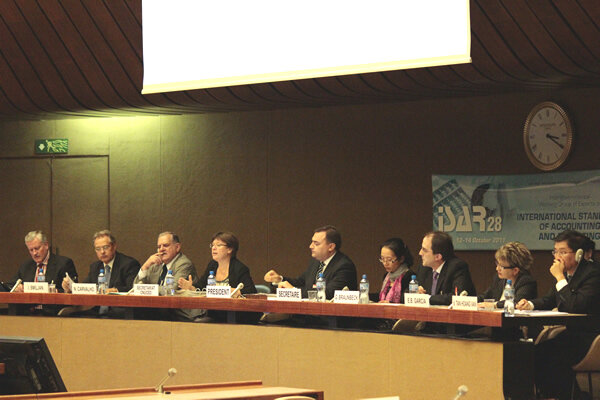
By adopting IFRS, countries help their local companies access global capital markets more easily. When investors can trust the numbers, they are more willing to invest. It also simplifies the work for multinational corporations, which no longer need to prepare different sets of financial statements for each country they operate in.
While many countries have adopted IFRS, the United States still uses its own set of standards, called Generally Accepted Accounting Principles (GAAP). However, the IASB and the U.S. standard-setter have worked to make the two systems more comparable over the years.
The shift toward a single global standard has fundamentally changed financial reporting, making the world's economy more interconnected and transparent than ever before.