Understanding HVAC Systems
Refrigeration Cycle Basics
The Heart of Cooling
Cooling systems don't create cold; they move heat. At the core of almost every air conditioner and refrigerator is a process called the vapour-compression refrigeration cycle. It's a continuous loop that uses a special fluid to absorb heat from the space you want to cool and reject it somewhere else.
Think of it like a conveyor belt for thermal energy. A substance called a refrigerant circulates through four key components, changing its state from liquid to gas and back again. This transformation is the secret to its ability to pick up and drop off heat. The entire process relies on a fundamental principle: the temperature at which a fluid boils or condenses changes with its pressure. By manipulating the refrigerant's pressure, we can control where it absorbs and releases heat.
The four components work in a precise sequence to achieve this heat transfer.
The Four Key Players
1. Compressor The compressor is the heart of the system, a pump that drives the refrigerant through the loop. It draws in low-pressure, cool refrigerant gas from the evaporator and squeezes it. This compression process dramatically increases the pressure and temperature of the gas. Think of how a bicycle pump gets hot when you use it; the compressor adds energy to the refrigerant in the form of work, heating it up significantly.
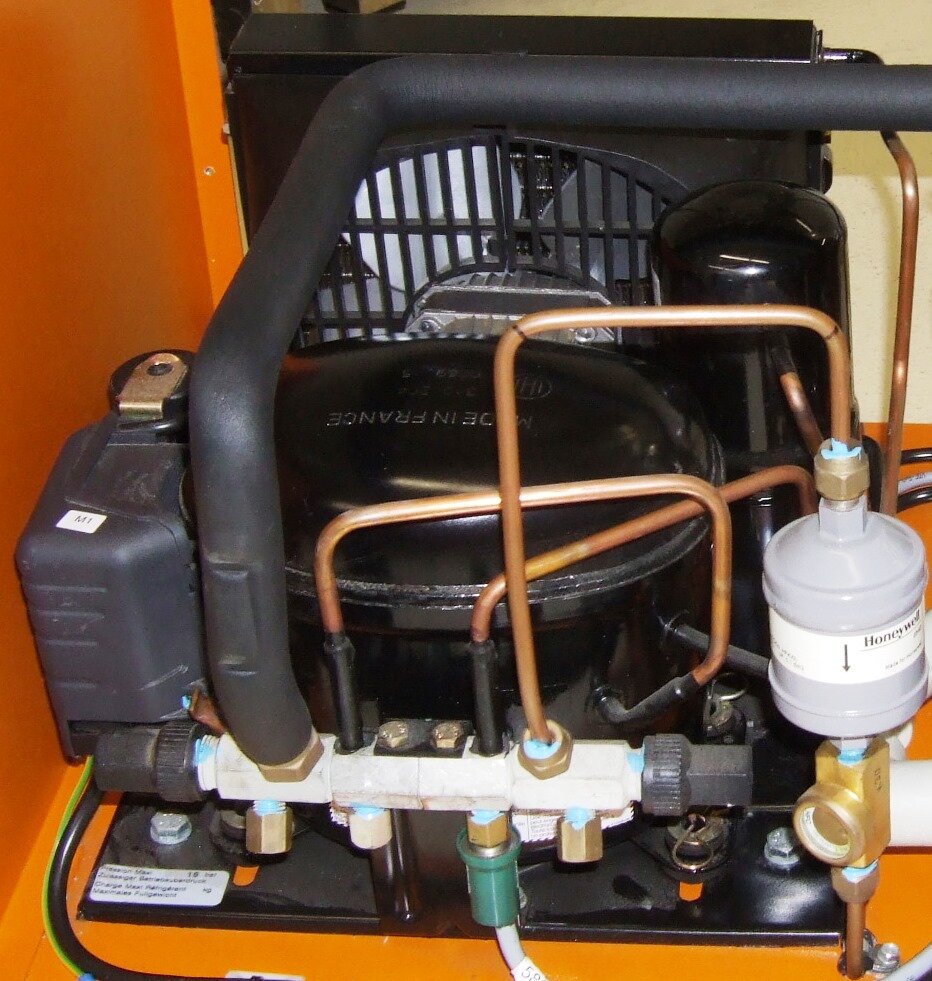
2. Condenser The high-pressure, hot gas then flows into the condenser. The condenser's job is to reject the heat that the refrigerant picked up in the evaporator and the heat added by the compressor. It's a heat exchanger with coils and fins, and a fan often blows air across it. Because the refrigerant is now much hotter than the surrounding air, heat flows from the refrigerant to the air, causing the refrigerant to cool down and condense from a gas back into a high-pressure liquid.
This is the 'heat rejection' phase. In an air conditioner, the condenser unit is located outside, which is why you feel hot air blowing from it.
3. Expansion Valve Next, the high-pressure liquid refrigerant reaches the expansion valve, also known as a metering device. This component acts as a restriction in the line, causing a sudden and significant drop in pressure as the refrigerant is forced through it. This rapid pressure drop makes the liquid refrigerant expand and partially flash into a gas, a process called flash evaporation. This causes its temperature to plummet, making it very cold.
4. Evaporator The cold, low-pressure mix of liquid and vapour refrigerant now enters the evaporator. Like the condenser, the evaporator is a heat exchanger with coils and fins. It's located in the space you want to cool. Because the refrigerant is now colder than the surrounding air, heat flows from the air into the refrigerant. This absorbed heat causes the remaining liquid refrigerant to boil and turn completely into a low-pressure gas. The air, having lost its heat, becomes cool.
From the evaporator, the low-pressure, cool gas is drawn back into the compressor, and the entire cycle begins again. This continuous process efficiently moves heat from inside to outside, providing the cooling effect we rely on.
What is the fundamental principle behind how most air conditioners and refrigerators work?
What is the primary function of the compressor in the vapour-compression refrigeration cycle?