Understanding Human Consciousness
Introduction to Consciousness
What is Consciousness?
It's the first thing you experience when you wake up and the last thing you have before you fall asleep. Consciousness is the state of being aware of your own existence, thoughts, feelings, and surroundings. It’s the movie playing in your head, starring you.
But pinning down a precise definition is tricky. Scientists and philosophers have been trying for centuries. For our purposes, we can think of it in a few ways:
• Awareness: Simply being aware of the world around you and your internal states. • Subjective Experience: The personal, private quality of your perceptions. It's what it feels like to see the color red, taste a strawberry, or hear a sad song.
Consciousness
noun
The state of being aware of and responsive to one's surroundings; a person's awareness or perception of something.
This subjective, first-person quality is what makes consciousness so fascinating and so difficult to study. We can observe a brain in a scanner, but we can't observe the feeling of joy that person is experiencing.
A Brief History
Thinking about the mind is as old as thinking itself. Ancient philosophers in Greece and India pondered the nature of the self and awareness. For centuries, these questions remained in the realm of philosophy and religion.
When psychology emerged as a science in the late 19th century, early pioneers were very interested in subjective experience. But in the mid-20th century, a school of thought called behaviorism took over. Behaviorists argued that science should only study observable behaviors, not internal mental states like consciousness, which they considered unscientific and impossible to measure.
For decades, consciousness was a taboo topic in mainstream science. That changed toward the end of the 20th century. With advances in neuroscience and new brain imaging tools, scientists regained the confidence to tackle the mystery of the mind. Today, the study of consciousness is a thriving, interdisciplinary field.
Why Study Consciousness?
Understanding consciousness isn't just an academic exercise. It has profound real-world implications. In medicine, it's central to understanding conditions like comas or the effects of anesthesia. How do we know if a patient who appears unresponsive is still aware?
The rise of artificial intelligence also forces the issue. If we create a sufficiently complex AI, could it become conscious? How would we even know? Answering these questions requires us to first have a better grasp of what consciousness is and how it works. This has huge ethical implications for how we develop and treat advanced AI systems.
Ultimately, studying consciousness is about understanding ourselves at the most fundamental level. It's the core of our identity and how we experience every moment of our lives.
The Big Questions
Researchers in this field are grappling with some of the biggest questions science has to offer. While we've made progress, the deepest mysteries remain.
How does the brain create consciousness? We know that brain activity is correlated with conscious experience, but how does the firing of neurons give rise to the feeling of seeing blue or the smell of coffee? This is often called the "hard problem" of consciousness.
This question is at the heart of the mind-body problem. How does the physical stuff of the brain relate to the non-physical stuff of the mind? Is consciousness just a complex computation, or is it something more?
Are other animals conscious? Many animals have complex brains and behaviors. Does a dog feel happiness? Does an octopus experience curiosity? Where do we draw the line, and what does that mean for how we treat other species?
These aren't easy questions, and there are many competing theories trying to answer them. Scientists are exploring everything from specific brain structures to quantum physics to find clues.
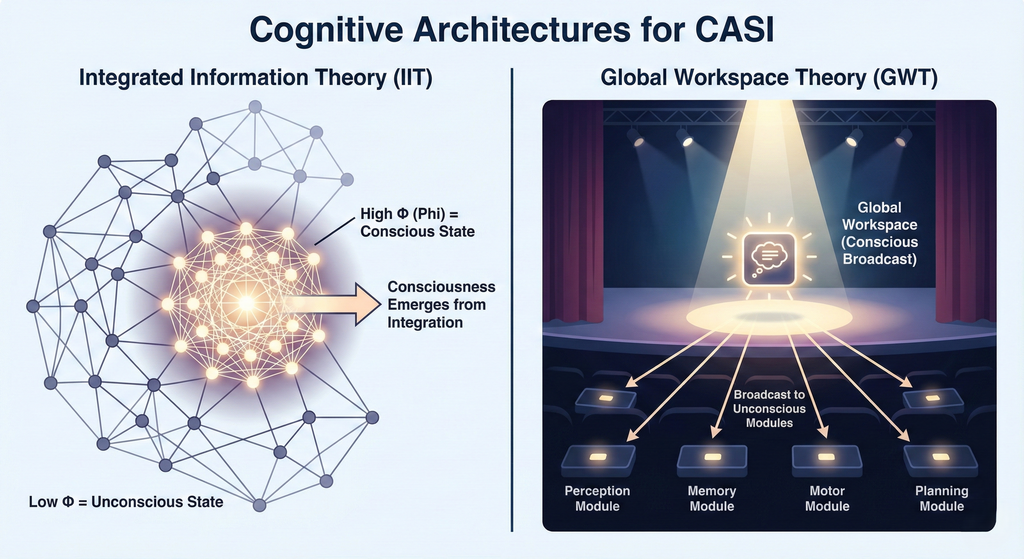
As we move forward, we'll dive into some of these theories and see what they have to say about the nature of our own minds.
What is the primary characteristic that makes consciousness difficult to study scientifically?
During the mid-20th century, which school of thought largely dismissed the study of consciousness as unscientific?