Understanding Global Poverty
Defining Poverty
What is Poverty?
When we hear the word "poverty," we often think of a lack of money. But it's much more than that. Poverty is a state where people lack the financial resources and essentials for a minimum standard of living. This isn't just about being unable to buy luxuries; it's about lacking access to basic human needs like safe drinking water, nutrition, healthcare, and education.
To understand poverty, we need to look at it from different angles. Economists and sociologists generally classify it into two main types: absolute and relative.
Absolute vs Relative Poverty
Absolute poverty is the most severe form. It's a condition where a person doesn't have the minimum amount of income needed to meet the basic necessities of life, like food, clean water, shelter, and sanitation. The standard for absolute poverty is fixed and doesn't change based on where you live.
The World Bank, for example, sets an international poverty line. Anyone living on less than that amount per day is considered to be in extreme poverty, regardless of whether they live in a wealthy or a developing nation. It's a universal benchmark for basic survival.
Absolute poverty is about survival.
Relative poverty, on the other hand, is defined in comparison to the economic standards of the population in which a person lives. If a household has an income that is a certain percentage below the median income of their country, they are considered relatively poor. They might have access to food and shelter, but they can't afford the things that allow them to participate fully in their society, like new clothes for their kids, a reliable internet connection, or an occasional family vacation.
Relative poverty is about social inclusion.
Someone considered relatively poor in a wealthy country might be well-off by the standards of absolute poverty. The key difference is the frame of reference: one is a fixed line for survival, and the other is a moving target based on the well-being of the surrounding community.
How We Measure Poverty
To identify and help those in need, governments and organizations must first measure poverty. The most common tool for this is the poverty line, also known as the poverty threshold. This is a minimum level of income deemed adequate in a particular country.
But how is this line drawn? Typically, it's based on the estimated cost of a basket of essential goods and services. This includes the cost to feed a family, secure housing, buy clothing, and cover other basic needs. If a family's total income is less than the cost of that basket, they are considered to be below the poverty line.
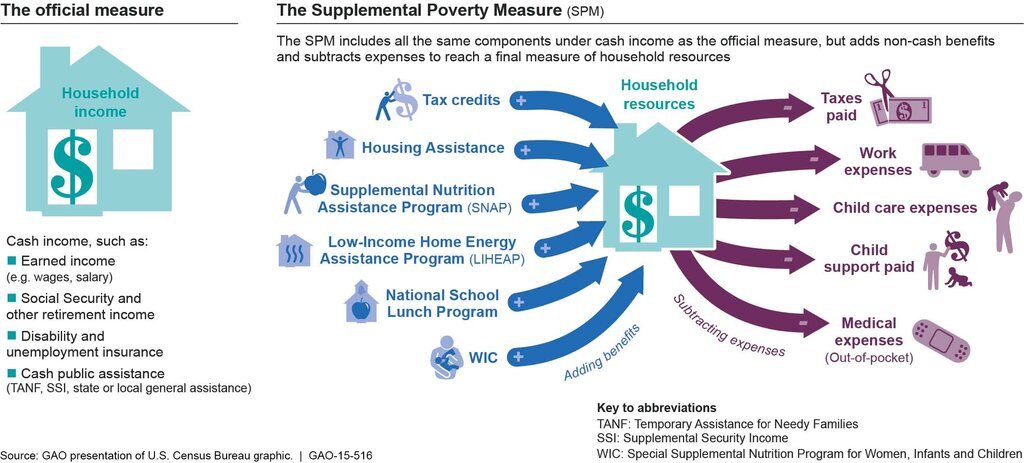
Calculating this isn't simple. Should the government include non-cash benefits like food stamps or housing assistance when measuring a family's resources? What about necessary expenses like taxes, work-related costs, and medical bills? Different measurement models account for these factors in different ways, leading to different conclusions about who is truly poor.
Why Definitions Matter
The way we define and measure poverty has real-world consequences. These definitions determine who is eligible for government assistance programs, from nutritional support to housing aid. They shape public policy and guide how resources are allocated.
Understanding poverty's multifaceted nature is the first step toward addressing it. A narrow definition focused only on income might miss families struggling with high medical costs or lack of access to education. A broader view helps create more effective strategies to not only lift people out of poverty but also to create opportunities for them to thrive.
Now, let's check your understanding of these core concepts.
Which of the following best describes the concept of 'absolute poverty'?
A family in a wealthy country has stable housing and enough food, but cannot afford internet access for their children's schoolwork or to ever eat at a restaurant. This family is most likely experiencing which type of poverty?
Defining poverty clearly is crucial because it transforms a complex social problem into a measurable challenge we can work to solve.