Understanding Generative AI
Introduction to Artificial Intelligence
What Is Artificial Intelligence?
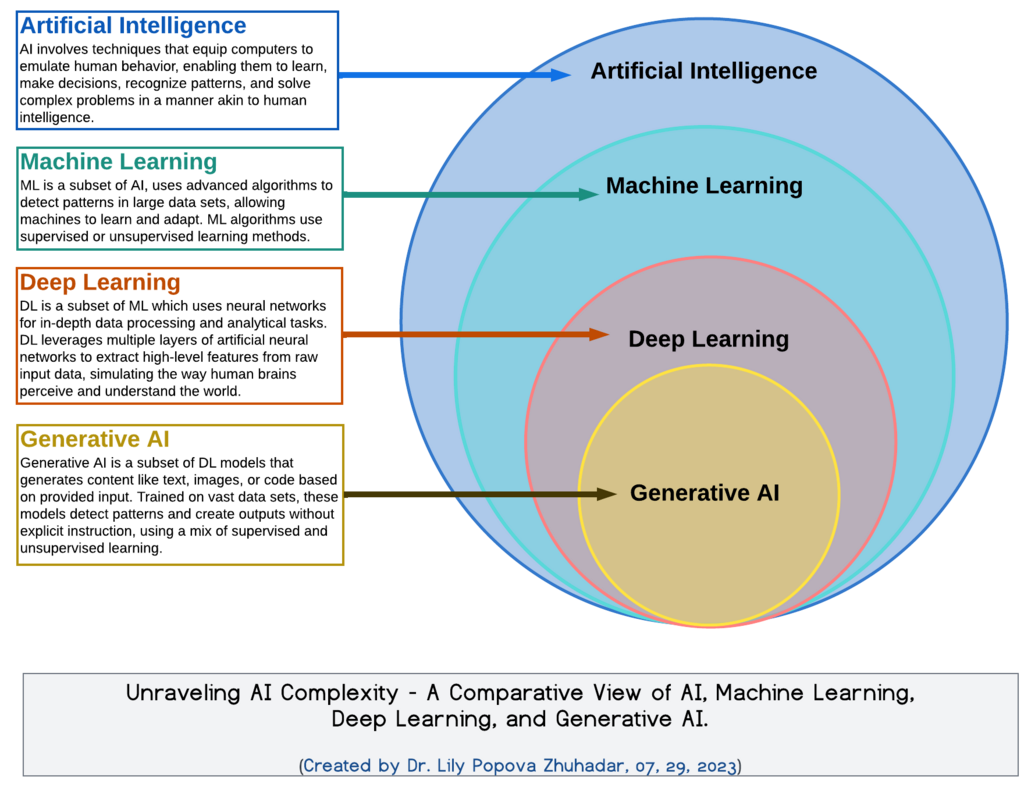
Artificial intelligence, or AI, is the science of making computers do things that normally require human intelligence. Think about how a person learns to identify a new animal. You see pictures, hear its name, and eventually, you can spot it on your own. AI works in a similar way, but for machines. It's a broad field of computer science focused on creating systems that can perceive their environment, think, learn, and make decisions.
Instead of being one single technology, AI is an umbrella term that covers many different methods and subfields. The goal is to create machines that can perform tasks that are easy for humans but have historically been very difficult for computers, like understanding language, recognizing faces, or driving a car.
A Brief History of AI
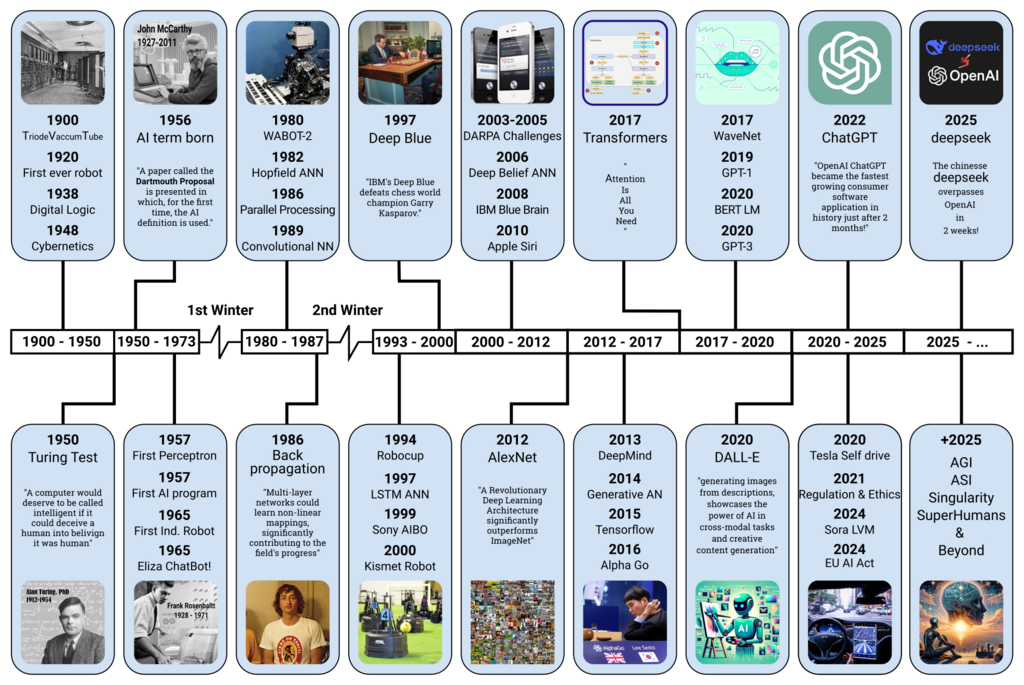
The dream of creating intelligent machines is ancient, but the modern field of AI began in the mid-20th century. The term "artificial intelligence" was first coined in 1956 at a conference at Dartmouth College. Early researchers were optimistic, believing that a machine as intelligent as a human being would exist in just a few decades.
This early work focused on rule-based systems. Programmers would write explicit, step-by-step instructions for the computer to follow to solve a specific problem, like playing checkers. While these systems could be effective for narrow tasks, they were brittle. They couldn't handle new situations they weren't explicitly programmed for.
Progress was slower than expected, leading to periods known as "AI winters," when funding and interest in the field dried up. But breakthroughs in the late 20th and early 21st centuries, driven by more powerful computers and the availability of massive amounts of data, led to a resurgence. The focus shifted from programming rules to creating systems that could learn from data on their own. This shift gave rise to the dominance of machine learning.
Two Kinds of AI
When people talk about AI, they are often referring to one of two very different concepts: narrow AI and general AI. Understanding the difference is key to understanding where the technology is today and where it might go.
Artificial Narrow Intelligence (ANI)
noun
An AI system that is designed and trained for one specific task. It operates within a limited context and cannot perform tasks outside of its single purpose.
Virtually all AI in existence today is narrow AI. Your navigation app, a chess-playing computer, a facial recognition system—these are all examples of ANI. They can be incredibly powerful and even outperform humans at their specific tasks, but they have no awareness or ability outside of what they were built for.
Artificial General Intelligence (AGI)
noun
A hypothetical type of AI that possesses the ability to understand, learn, and apply its intelligence to solve any problem, much like a human being. It would have consciousness and cognitive abilities.
AGI is the kind of AI you often see in movies—a machine that can think, reason, and create with the flexibility and breadth of a human mind. While it's an active area of research, building an AGI is an extraordinarily complex challenge that has not yet been solved.
| Feature | Artificial Narrow Intelligence (ANI) | Artificial General Intelligence (AGI) |
|---|---|---|
| Scope | Performs a single, specific task | Can handle a wide range of tasks |
| Awareness | No consciousness or self-awareness | Potentially conscious and self-aware |
| Flexibility | Inflexible, cannot adapt to new domains | Highly flexible and adaptable |
| Current Status | Widely used today | Theoretical, does not yet exist |
How AI Learns from Data
Modern AI systems learn from data rather than being explicitly programmed. This is the core idea behind machine learning. The two most common approaches to this learning process are supervised and unsupervised learning.
Think of it this way: supervised learning is like studying with a teacher, while unsupervised learning is like exploring and finding patterns on your own.
In supervised learning, the AI is trained on a dataset that has been labeled by humans. Each piece of data is tagged with the correct answer. For example, to train an AI to identify pictures of cats, you would feed it thousands of images, each one labeled as either "cat" or "not cat." The AI's job is to learn the relationship between the input (the image) and the output (the label). Over time, it gets better at predicting the correct label for new, unseen images.
In unsupervised learning, the AI is given a dataset without any labels. There are no right answers to learn from. Instead, the AI's goal is to find hidden patterns, structures, or relationships within the data. For instance, an e-commerce company might use unsupervised learning to analyze customer purchase histories. The AI could identify distinct groups of customers who buy similar products, allowing the company to create targeted marketing campaigns without ever being told what to look for.
This highlights the central role of data in modern AI. Whether it's labeled data for supervised learning or vast amounts of unlabeled data for unsupervised learning, the quality and quantity of the data are what determine the performance of the system. Without data, an AI model has nothing to learn from. It's the fuel that powers the engine of machine learning.
What is the primary goal of artificial intelligence?
The type of AI that can outperform humans at a specific task, like playing chess or recognizing faces, but cannot function outside of that narrow domain is called:
You've now covered the basics of what AI is, its history, and how it learns. These core concepts are the foundation for understanding the more complex systems that are becoming a part of our daily lives.