Understanding Garbage
Introduction to Waste
What Is Waste?
Simply put, waste is anything we discard because we no longer need or want it. It's the apple core left after a snack, the empty shampoo bottle, the old phone that doesn't work anymore. While it sounds simple, waste is a complex topic with many categories and sources.
Waste
noun
Unwanted or unusable material, substance, or by-product.
Waste isn't just one thing. It can be categorized by its physical state (solid, liquid, or gas) or by its potential harm to us and the environment. The most common category we deal with every day is Municipal Solid Waste, or MSW.
Municipal Solid Waste (MSW) is a fancy term for everyday trash or garbage generated by homes, schools, and businesses. It includes things like product packaging, food scraps, grass clippings, and old furniture.
Waste comes from nearly every human activity. Understanding its sources helps us see the bigger picture.
| Source | Description | Examples |
|---|---|---|
| Residential | Waste from households. | Food scraps, packaging, old clothes, electronics. |
| Commercial | Waste from businesses like offices, restaurants, and stores. | Paper, cardboard, food waste, plastic wrap. |
| Industrial | Waste from manufacturing and industrial processes. | Chemicals, scrap metal, construction debris. |
| Agricultural | Waste from farming and ranching. | Crop residues, animal manure, pesticides. |
A Brief History of Trash
For most of human history, waste wasn't a major problem. Early societies produced very little trash. Most of what they used was organic and biodegradable, returning to the earth naturally. Tools were repaired, not replaced. Food scraps fed animals. Nothing was wasted.
As villages grew into cities, waste started to pile up. Ancient cities often had designated dumps outside their walls, but sanitation was a constant struggle. The Industrial Revolution in the 18th and 19th centuries changed everything. Factories began mass-producing goods, and people flocked to cities. This created more waste than ever before, leading to the first organized municipal collection systems.
The 20th century saw the birth of consumer culture and the "throwaway society." New materials like plastic made single-use products cheap and convenient. From disposable razors to pre-packaged meals, the idea of using something once and then tossing it became normal. This convenience came at a cost, creating a mountain of waste that previous generations could never have imagined.
The Global Waste Problem
Today, our waste production is staggering. The world generates over 2 billion metric tons of municipal solid waste annually. If you put all that trash into garbage trucks, they would circle the globe 24 times.
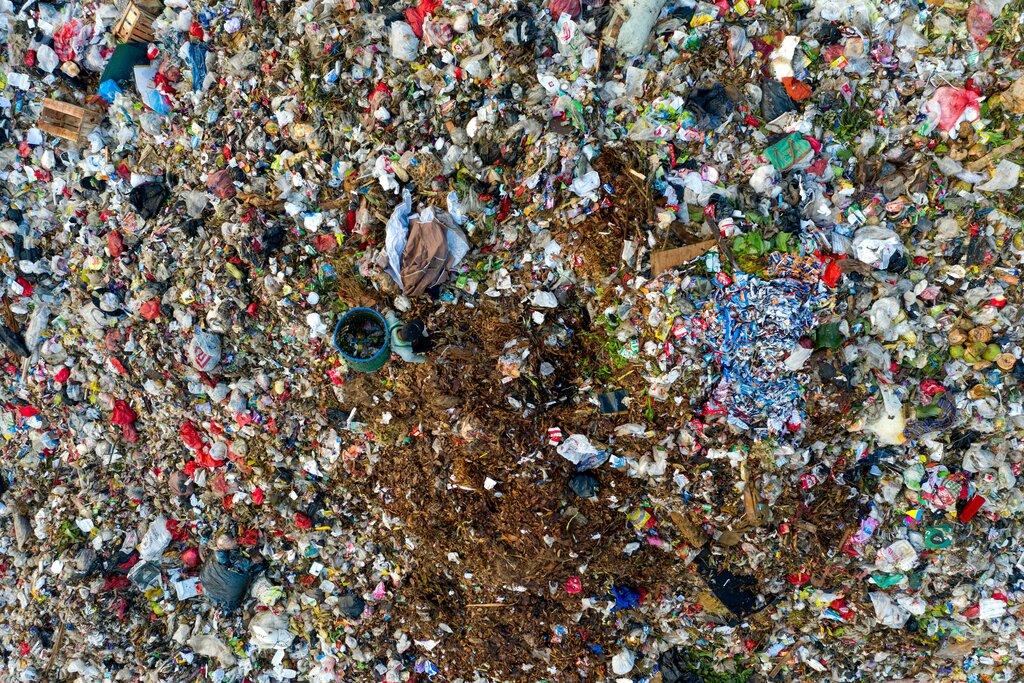
This massive volume of trash isn't just an eyesore; it represents a huge loss of resources. Every discarded item contains materials and energy that were used to produce it. As the global population and consumption rates grow, the challenge of managing this waste becomes more urgent.
The Principles of Management
So, what do we do with all this trash? The goal of waste management is to handle waste in a way that protects both human health and the environment. This involves a set of practices from collection and transport to processing and disposal. To guide these efforts, experts developed a concept known as the waste hierarchy.
The waste hierarchy ranks waste management options according to what’s best for the environment. The top of the pyramid is the most preferred option, and the bottom is the last resort.
- Prevention: The best approach is to not create waste in the first place. This means reducing consumption and designing products to last longer.
- Reuse: If waste can't be prevented, the next best thing is to reuse items for their original purpose or a new one.
- Recycling: This involves turning waste into a new substance or product. It saves resources and energy.
- Recovery: This includes processes that recover energy from waste, such as incineration that generates electricity.
- Disposal: The least desirable option is to send waste to a landfill or incinerate it without energy recovery. This should only be done when no other option is available.
This hierarchy provides a framework for creating a more sustainable relationship with the things we use and discard.
Ready to check your understanding? Let's see what you've learned.
According to the provided text, what is the simplest definition of waste?
Which historical event is credited with the most significant increase in waste production and the creation of organized collection systems?
Understanding what waste is and where it comes from is the first step toward managing it more effectively. By applying the principles of the waste hierarchy, we can begin to address the global challenge of our ever-growing trash.