Understanding Futurism and Foresight
Introduction to Strategic Foresight
Thinking About Tomorrow
Strategic foresight is a structured way of thinking about the future to make better decisions today. It isn't about gazing into a crystal ball or making exact predictions. Instead, it’s about exploring a range of possible futures, understanding the forces that shape them, and preparing for whatever might come.
The goal is not to predict one single future, but to prepare for many possible ones.
Think of it like planning a cross-country road trip. A forecaster might try to predict the exact arrival time based on current traffic. Someone using foresight, however, would consider multiple routes, potential roadblocks, different weather scenarios, and where they might want to stop along the way. They develop a flexible plan that can adapt to changing conditions. This proactive approach helps organizations and individuals navigate uncertainty and spot opportunities others might miss.
A Quick History
Thinking about the future is as old as humanity, but as a formal discipline, it's relatively new. Early seeds were sown in the early 20th century, with thinkers and writers like H.G. Wells imagining new technologies and societal shifts. Science fiction often served as an early, informal way to explore different futures.
The field became more structured after World War II. Governments and military planners realized they needed systematic methods for long-range planning in a complex and rapidly changing world. This led to the creation of think tanks and the development of more rigorous approaches to studying the future, moving it from the realm of fiction to strategic analysis.
Foresight vs. Forecasting
The terms are often used interchangeably, but they mean very different things. Forecasting is about prediction, while foresight is about preparation.
| Forecasting | Strategic Foresight | |
|---|---|---|
| Goal | Predict a single, most likely outcome | Explore multiple plausible futures |
| Focus | Quantitative, data-driven | Qualitative, considers big-picture shifts |
| Timeframe | Usually short to medium-term | Often long-term (10+ years) |
| Question | "What will happen?" | "What could happen?" |
A weather forecast, for example, uses data to predict the probability of rain tomorrow. It gives you a single, expected outcome. Strategic foresight, on the other hand, would ask: What if we have a decade of unusually rainy seasons? How would that impact our city’s infrastructure, agriculture, and way of life? It opens up a wider conversation about resilience and adaptation.
Putting Foresight to Work
Strategic foresight isn't just a theoretical exercise. It has practical applications across many sectors.
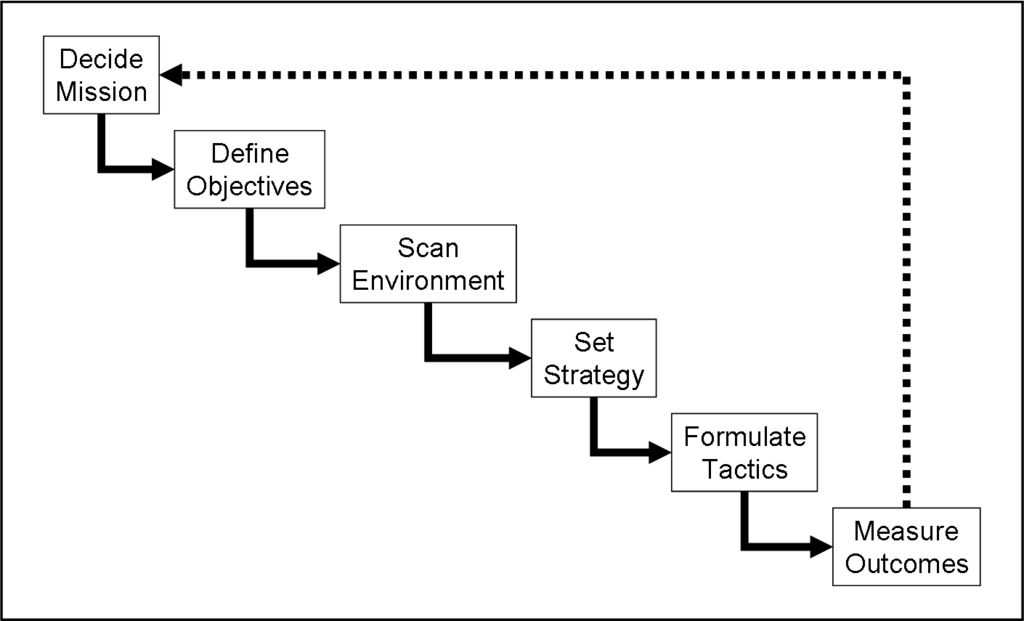
At its core, strategic planning is about envisioning the future and determining the best course of action to achieve that vision.
In business, companies use foresight to anticipate market shifts, new technologies, and changing consumer behaviors. Energy companies, for instance, use it to plan for a world less reliant on fossil fuels, exploring investments in renewables and new technologies.
In government, policymakers apply foresight to tackle long-term challenges like aging populations, urbanization, and climate change. A city might use it to design infrastructure that will serve its citizens not just for the next five years, but for the next fifty.
In society, non-profits and educational institutions use foresight to better understand the future of work, the skills people will need, and how to address enduring social problems. It helps them stay relevant and effective in a world that is constantly evolving.
Now that you have a grasp of the basics, let's test your knowledge.
Which of the following statements best captures the primary goal of strategic foresight?
Strategic foresight is primarily about prediction, while forecasting is about preparation.
By understanding what strategic foresight is and how it differs from simple prediction, we can begin to see its value. It provides a powerful framework for navigating an uncertain world with confidence and creativity.