Understanding Exclamations
Introduction to Exclamations
More Than Just Words
Language isn't just for sharing facts. We also use it to express surprise, excitement, anger, or joy. When we need to convey a strong feeling, we often use exclamations. An exclamation is a sudden, forceful utterance.
exclamation
noun
A sudden cry or remark, especially one expressing surprise, anger, or pain.
Think of the difference between saying "It is cold" and shouting "It's so cold!" The first is a simple statement of fact. The second is an exclamation, packed with emotion. It tells you not just about the temperature, but about how the speaker feels about the temperature.
Exclamations add emotional color to our communication, turning a plain statement into a vivid expression of feeling.
Statements, Questions, and Exclamations
Sentences can serve different purposes. They can state a fact, ask a question, give a command, or exclaim. The purpose often changes the sentence structure and always changes the punctuation at the end.
| Sentence Type | Purpose | Example |
|---|---|---|
| Declarative (Statement) | States a fact or opinion. | The sky is blue. |
| Interrogative (Question) | Asks for information. | Is the sky blue? |
| Imperative (Command) | Gives a command or makes a request. | Look at the blue sky. |
| Exclamatory (Exclamation) | Expresses strong emotion. | What a blue sky! |
Notice how the exclamatory sentence often starts with words like "What" or "How" but isn't a question. The key difference is the intent: one seeks information, while the other expresses a powerful feeling.
The Exclamation Mark
In writing, we signal an exclamation with a special piece of punctuation: the exclamation mark (!).
This mark is a relatively modern invention. For centuries, writers had no standard way to show this kind of emotional emphasis. The exclamation mark is thought to have originated in the Middle Ages from the Latin word io, an exclamation of joy. Scribes would write the 'i' above the 'o' to save space on expensive parchment, and over time, this stacked representation evolved into the symbol we use today.
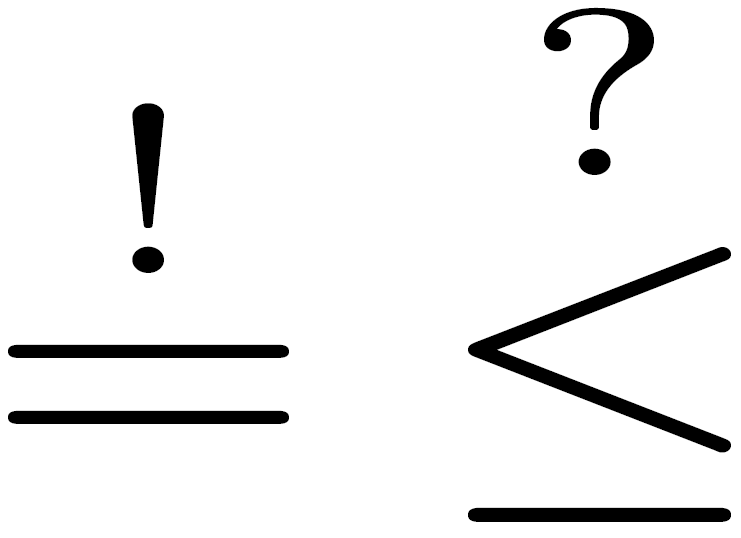
The mark itself was often called a "note of admiration" until the 19th century. Its job is to tell the reader that a sentence should be read with more force or emotion than a simple statement. It's the written equivalent of raising your voice in excitement or alarm.
Use exclamation marks sparingly. Overusing them can make your writing feel overly dramatic or even childish. One is usually enough to make your point.
Let's test your understanding of these concepts.
What is the primary purpose of an exclamation?
Which of the following sentences is an exclamation?
By understanding exclamations, you gain a tool for adding energy and emotion to both your speech and your writing.