Understanding Entropy
Introduction to Thermodynamics
The Rules of Energy
Thermodynamics is the study of energy, heat, and work, and how they relate to physical systems like engines, chemicals, or even stars. At its heart are a few fundamental laws that govern how energy behaves. These aren't suggestions; they're the unbreakable rules of the universe.
The First Law of Thermodynamics is essentially a statement about conservation of energy. You can't create or destroy energy, only change its form or move it around. It's like a cosmic accounting system. The total energy in an isolated system always remains constant.
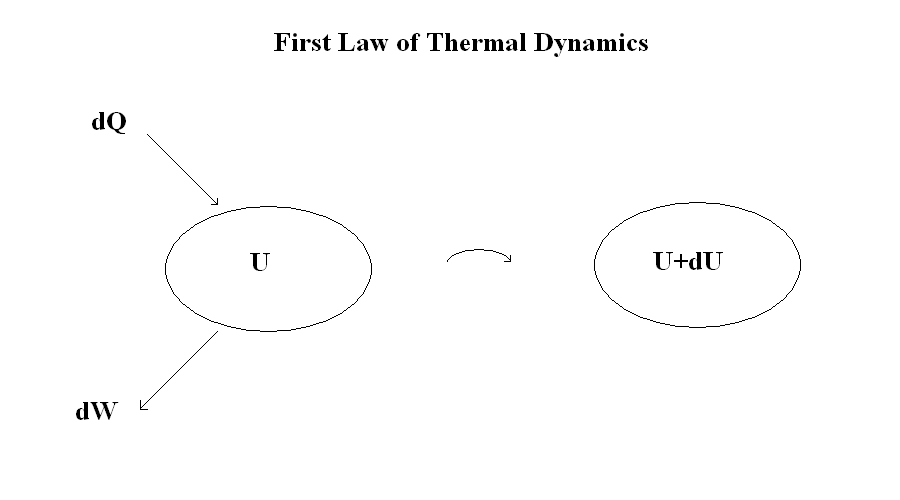
Imagine a system, like a gas in a cylinder. Its total internal energy is denoted by . We can change this energy in two ways: by adding heat () to it, or by making the system do work (), like pushing a piston. The change in internal energy () is the heat added minus the work done.
If you add heat to the gas, its internal energy increases. If the gas expands and pushes a piston, it does work, and its internal energy decreases. Everything has to balance out.
State of the System
To describe a system in thermodynamics, we use properties like pressure (), temperature (), and volume (). Together, these properties define the system's state. A state function is any property that depends only on the current state of the system, not on how it got there.
Think about climbing a mountain. Your final altitude depends only on where you started and where you ended. It doesn't matter if you took a long, winding path or a steep, direct one. Altitude is a state function. However, the distance you walked and the calories you burned definitely depend on the path you took. They are not state functions.
In thermodynamics, internal energy () is a state function. The change in internal energy, , between two states is always the same, regardless of the process. In contrast, heat () and work () are like the distance you walked. They are "path-dependent." The amount of heat you add or work you do to get from state A to state B can vary depending on the process you use.
State functions depend only on the start and end points. Path functions depend on the journey taken between them.
The Arrow of Time
If the First Law is about accounting for energy, the Second Law of Thermodynamics is about direction. It tells us which way processes naturally occur. It's the reason why a hot cup of coffee cools down in a room, but a cool cup of coffee never spontaneously heats up by drawing energy from the room's air.
The Second Law states that heat naturally flows from a hotter object to a colder object. This might seem obvious from everyday experience, but it's a profound rule. It introduces the idea of an "arrow of time" into physics. Some things happen in one direction but not the other.
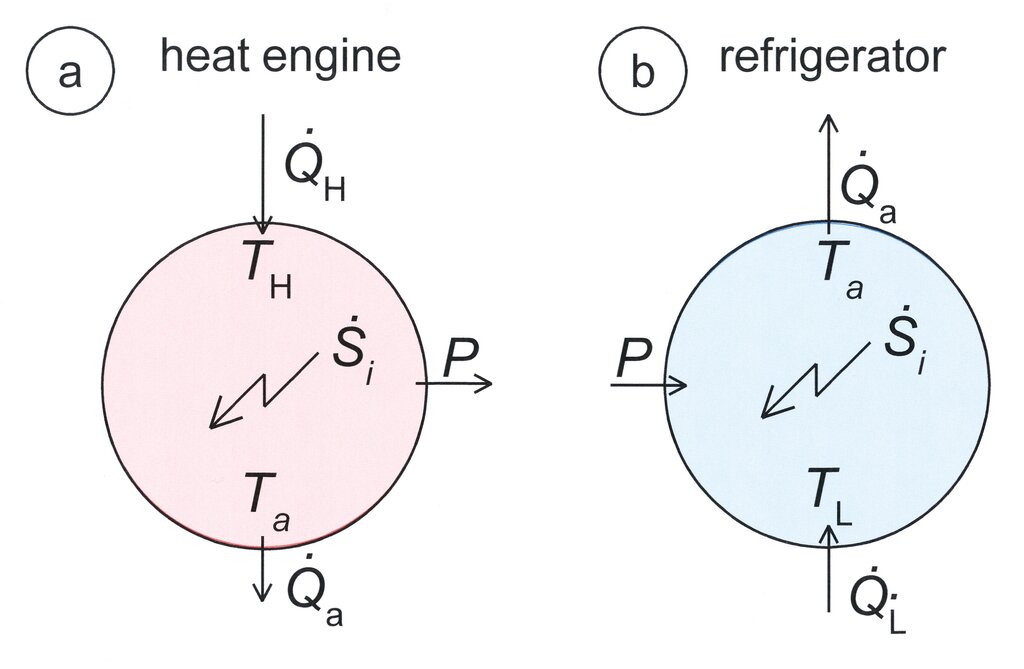
This directional nature leads to the concepts of reversible and irreversible processes.
An irreversible process is a one-way street. Once it happens, you can't simply undo it without leaving a trace on the surroundings. Scrambling an egg, mixing cream into coffee, or a gas expanding into a vacuum are all irreversible. These are the processes we see in the real world.
A reversible process, on the other hand, is a theoretical ideal. It's a process that happens so slowly and perfectly that it's always in a state of balance, or equilibrium. It could be reversed at any moment, returning both the system and its surroundings to their exact starting conditions. While no real process is truly reversible, this concept is a powerful tool for calculating the maximum possible efficiency of engines and other systems.
The second law of thermodynamics specifies the arrow of time—the direction in which the flow of time runs.
These fundamental laws set the stage for understanding the limits and possibilities of energy conversion. They explain why some processes are possible and others are not, providing the essential framework for everything from steam engines to the chemistry of life.