Understanding Dysphagia
Swallowing Anatomy
The Oral Cavity: Where It All Begins
Swallowing starts in the oral cavity, or mouth. This isn't just a simple opening; it's a highly coordinated processing center. Your lips create a seal to keep food and drink inside, while your teeth and jaw muscles begin the mechanical breakdown of food through chewing, a process called mastication. Cheeks help keep the food positioned between your teeth.
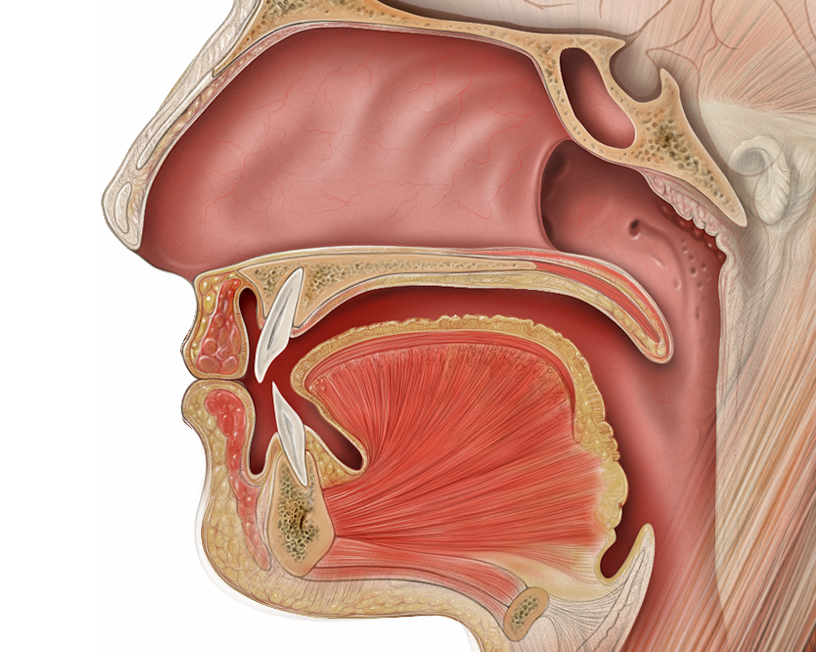
The tongue is the main player here. It's a powerful muscle that can move in complex ways to manipulate food, mix it with saliva, and gather it into a cohesive ball called a bolus, ready for swallowing.
The roof of your mouth, the palate, is divided into two parts. The hard palate is the bony front section, providing a firm surface for the tongue to press food against. Behind it is the soft palate, a flexible, muscular flap that ends in the uvula—the small tissue that hangs at the back of your throat. During a swallow, the soft palate and uvula lift to seal off the nasal passages, preventing food or liquid from going up your nose.
Salivary glands also play a silent but vital role. They produce saliva that moistens the food, making it easier to chew and form into a bolus. Saliva also contains enzymes that start the chemical process of digestion.
The Pharynx: A Critical Crossroads
Once the bolus is ready, the tongue pushes it to the back of the mouth and into the pharynx, or throat. The pharynx is a muscular tube that serves as a crossroads for both the digestive and respiratory systems. It's about five inches long and is divided into three sections.
The top part, the nasopharynx, connects to the nasal cavity and is only for air. Below that is the oropharynx, which is behind the oral cavity and handles both air from breathing and food from eating. The lowest section is the laryngopharynx, where the path splits. Food is directed into the esophagus, while air is directed into the larynx (voice box) and trachea (windpipe).
This split is a critical moment in swallowing. To prevent food from "going down the wrong pipe," a leaf-shaped flap of cartilage called the epiglottis springs into action. As you swallow, the larynx lifts up and forward, causing the epiglottis to fold down and cover the opening of the airway, guiding the bolus safely toward the esophagus.
The Esophagus and Its Gatekeepers
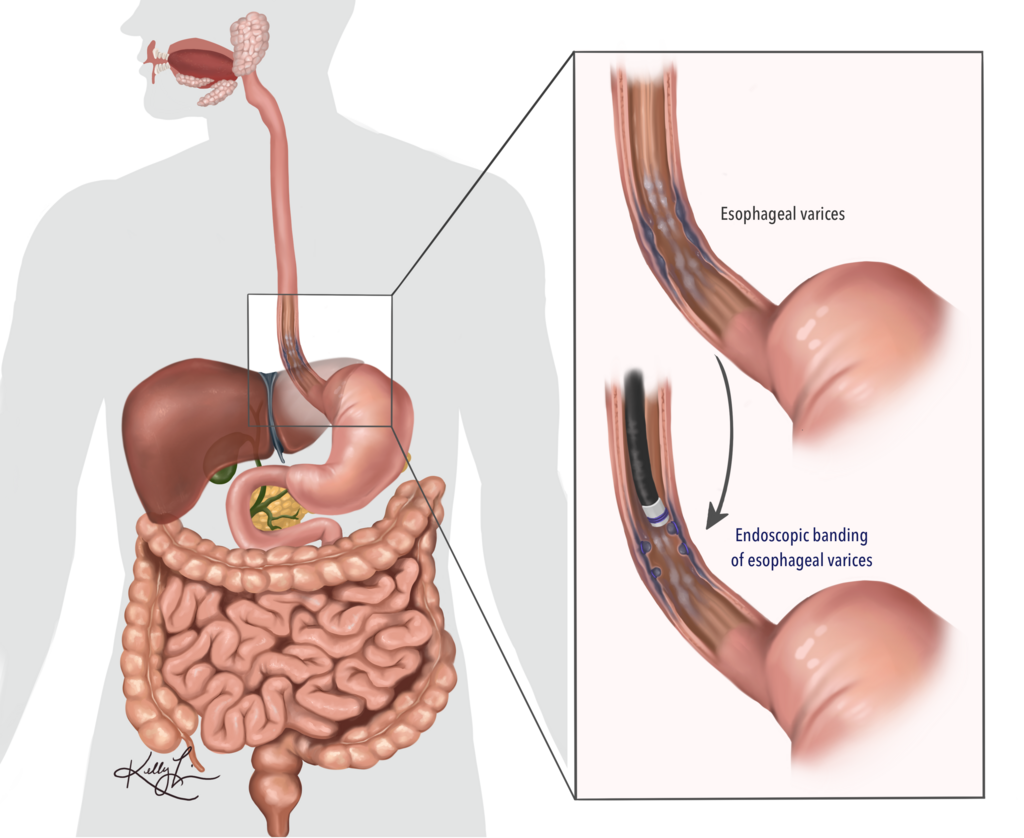
The esophagus is a muscular tube, about 10 inches long, that transports the bolus from the pharynx to the stomach. It isn't just a passive slide; its muscles contract in a wave-like motion called peristalsis to actively push the food downward, even if you're swallowing while upside down.
peristalsis
noun
The involuntary constriction and relaxation of the muscles of the intestine or another canal, creating wave-like movements that push the contents of the canal forward.
There are two important sphincters, or muscular rings, that act as gatekeepers for the esophagus.
-
Upper Esophageal Sphincter (UES): Located at the junction of the pharynx and esophagus. Most of the time, the UES is tightly closed to prevent air from entering the esophagus during breathing. When you swallow, it relaxes to allow the bolus to pass through.
-
Lower Esophageal Sphincter (LES): Found at the bottom of the esophagus where it meets the stomach. The LES opens to let food into the stomach and then closes to prevent stomach acid and contents from splashing back up, which causes acid reflux.
The Nerves in Charge
Swallowing is a complex reflex that involves precise coordination between numerous muscles. This entire process is controlled by a network of cranial nerves that send signals between the brainstem and the muscles of the mouth, pharynx, larynx, and esophagus. While you can start a swallow voluntarily, once the bolus passes a certain point in the pharynx, the process becomes an involuntary, automatic reflex.
| Cranial Nerve | Name | Key Swallowing Function(s) |
|---|---|---|
| V | Trigeminal | Sensation in the mouth; muscles for chewing |
| VII | Facial | Lip closure; taste; saliva production |
| IX | Glossopharyngeal | Sensation for taste and gag reflex; pharyngeal movement |
| X | Vagus | Laryngeal and pharyngeal muscle control; peristalsis in the esophagus |
| XII | Hypoglossal | Tongue movement for bolus formation and transport |
These nerves work together in a perfectly timed sequence. Any disruption to this neural control can interfere with the safety and efficiency of swallowing, highlighting how intricate this seemingly simple act truly is.
Now, let's test your understanding of these anatomical structures.
What is the primary function of the soft palate and uvula during the act of swallowing?
The wave-like muscular contractions that move food through the esophagus are called:
Understanding the anatomy of swallowing provides a crucial foundation for recognizing how and why difficulties with this essential function can arise.