Understanding Draw Over Anesthesia Techniques
Anesthetic Principles
The Goal of Anesthesia
Anesthesia is a state of controlled, temporary loss of sensation or awareness. Its primary purpose is to allow patients to undergo surgery and other medical procedures without feeling pain or experiencing distress. Modern anesthesia aims to achieve three main goals, often called the "triad of anesthesia":
- Unconsciousness: The patient is unaware of the procedure.
- Analgesia: The patient does not feel pain.
- Muscle Relaxation: The patient's muscles are relaxed, which is often necessary for the surgeon to work effectively.
By achieving these three states, anesthesia creates the ideal conditions for safe and successful surgery.
Types of Anesthesia
Anesthesia isn't a one-size-fits-all solution. The type used depends on the procedure, the patient's health, and other factors. There are three main categories.
| Type | Scope | Patient State | Example |
|---|---|---|---|
| General | Entire body | Unconscious | Heart surgery |
| Regional | Large body area (e.g., a limb) | Awake or sedated | Epidural for childbirth |
| Local | Small, specific area | Awake | Dental filling |
With general anesthesia, the brain is put into a state of medically induced coma. You are completely unconscious and have no awareness of the procedure.
Regional anesthesia blocks nerve signals to a specific region of the body, like an arm or the lower half of the body. It’s like temporarily unplugging the phone line to one part of your house; signals just can't get through. You can be awake, or you might be given a sedative to help you relax.
Local anesthesia is the most targeted type. It numbs a very small area where a procedure is being done. You remain fully conscious and alert.
How Anesthetics Affect the Body
Anesthetic agents are the drugs that produce the state of anesthesia. They primarily work on the central nervous system—the brain and spinal cord—by interrupting nerve signals. Think of nerve cells as electrical wires carrying messages. Anesthetics temporarily disrupt this signaling, preventing pain messages from reaching the brain.
These drugs don't just affect awareness and pain. They have broader physiological effects that need careful management:
- Cardiovascular System: Anesthetics often cause a drop in blood pressure and heart rate.
- Respiratory System: Breathing can slow down or become shallow. For general anesthesia, a patient's breathing is typically supported by a ventilator.
- Thermoregulation: The body's ability to regulate its temperature can be impaired, often leading to a drop in body temperature.
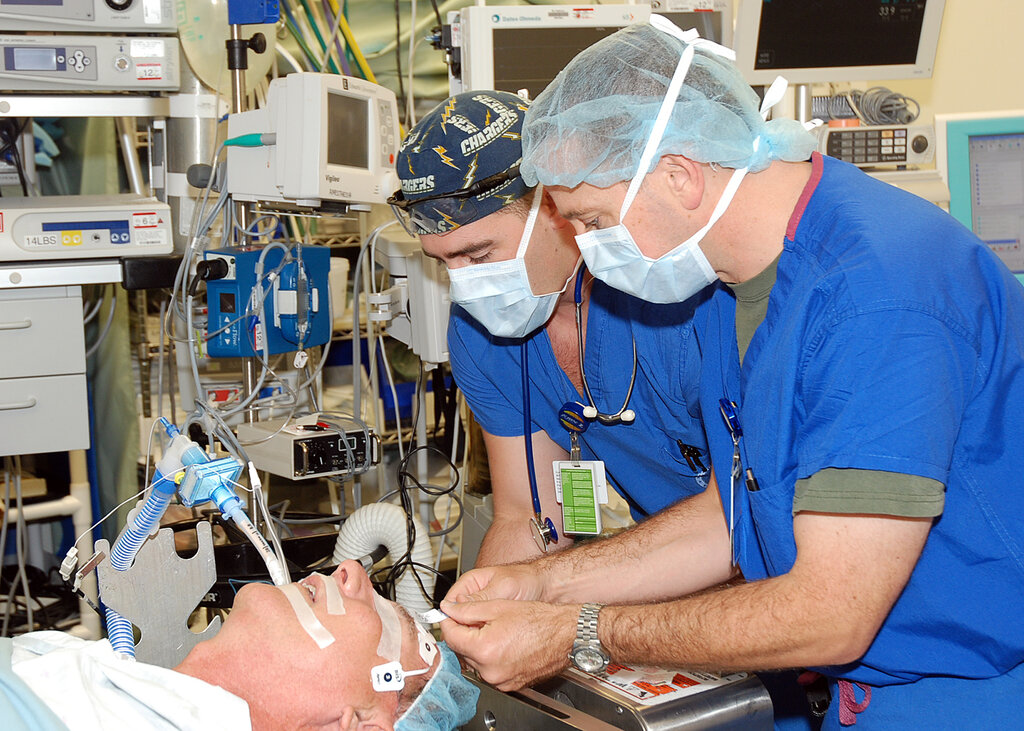
Because of these widespread effects, patients must be monitored constantly.
The Importance of Monitoring
Patient monitoring is a critical safety measure during any type of anesthesia, but especially general and regional. The anesthesia professional acts like a pilot, continuously watching a dashboard of vital signs to ensure the patient remains safe and stable. This allows them to make precise, real-time adjustments to the anesthetic drugs.
Key parameters that are monitored include:
- Heart Rate and Rhythm: Using an electrocardiogram (ECG).
- Blood Pressure: Checked automatically every few minutes.
- Oxygen Saturation: Measured with a pulse oximeter, a small clip on the finger.
- Breathing: Tracking the rate of breaths and the level of carbon dioxide being exhaled (capnography).
- Temperature: To prevent the patient from becoming too cold.
This constant vigilance ensures that any changes in the patient's condition are detected and addressed immediately, making modern anesthesia remarkably safe.
Ready to check your understanding of these core principles?
Which of the following best describes the "triad of anesthesia," the three primary goals of modern anesthesia?
A patient is undergoing surgery on their hand. They are awake and comfortable but cannot feel or move their entire arm. Which type of anesthesia was most likely administered?