Understanding Drag Forces in Fluids
Introduction to Drag
What Is Drag?
Drag is a force that pushes back on anything moving through a fluid. A fluid can be a liquid, like water, or a gas, like air. If you're running, drag is the air resistance you feel. If you're swimming, it's the water pushing against you.
Drag always opposes the direction of motion. It's the universe's way of saying, "slow down."
Think about sticking your hand out of a moving car's window. The force you feel pushing your hand back is drag. This force isn't just a minor annoyance; it plays a huge role in everything from designing fuel-efficient cars to throwing a perfect curveball.
Where Drag Comes From
Drag isn't a single force. It's the result of two main phenomena happening at the same time: friction between the fluid and the object's surface, and pressure differences around the object.
First, there's frictional drag, often called skin friction. This happens because the fluid right next to an object's surface tends to stick to it, creating friction as the object moves past the rest of the fluid. A smooth, polished surface will have less skin friction than a rough one.
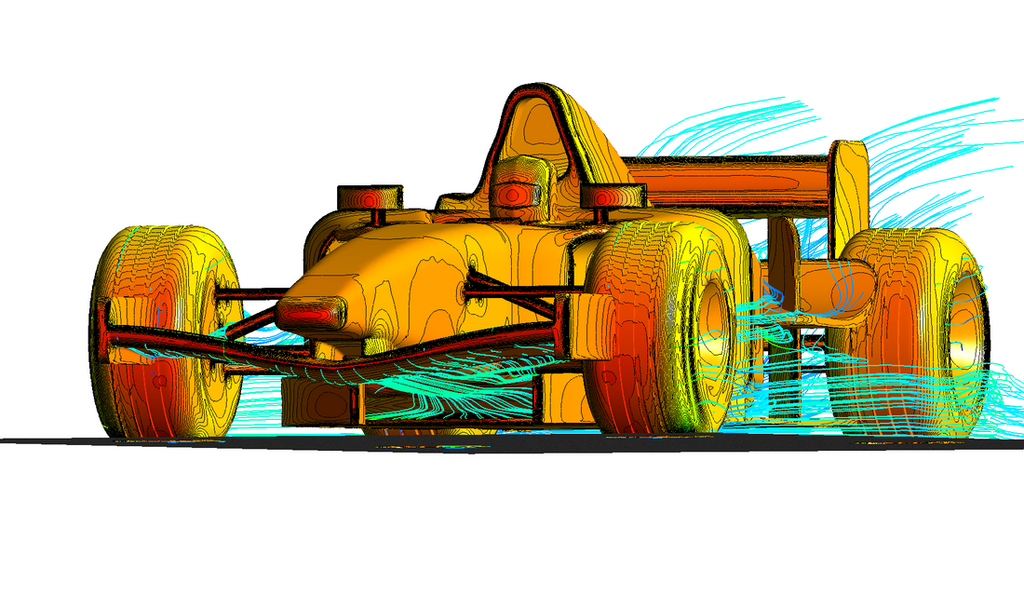
The second, and often more significant, cause is pressure drag, also known as form drag. As an object moves, it shoves fluid particles out of the way. This creates a high-pressure zone in front of the object. As the fluid flows around the object, it separates from the surface, creating a turbulent, low-pressure wake behind it. This pressure difference—high in the front, low in the back—results in a net force that pushes the object backward.
Most objects experience a combination of both types of drag. For a streamlined, aerodynamic shape like an airplane wing, skin friction is the main source of drag. For a blunt, blocky shape like a truck, pressure drag dominates.
Drag in Everyday Life
Once you understand drag, you start seeing it everywhere. Car manufacturers spend millions of dollars in wind tunnels to create sleeker designs that reduce drag and improve fuel economy. Even small changes to a car's shape, like the angle of its windshield or the curve of its side mirrors, can make a difference.
In sports, athletes are constantly battling drag. Swimmers wear specialized suits and caps to minimize water resistance. Cyclists crouch low on their bikes and wear tight-fitting clothing to become more aerodynamic. Every fraction of a second saved by reducing drag can be the difference between winning and losing.
Even something as simple as a parachute is a perfect example of using drag. A parachute is designed to be the opposite of aerodynamic. It creates a massive amount of drag to slow a person's descent, allowing for a safe landing.
What is drag?
Which type of drag is most significant for a blunt, non-streamlined object like a parachute?
Understanding drag is the first step in learning how objects move through the world. It’s a fundamental force that engineers, athletes, and scientists must account for every day.