Understanding Digital RWA Custodians
Introduction to Blockchain
What Is a Blockchain?
Think of a blockchain as a special kind of digital notebook. But instead of one person owning it, everyone in a group has an identical copy. Whenever someone adds a new entry, it appears in everyone's notebook at the same time. This shared, synchronized nature is the core idea.
At its heart, a blockchain is a digital ledger of transactions that is secure, immutable, and decentralized.
Let's break that down. A "digital ledger" is just a file where transactions are recorded. The magic is in how they are recorded. Unlike a traditional bank ledger kept on a central server, a blockchain is distributed across many computers, making it incredibly resilient and transparent.
How It Works
A blockchain is built from three key components: blocks, chains, and nodes. They work together to ensure that the shared notebook is secure and trustworthy.
Block
noun
A package of data containing a list of transactions, a timestamp, and a unique identifying code called a hash.
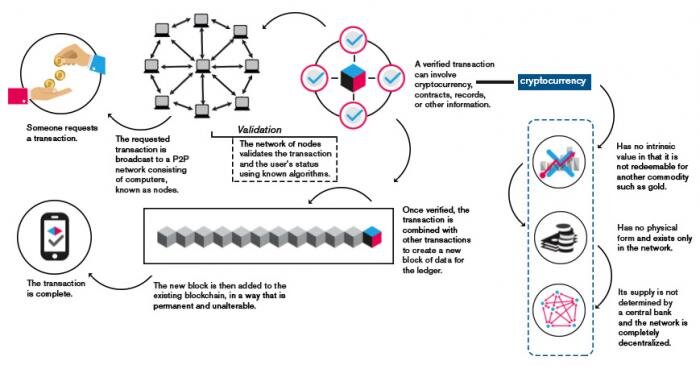
New transactions are bundled together into a "block." Each block contains not only the transaction data but also two very important pieces of information: its own unique hash (like a digital fingerprint) and the hash of the block that came directly before it.
This linking of blocks is what forms the "chain." Because each block contains the fingerprint of the one before it, it creates a secure, chronological record. If you tried to alter the data in an old block, its hash would change. This would break the link to the next block, and the rest of the network would immediately notice the tampering. This structure is what makes the blockchain immutable, or unchangeable.
So who maintains this chain? That's where nodes come in.
Node
noun
A computer connected to the blockchain network that holds a copy of the entire ledger. Nodes work to validate and relay transactions.
Instead of a single company or bank controlling the ledger, the blockchain is maintained by a network of participants running these nodes. This is decentralization. There is no central point of failure or control. Everyone has a copy of the record, and they all work together to keep it consistent and accurate.
For the network to agree on which new blocks to add, it uses a consensus mechanism. Think of it as a voting system. Before a new block can be added to the chain, a majority of the nodes in the network must agree that its transactions are valid. This prevents fraudulent transactions and ensures everyone's copy of the ledger stays the same.
Core Benefits
This unique structure provides several key advantages over traditional systems.
- Transparency: Because the ledger is shared among many participants, it offers a high level of transparency. On public blockchains, anyone can view the history of transactions.
- Security: The combination of cryptographic hashing (the digital fingerprints) and the decentralized consensus mechanism makes the blockchain extremely difficult to alter or hack. Changing a single record would require immense computational power to rewrite all subsequent blocks and control a majority of the network.
- Immutability: Once a transaction is recorded on the blockchain and a new block is added after it, it cannot be changed or deleted. This creates a permanent, trustworthy audit trail.
Beyond Cryptocurrency
While blockchain is famous for powering cryptocurrencies like Bitcoin and Ethereum, its applications go much further. The technology's ability to create a secure and transparent record of anything of value is being explored in many industries.
For example, it can be used for supply chain management, allowing companies to track goods from the factory to the store shelf. This helps verify authenticity and prevent counterfeiting. Other uses include secure voting systems, managing medical records, and proving ownership of digital art.
The core idea is always the same: creating a trustworthy, shared record without needing a central authority to oversee it. This simple but powerful concept is what makes blockchain a foundational technology for a more decentralized future.
What is the primary function of linking blocks together using cryptographic hashes?
In a blockchain network, what role do the 'nodes' play?
Understanding these fundamentals is the first step. With this foundation, you can begin to see how more complex assets can be managed and verified using this technology.