Understanding DICOM
Introduction to DICOM
The Universal Language of Medical Images
Imagine it's the 1980s. A patient gets a CT scan at one hospital, but needs a specialist at another hospital to review it. The two hospitals use scanners from different manufacturers. Getting the image from the first machine to the second is a huge headache. The file formats are incompatible, like trying to play a Blu-ray disc in a VCR. Staff might have to print the image to film and physically mail it, or attempt a complicated, often-unreliable digital conversion.
This was the reality of early digital medical imaging. Each manufacturer had its own proprietary way of storing and transmitting images. This lack of a common standard created isolated islands of information, making it difficult for healthcare providers to collaborate and share vital patient data.
To solve this, the medical community created a universal translator for medical images and their associated information: DICOM.
DICOM
noun
Stands for Digital Imaging and Communications in Medicine. It is the international standard for transmitting, storing, retrieving, printing, processing, and displaying medical imaging information.
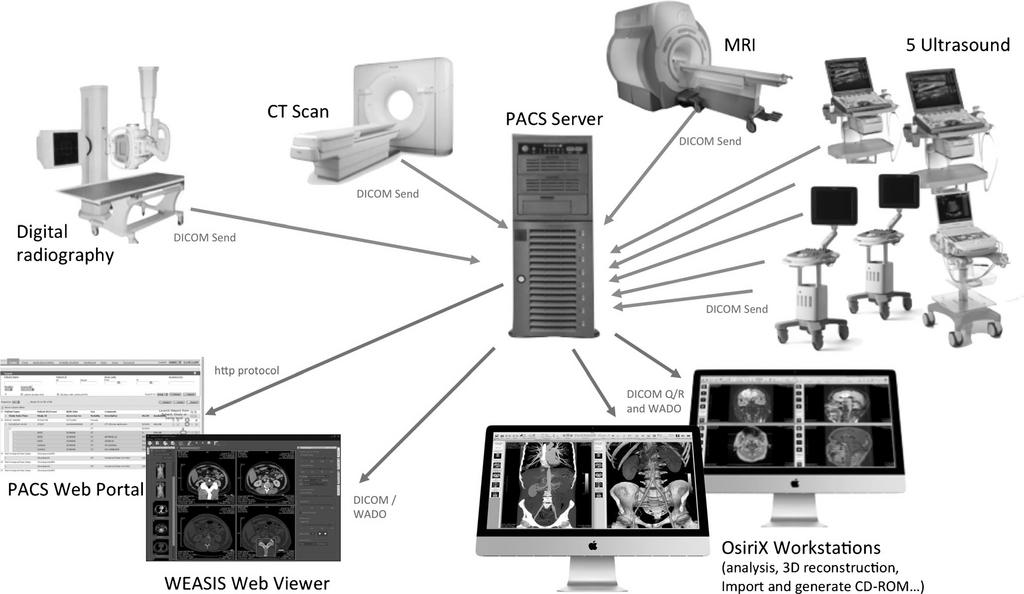
DICOM ensures that an MRI scan from a machine made by one company can be viewed on a workstation from another, or stored in an archive from a third. It's the standard language that all medical imaging devices and systems use to communicate, from the scanner itself to the software used by doctors for diagnosis.
A Brief History
The need for a standard was clear. In 1983, the American College of Radiology (ACR) and the National Electrical Manufacturers Association (NEMA) formed a joint committee to tackle the problem. Their goal was to create a standard method for transferring images and their associated information, regardless of the manufacturer.
The first version of the standard, called ACR-NEMA 300, was released in 1985. After a few revisions and significant improvements, it was renamed DICOM in 1993. Since then, it has become the bedrock of modern radiology and other medical imaging fields. The standard is continuously updated by a dedicated committee to keep pace with evolving technology.
Why Interoperability Matters
The core purpose of DICOM is to enable interoperability—the ability of different systems to work together seamlessly. This has profound implications for healthcare.
Interoperability allows for the easy sharing of patient images between departments, hospitals, and even countries. A patient can have a scan in one city and have it read by a specialist across the globe almost instantly.
It also allows hospitals to build a best-of-breed imaging infrastructure. They can buy a CT scanner from Company A, an MRI from Company B, and a picture archiving and communication system (PACS) from Company C, confident that all the components will communicate with each other. This flexibility and competition drives innovation and helps control costs.
An Overview of the Standard
The DICOM standard is a complex document, divided into multiple parts. You don't need to know the technical details of each part, but it's helpful to understand what they cover at a high level. Some of the key areas include:
- Image Information Objects: Defines how to format images from different modalities (like CT, MRI, X-ray). Crucially, this includes not just the pixel data, but also the patient information, study details, and equipment parameters, all bundled into one file.
- Network Communication: Specifies the protocols for sending and receiving DICOM files over a network.
- Media Storage: Defines how to store DICOM files on physical media like CDs or USB drives.
- Data Structures and Encoding: Lays out the rules for the file format itself, including the structure of the metadata header.
- Conformance: Provides a framework for manufacturers to state which parts of the DICOM standard their products support.
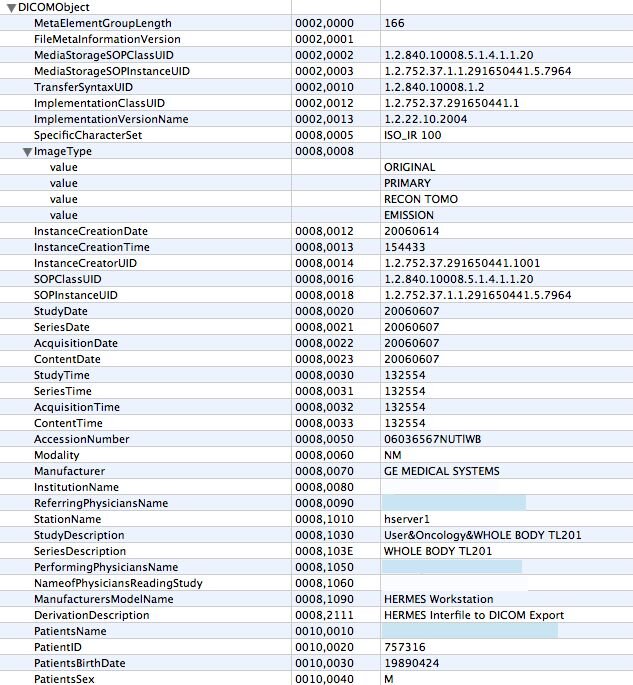
This structure ensures every aspect of handling medical images is standardized, from creation to storage to viewing. Now, let's check your understanding of these core concepts.
What was the primary problem in medical imaging that led to the creation of the DICOM standard?
The DICOM standard's ability to allow different systems (e.g., a scanner from Company A and a workstation from Company B) to work together seamlessly is known as ____________.
DICOM is the essential, behind-the-scenes standard that makes modern medical imaging possible, ensuring that crucial patient data is accessible, shareable, and consistent across different systems.